

How Is Big Data Applied in Education and Digital Learning?
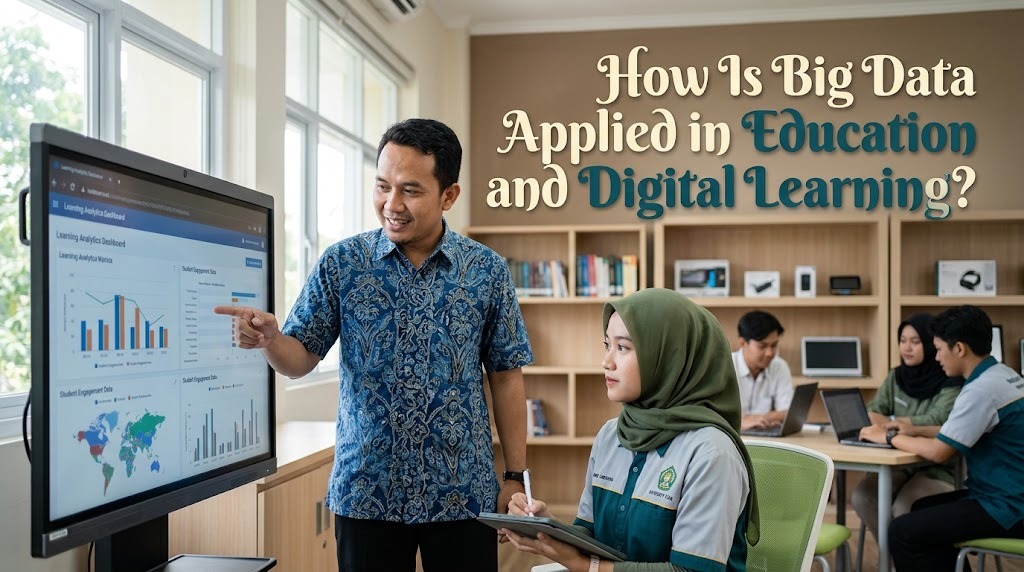
Big Data is transforming education by helping schools, universities, and online learning platforms understand how students learn and what they need to succeed. Every time students watch educational videos, complete online assignments, participate in digital classes, or take assessments, they generate data that can provide useful insights. When analyzed responsibly, this information can help educators improve teaching methods, personalize learning experiences, and monitor student progress. Big Data also supports educational institutions in evaluating programs and making better decisions. As digital learning continues to grow, Big Data has become an important tool for creating more effective and accessible education.
WHAT IS BIG DATA IN EDUCATION?
Big Data in education refers to the collection and analysis of large amounts of information generated through teaching, learning, assessment, and educational administration. The information can come from learning management systems, online courses, digital libraries, student records, and educational applications. It may include assignment scores, learning activity records, time spent on lessons, attendance, and student feedback. By examining these different sources, educators can identify learning patterns and understand how students interact with educational materials.
For example, an online learning platform may discover that many students struggle with a particular mathematics topic. Teachers can use this information to review the lesson, provide additional explanations, or introduce more practice activities. However, data should be interpreted carefully because a student's online activity does not always reflect their actual understanding. Combining data with teacher observations and student feedback can provide a more complete picture of learning needs.
HOW BIG DATA SUPPORTS PERSONALIZED LEARNING
One of the main applications of Big Data in education is personalized learning. Every student has different abilities, interests, learning speeds, and educational needs. By analyzing assessment results and learning activities, digital platforms can identify areas where students perform well and topics that require additional practice. This information can help teachers adjust learning materials and provide support that matches individual needs.
For example, an educational application may recommend beginner exercises to students who have difficulty understanding a topic. Students who demonstrate strong understanding may receive more advanced activities to develop their skills further. Personalized learning can make lessons more relevant and help students progress at a suitable pace. Nevertheless, recommendations should remain flexible because students' needs can change over time, and educators must retain an important role in guiding the learning process.
MONITORING STUDENT PROGRESS THROUGH DATA ANALYSIS
Big Data enables teachers to monitor student progress using information collected from assignments, quizzes, attendance records, and digital learning activities. Instead of relying only on final examination results, educators can examine performance throughout a course. This approach can reveal recurring mistakes, changes in participation, and subjects that students find difficult. Teachers can then use these findings to provide timely feedback and improve their teaching strategies.
For example, a student who repeatedly receives low scores on reading comprehension exercises may benefit from additional reading materials and guided practice. Teachers can also compare performance across different assessments to determine whether students are improving. However, student progress should not be judged through numbers alone. Factors such as access to technology, personal circumstances, learning differences, and the quality of instructional materials should also be considered.
IDENTIFYING STUDENTS WHO NEED ADDITIONAL SUPPORT
Big Data can help educational institutions identify students who may need additional academic assistance. By examining patterns in attendance, assignment completion, assessment results, and participation, analytical systems can identify possible warning signs. For instance, repeated missed assignments combined with declining assessment scores may indicate that a student is experiencing learning difficulties. Teachers and academic advisers can use these signals to investigate the situation and offer appropriate support.
Some institutions use predictive analytics to estimate which students may be at risk of falling behind or leaving a course. These predictions can help schools organize tutoring, counseling, and other support services more efficiently. However, predictions are not certain outcomes, and students should never be labeled solely because of an algorithm. Educators must consider individual circumstances, verify the information, and use the results to provide assistance rather than punishment.
IMPROVING ONLINE LEARNING PLATFORMS
Online learning platforms generate data about how students access and use educational resources. This information can help developers and educators evaluate whether lessons are clear, engaging, and easy to navigate. For example, if many students repeatedly leave a lesson at the same point, the platform's team can investigate whether the content is too difficult, confusing, or technically problematic. Data about quiz attempts and lesson completion can also reveal which activities may need improvement.
These insights allow educational providers to improve course structure, learning materials, and digital tools. Platforms may also use data to recommend relevant lessons or provide reminders when students have unfinished activities. However, high engagement does not necessarily mean high learning achievement. Effective digital learning should be evaluated through meaningful outcomes, including knowledge retention, skill development, and the ability to apply what students have learned.
THE ROLE OF BIG DATA IN TEACHER DECISION MAKING
Big Data provides teachers with additional evidence to support classroom decisions. By reviewing assessment results and learning patterns, teachers can identify topics that require further explanation and determine whether their teaching methods are effective. For example, if a large proportion of students answer the same question incorrectly, the teacher may need to explain the concept differently or provide additional examples. This approach helps educators focus their efforts on areas where students need the most support.
Data can also help teachers compare the effectiveness of different learning activities. They may examine whether group discussions, interactive exercises, or video lessons are associated with better learning outcomes. However, data analysis should support professional judgment rather than replace it. Teachers understand important classroom factors that may not appear in digital records, including student motivation, communication difficulties, and social interactions.
BIG DATA FOR EDUCATIONAL PLANNING AND MANAGEMENT
Educational institutions can use Big Data to improve planning, resource allocation, and administrative efficiency. Information about enrollment, attendance, course demand, examination results, and classroom usage can help administrators understand institutional needs. For example, a university may analyze enrollment trends to determine which courses require additional classes or teaching staff. Schools can also use reliable data to identify gaps in educational resources and plan improvements.
At a broader level, education authorities can analyze aggregated information to evaluate educational programs and identify differences in learning outcomes across regions or student groups. These findings can support decisions about teacher training, digital infrastructure, and learning resources. However, comparisons must account for differences in socioeconomic conditions, technology access, and educational opportunities. Responsible analysis can help institutions make more informed decisions without overlooking the unique circumstances of individual schools and students.
CHALLENGES OF USING BIG DATA IN EDUCATION
Although Big Data offers many educational benefits, its use also creates challenges. One major concern is student privacy because educational datasets may contain personal information, academic records, and details about learning behavior. If this information is collected or shared without appropriate safeguards, students may face privacy violations or unauthorized use of their data. Educational institutions must therefore follow applicable privacy regulations, limit unnecessary data collection, and clearly explain how information is used.
Another challenge is data accuracy and interpretation. Incomplete records or unreliable measurements can produce misleading conclusions about student performance. Digital inequality is also important because students with limited internet access or unsuitable devices may generate less online activity than their classmates. Institutions should avoid treating missing digital records as evidence of poor motivation or ability. Proper staff training, secure systems, transparent policies, and inclusive teaching practices are essential for responsible implementation.
THE FUTURE OF BIG DATA IN DIGITAL LEARNING
The future of Big Data in education will be shaped by advances in artificial intelligence, learning analytics, cloud computing, and adaptive learning systems. These technologies can help educational platforms analyze learning patterns and provide more timely recommendations. For example, an adaptive learning system may adjust the difficulty of exercises based on a student's demonstrated understanding. Teachers may also receive analytical reports that highlight common learning difficulties and suggest areas for additional instruction.
Despite these opportunities, the development of data-driven education must remain focused on students' needs and educational quality. Schools and universities should ensure that automated recommendations are evaluated for accuracy, fairness, and usefulness. Human interaction, teacher guidance, creativity, and critical thinking will remain essential parts of effective education. By combining technology with responsible teaching practices, institutions can use Big Data to support more flexible and meaningful learning experiences.
CONCLUSION
Big Data is increasingly important in education and digital learning because it helps educators understand student needs, monitor academic progress, improve online platforms, and make informed institutional decisions. Through data analysis, schools and universities can personalize learning materials, identify students who may need additional support, and evaluate teaching strategies. These applications can make education more responsive and help institutions use their resources effectively.
However, successful implementation requires more than collecting large amounts of information. Educational institutions must protect student privacy, maintain data accuracy, address digital inequality, and ensure that analytical systems are used fairly. Big Data should support teachers rather than replace their professional judgment. When combined with effective teaching and responsible technology, Big Data can contribute to more inclusive, efficient, and student-centered education.
Recent Posts

Bagaimana Sistem SKS pada Program Kuliah... 22.11.2026/45 View

How Does Technology Make Daily Evaluation... 21.11.2026/73 View

Apa Strategi Menghadapi Kesenjangan antara Kompetensi... 21.11.2026/75 View

Mengapa Inventaris Aset Penting bagi Kelancaran... 21.11.2026/71 View

When Should Musicians Join a Record... 21.11.2026/75 View
