

How Is Big Data Transforming Modern Business Strategies?
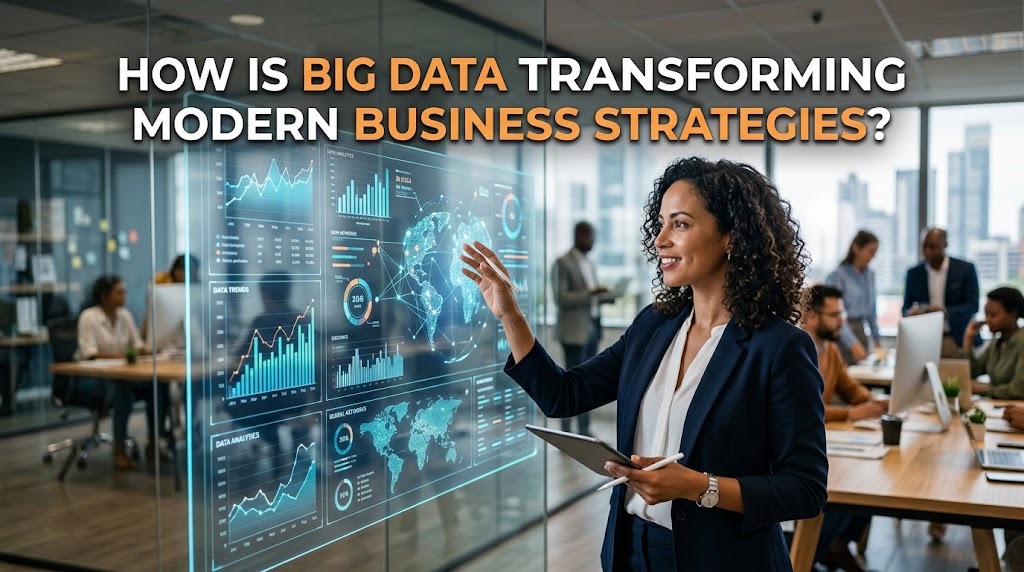
Big data is changing how modern businesses operate, compete, and make decisions. Companies collect information from customer transactions, websites, social media, digital platforms, and daily operations. When analyzed effectively, this information helps businesses understand market trends, improve customer experiences, and identify new opportunities for growth.
In today's competitive environment, businesses cannot rely only on traditional methods or personal intuition. Big data analytics allows organizations to make more informed decisions, respond to changing customer needs, and improve their strategies. Understanding how big data is transforming modern business strategies helps companies use technology and information to achieve sustainable growth.
UNDERSTANDING BIG DATA IN MODERN BUSINESS
Big data refers to large and complex collections of information that traditional data processing methods may struggle to handle efficiently. It includes structured data, such as sales records, and unstructured data, such as customer reviews, images, and social media comments. These different sources provide valuable insights into business performance and customer behavior. With suitable analytical tools, organizations can turn raw information into useful knowledge.
Big data is commonly associated with volume, velocity, and variety, which describe the amount, speed, and different forms of data being processed. Modern businesses use data analytics to identify patterns, measure performance, and understand changes in their industries. For example, a retail company can examine purchasing records to identify popular products and predict customer demand. This information helps managers develop strategies based on evidence rather than assumptions.
IMPROVING BUSINESS DECISION MAKING
One of the most significant ways big data transforms business strategies is by improving decision making. Managers can analyze sales performance, operating costs, customer feedback, and market conditions before choosing a particular strategy. This approach provides a clearer understanding of business challenges and potential opportunities. It also helps organizations compare different options and evaluate their possible outcomes.
For example, a company planning to introduce a new product can analyze customer preferences and market demand before investing in production. The findings may help determine suitable pricing, target audiences, and promotional methods. Businesses can also monitor key performance indicators to evaluate whether their strategies are producing the expected results. Although data cannot guarantee success, reliable analysis can reduce uncertainty and support more consistent decisions.
CREATING BETTER CUSTOMER EXPERIENCES
Big data enables businesses to understand customers more deeply by examining their preferences, purchasing habits, browsing activities, and feedback. These insights help companies identify what customers need and which factors influence their buying decisions. Businesses can use this information to improve products, services, and communication. As a result, customer experiences can become more relevant and satisfying.
For instance, an online shopping platform may recommend products based on a customer's previous purchases or browsing activity. A telecommunications company can analyze complaints to identify recurring service problems and improve customer support. Personalized services may strengthen customer relationships when they provide genuine value. However, companies must protect personal information, obtain appropriate consent where required, and use customer data responsibly.
DEVELOPING MORE EFFECTIVE MARKETING STRATEGIES
Big data has transformed marketing by allowing businesses to measure campaign performance and understand their target audiences more accurately. Marketing teams can analyze website traffic, advertising engagement, customer responses, and sales conversions. These insights help them determine which marketing channels deliver useful results and which activities need improvement. Businesses can then allocate their marketing budgets more effectively.
Another important application is customer segmentation, which involves grouping customers according to relevant characteristics, preferences, or behaviors. Companies can use these groups to create more relevant advertisements, promotions, and product recommendations. For example, a business may discover that younger customers respond differently to online campaigns than older customer groups. By adjusting its marketing approach, the company can improve engagement and reduce spending on ineffective campaigns.
INCREASING OPERATIONAL EFFICIENCY
Big data helps businesses identify inefficient processes, reduce waste, and improve resource allocation. By analyzing inventory records, production schedules, employee workloads, and delivery information, organizations can discover delays and unnecessary expenses. Managers can use these findings to improve workflows and make daily operations more efficient. This can increase productivity without requiring an equivalent increase in operating costs.
Manufacturing companies, for example, can monitor equipment performance to identify warning signs before a machine fails. Logistics businesses can analyze traffic patterns and delivery histories to improve route planning. Retailers can use demand forecasts to maintain appropriate inventory levels and avoid excessive stock. These applications can reduce disruptions, improve service reliability, and help businesses respond more effectively to operational challenges.
SUPPORTING PREDICTIVE ANALYTICS AND BUSINESS PLANNING
Predictive analytics uses historical data, statistical techniques, and analytical models to estimate possible future outcomes. It helps businesses anticipate customer demand, identify potential risks, and prepare for changes in market conditions. Instead of reacting only after a problem occurs, organizations can use predictions to develop preventive strategies. This approach can improve planning and make businesses more adaptable.
For example, a retailer can use historical sales patterns to estimate demand during holiday seasons. A financial services company may analyze transaction patterns to identify unusual activities that require further investigation. Businesses can also evaluate different scenarios to understand how changes in prices, costs, or demand might affect performance. However, predictions are not always accurate because unexpected events and changing conditions can influence the results.
IDENTIFYING MARKET OPPORTUNITIES AND COMPETITIVE ADVANTAGES
Big data allows businesses to monitor market trends, customer interests, and changes in competitor activity. By combining information from multiple sources, companies can identify emerging needs and areas where existing products or services may be insufficient. These findings can reveal opportunities to develop new offerings or enter promising markets. Businesses that recognize relevant trends early may be better positioned to respond to customer demand.
Data analysis can also help organizations understand their strengths and weaknesses compared with market conditions. For example, a company may discover that customers increasingly prefer convenient digital services or environmentally responsible products. It can use these insights to adjust its product development and long-term business plans. Nevertheless, businesses should verify their findings and consider industry knowledge before making major investments based on analytical results.
ENCOURAGING INNOVATION AND DIGITAL TRANSFORMATION
Big data supports innovation by helping businesses test ideas, evaluate products, and understand how customers respond to new services. Companies can analyze user feedback and product performance to identify improvements before expanding an initiative. This makes experimentation more informed and helps organizations learn from both successful and unsuccessful projects. Data-driven insights can also reveal unmet needs that inspire new business models.
When combined with technologies such as artificial intelligence, cloud computing, and automation, big data can support broader digital transformation. Artificial intelligence can identify patterns in large datasets, while cloud computing provides flexible infrastructure for storing and processing information. Automation can use data-based rules to perform repetitive tasks more efficiently. However, businesses need clear objectives and appropriate oversight to ensure that these technologies solve real problems rather than simply adding complexity.
MANAGING THE CHALLENGES OF BIG DATA
Despite its benefits, big data creates challenges that businesses must address. Poor data quality, incomplete records, and inconsistent information can lead to misleading conclusions. Organizations should establish procedures for checking accuracy, maintaining consistency, and updating information regularly. Reliable data is essential for producing useful analysis and making sound strategic decisions.
Data privacy, cybersecurity, and employee expertise are equally important. Businesses must protect sensitive information, manage access carefully, and comply with applicable regulations. They may also need trained employees and suitable analytical tools to interpret findings correctly. Small businesses can begin with affordable solutions and a few clearly defined goals before investing in more complex systems. Regular evaluation helps organizations determine whether their data initiatives provide measurable value.
HOW BUSINESSES CAN IMPLEMENT DATA-DRIVEN STRATEGIES
Businesses should begin by identifying specific problems or goals they want to address. These goals might include increasing customer retention, improving sales, reducing operating costs, or shortening delivery times. Clear objectives help companies decide which information to collect and which performance indicators to monitor. Without defined goals, collecting large amounts of data may create unnecessary costs without improving business results.
The next step is to establish reliable data collection, select appropriate analytical tools, and ensure that employees understand how to use the findings. Managers should review results regularly and compare them with actual business performance. They should also combine data insights with professional judgment, customer feedback, and knowledge of industry conditions. By continuously learning and adjusting their strategies, businesses can build a stronger data-driven culture and respond more effectively to change.
CONCLUSION
Big data is transforming modern business strategies by improving decision making, personalizing customer experiences, strengthening marketing, increasing operational efficiency, and supporting predictive planning. It also helps businesses identify market opportunities, encourage innovation, and respond to competition more effectively. These capabilities allow organizations to make informed choices and adapt to changing customer expectations.
However, successful implementation requires accurate data, suitable technology, skilled employees, and responsible information management. Businesses should establish clear objectives and measure the results of their data initiatives rather than collecting information without a specific purpose. By combining reliable analytics with human judgment and effective planning, organizations can use big data to strengthen their competitive position and achieve sustainable growth.
Recent Posts

Bagaimana Sistem SKS pada Program Kuliah... 22.11.2026/45 View

How Does Technology Make Daily Evaluation... 21.11.2026/73 View

Apa Strategi Menghadapi Kesenjangan antara Kompetensi... 21.11.2026/75 View

Mengapa Inventaris Aset Penting bagi Kelancaran... 21.11.2026/71 View

When Should Musicians Join a Record... 21.11.2026/75 View
