

How Is Color Blindness Testing Used in Eye Health Examinations?
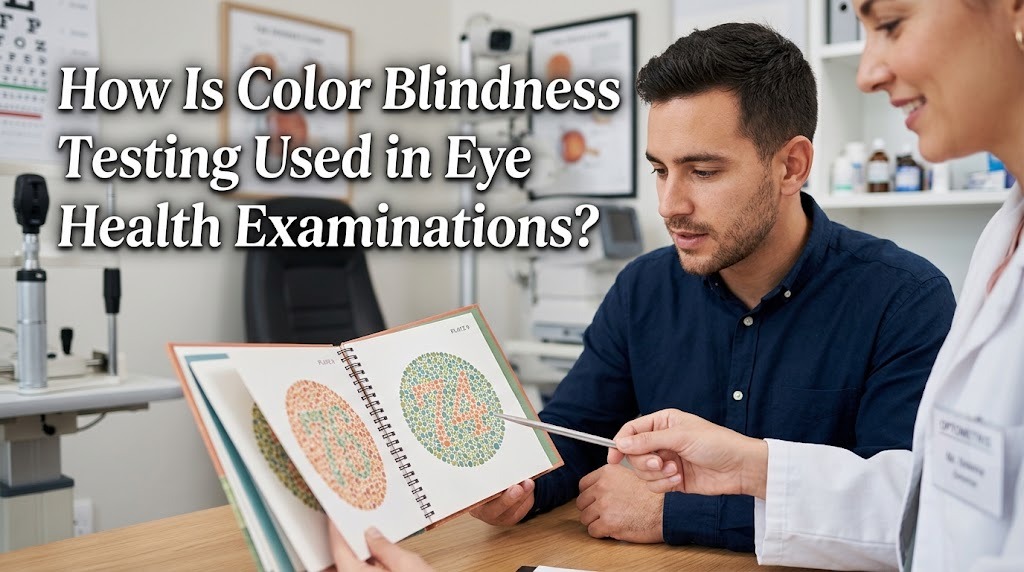
Color vision is an important part of overall eye health because it helps people recognize and distinguish different colors in their surroundings. However, some individuals have difficulty identifying certain colors due to a condition known as color blindness or color vision deficiency. This condition can be inherited or develop later in life because of eye diseases, certain medical conditions, or damage to the visual system. Since color vision problems are not always easy to recognize, specific examinations are needed to identify them.
Color blindness testing is used as part of eye health examinations to evaluate how accurately a person can distinguish different colors. These tests help eye care professionals identify color vision deficiencies, determine possible patterns of color perception problems, and decide whether further examinations are necessary. Understanding how this testing works can help people recognize its importance in maintaining visual health.
THE ROLE OF COLOR BLINDNESS TESTING IN EYE EXAMINATIONS
Color blindness testing plays an important role in evaluating a person's ability to recognize and distinguish different colors. During an eye health examination, eye care professionals may include color vision tests to identify difficulties that are not necessarily detected through ordinary visual acuity tests. A person may have clear distance and near vision but still experience problems distinguishing certain colors. Therefore, checking color perception provides additional information about visual function.
These examinations are particularly useful for identifying inherited color vision deficiencies, especially red-green color blindness. They can also help detect changes in color perception that may be associated with certain eye or neurological conditions. If an individual develops color vision problems later in life, the results may encourage the eye care professional to investigate possible underlying causes. This makes color blindness testing a valuable part of a broader assessment of eye health.
HOW COLOR BLINDNESS TESTING IS PERFORMED
Color blindness testing generally involves showing individuals different colors, patterns, numbers, or symbols and asking them to identify what they see. One of the most common methods is the Ishihara Color Test, which uses circular plates containing colored dots that form hidden numbers or shapes. People with normal color vision can usually recognize these figures, while individuals with certain color vision deficiencies may see different figures or have difficulty identifying them.
The examination is usually simple, painless, and does not require physical contact with the eyes. The examiner may present several test plates under suitable lighting conditions and record the individual's answers. Depending on the initial results, additional examinations may be performed to evaluate color discrimination more thoroughly. The testing method is selected according to the person's age, visual condition, and suspected type of color vision deficiency.
TYPES OF COLOR BLINDNESS TESTS USED BY EYE CARE PROFESSIONALS
Several types of color blindness tests are available, and each has a different purpose during an eye examination. The Ishihara Color Test is widely used to screen for red-green color vision deficiencies. Another method is the Farnsworth D-15 Test, which requires individuals to arrange colored caps according to their similarities. This examination helps identify patterns of difficulty when distinguishing specific color groups.
For more detailed assessments, eye care professionals may use the Farnsworth Munsell 100 Hue Test or an Anomaloscope Test. The Farnsworth Munsell examination evaluates how accurately someone can arrange many different shades, while an anomaloscope measures how a person matches specific combinations of colored light. These specialized tests can provide additional information about the type and severity of certain color vision deficiencies. Not every patient needs all these examinations because the choice depends on individual symptoms and clinical requirements.
IDENTIFYING INHERITED AND ACQUIRED COLOR VISION DEFICIENCIES
Color blindness testing helps distinguish possible inherited color vision deficiencies from problems that develop later in life. Inherited color blindness is commonly associated with genetic changes affecting the cone cells in the retina, which are responsible for detecting colors. The condition is often present from birth and may affect a person's ability to distinguish red, green, or other color combinations. Testing can help identify the characteristic patterns of these deficiencies.
Acquired color vision problems may develop because of certain eye diseases, damage to the optic nerve, neurological conditions, or medication side effects. Unlike inherited color blindness, acquired deficiencies may affect one or both eyes and can change over time. Eye care professionals may compare the results from each eye and review the patient's medical history to investigate possible causes. If color perception changes suddenly or becomes noticeably worse, a professional eye examination is important to identify the underlying problem.
WHY COLOR VISION RESULTS ARE IMPORTANT FOR EYE HEALTH
The results of color blindness testing provide useful information about how the visual system processes different colors. These findings can help eye care professionals recognize color vision deficiencies that might otherwise remain unnoticed. They can also provide a reference point for comparing future examinations when changes in color perception are suspected. This is especially important when a person experiences new visual symptoms.
Color vision results may also help determine whether additional eye examinations are necessary. For example, unusual changes in color perception can sometimes be associated with retinal or optic nerve problems. However, color blindness testing alone cannot diagnose these conditions. Eye care professionals may need to perform additional assessments, such as visual acuity testing, retinal examinations, or other specialized procedures, to obtain a more complete understanding of eye health.
WHO SHOULD UNDERGO COLOR BLINDNESS TESTING?
Color blindness testing can be beneficial for children, teenagers, and adults, particularly when they experience difficulty distinguishing certain colors. Children may benefit from early screening because color recognition is frequently used in educational activities, including drawing, reading charts, and identifying objects. Identifying color vision deficiencies early allows parents and teachers to provide appropriate learning support. It can also prevent children from being misunderstood when they give answers that differ from common color expectations.
Adults may also need color vision examinations, especially if they notice changes in how they perceive colors. People with a family history of color blindness may consider screening to understand their own color vision abilities. In addition, certain occupations have specific color perception requirements, making accurate testing important for professional assessments. Anyone experiencing sudden changes in color perception should consult an eye care professional rather than relying only on online screening tests.
CONCLUSION
Color blindness testing is an important part of eye health examinations because it helps evaluate how accurately individuals distinguish different colors. Through methods such as the Ishihara Color Test, Farnsworth D-15 Test, and Anomaloscope Test, eye care professionals can identify various color vision deficiencies and determine whether further assessment is needed.
These examinations are useful for recognizing inherited conditions and identifying possible acquired changes in color perception. Although color blindness tests cannot diagnose every eye disease, their results provide valuable information about visual function. Regular eye examinations and professional evaluations can help individuals understand their color vision and maintain better overall eye health.
Recent Posts

Bagaimana Sistem SKS pada Program Kuliah... 22.11.2026/40 View

How Does Technology Make Daily Evaluation... 21.11.2026/71 View

Apa Strategi Menghadapi Kesenjangan antara Kompetensi... 21.11.2026/73 View

Mengapa Inventaris Aset Penting bagi Kelancaran... 21.11.2026/69 View

When Should Musicians Join a Record... 21.11.2026/73 View
