

How Is Digital Technology Changing Business Operations Management?
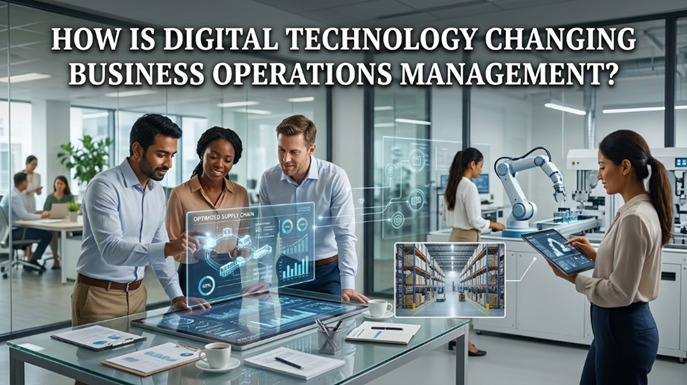
Digital technology is transforming the way companies manage their daily activities, organize resources, and deliver products or services. In today's competitive business environment, organizations must adapt to technological developments to improve efficiency, reduce operational costs, and meet customer expectations. Traditional management methods that rely heavily on manual processes are increasingly being replaced by digital systems, automation, and data-driven decision-making.
Digital technology allows businesses to monitor operations in real time, communicate more effectively, manage inventory accurately, and improve productivity. From small businesses to large corporations, technology has become an essential part of modern operations management. Understanding these changes helps companies identify new opportunities, overcome operational challenges, and maintain a competitive advantage.
1. AUTOMATING DAILY BUSINESS PROCESSES
One of the most significant ways digital technology changes business operations management is through automation. Many repetitive activities, such as processing orders, managing invoices, updating inventory, and handling customer information, can now be completed using digital systems. Automation reduces manual workloads, minimizes human errors, and allows employees to focus on more important responsibilities. As a result, businesses can complete tasks faster and improve overall operational efficiency.
For example, companies can use automated accounting software to record financial transactions or inventory management systems to track stock levels. These technologies help organizations maintain accurate records and reduce unnecessary delays. However, businesses must ensure that automated systems are properly maintained and monitored to achieve reliable results.
2. IMPROVING DATA-DRIVEN DECISION-MAKING
Digital technology provides businesses with access to large amounts of information that can support better management decisions. Through data analytics, managers can examine sales performance, customer behavior, production efficiency, and operational expenses. This information helps organizations understand their current performance and identify areas that require improvement. Instead of relying only on assumptions, managers can make decisions based on measurable data.
For instance, a retail company can analyze previous sales records to predict which products will be in high demand during certain seasons. This allows the business to prepare sufficient inventory and avoid unnecessary storage costs. By using accurate information, companies can improve planning, reduce risks, and develop more effective business strategies.
3. ENHANCING COMMUNICATION AND TEAM COLLABORATION
Effective communication is essential for successful business operations. Digital communication tools make it easier for employees, managers, suppliers, and customers to exchange information quickly. Applications such as project management platforms, video conferencing software, and instant messaging services help teams coordinate their activities even when working from different locations. These tools also make it easier to share documents, monitor assignments, and track project progress.
Furthermore, cloud-based collaboration systems allow employees to access updated information from various devices. This reduces communication delays and helps prevent misunderstandings between departments. With better coordination, businesses can improve teamwork, complete projects more efficiently, and maintain smoother daily operations.
4. OPTIMIZING INVENTORY AND SUPPLY CHAIN MANAGEMENT
Digital technology has significantly improved the way companies manage inventory and supply chains. Modern inventory systems can monitor stock levels, record incoming and outgoing products, and provide automatic notifications when supplies are running low. These features help businesses maintain appropriate inventory levels and avoid problems such as overstocking or product shortages.
In supply chain management, technologies such as cloud computing, tracking systems, and the Internet of Things (IoT) provide better visibility into product movements. Companies can monitor shipments, communicate with suppliers, and identify potential delivery delays more effectively. Consequently, digital solutions help organizations improve distribution processes, reduce operational expenses, and provide more reliable services to customers.
5. IMPROVING CUSTOMER EXPERIENCE AND SERVICE QUALITY
Customer satisfaction is an important factor in business success, and digital technology helps companies provide faster and more convenient services. Businesses can use customer relationship management (CRM) systems to organize customer information, track interactions, and understand individual preferences. This allows employees to provide more relevant assistance and respond to customer needs more effectively.
Additionally, digital platforms such as websites, mobile applications, and chatbots make it easier for customers to access information and complete transactions. For example, customers can place orders, check delivery statuses, and submit complaints without visiting a physical store. By improving service accessibility and response times, companies can strengthen customer relationships and build long-term loyalty.
6. REDUCING OPERATIONAL COSTS AND INCREASING PRODUCTIVITY
Another important benefit of digital technology is its ability to help businesses control operational expenses. Automated systems reduce the need for repetitive manual activities, while digital documents minimize paper usage and administrative costs. Businesses can also use technology to monitor energy consumption, manage employee schedules, and identify inefficient processes. These improvements help organizations use their financial and human resources more effectively.
Digital tools also increase employee productivity by providing faster access to information and simplifying everyday tasks. For example, enterprise resource planning (ERP) software integrates different business functions, including finance, human resources, inventory, and production, into a connected system. This integration reduces duplicated work and improves coordination across departments.
7. SUPPORTING REMOTE WORK AND BUSINESS FLEXIBILITY
The development of digital technology has made remote and hybrid working arrangements more practical for many organizations. Employees can access company systems, attend virtual meetings, and collaborate with colleagues without being physically present in the office. Cloud-based platforms also allow teams to share information and continue their work from different locations.
This flexibility helps businesses adapt to changing working conditions and access a wider range of talent. However, organizations must establish clear communication procedures, performance standards, and cybersecurity policies. With proper management, digital working environments can support employee productivity while maintaining business continuity.
8. STRENGTHENING BUSINESS SECURITY AND RISK MANAGEMENT
As businesses become increasingly dependent on digital systems, protecting information and technology infrastructure becomes more important. Companies store various types of valuable data, including customer records, financial information, employee details, and business documents. Without proper protection, this information may be exposed to cyberattacks, unauthorized access, or data loss.
To reduce these risks, organizations can implement cybersecurity measures such as data encryption, multi-factor authentication, regular backups, and access controls. Businesses should also provide cybersecurity training to employees so they can recognize suspicious emails and other potential threats. Strong security practices help protect company information, maintain customer trust, and support reliable business operations.
9. USING ARTIFICIAL INTELLIGENCE TO IMPROVE OPERATIONS
Artificial intelligence (AI) is creating new opportunities for businesses to improve operational performance. AI-powered systems can analyze large datasets, identify patterns, automate customer support, and assist managers in forecasting business demand. These capabilities help organizations process information more quickly and make more informed decisions.
For example, manufacturing companies can use AI-powered predictive maintenance systems to identify possible equipment problems before serious breakdowns occur. Retail businesses can also use AI to recommend products based on customer preferences. Although AI offers many advantages, companies must consider data accuracy, implementation costs, employee training, and ethical responsibilities when adopting these technologies.
10. OVERCOMING CHALLENGES IN DIGITAL TECHNOLOGY IMPLEMENTATION
Despite its advantages, implementing digital technology in business operations management can create several challenges. Some organizations face high initial investment costs when purchasing software, upgrading equipment, or developing digital infrastructure. Employees may also experience difficulties adapting to new systems, particularly when they have limited technical knowledge or insufficient training.
Another major challenge is the increasing risk of cyber threats and technology failures. Businesses need to select appropriate systems, provide continuous employee training, and establish reliable data protection policies. A well-planned digital transformation strategy can help organizations overcome these obstacles and ensure that technology investments deliver long-term benefits.
CONCLUSION
Digital technology is changing business operations management by making processes faster, more accurate, flexible, and efficient. Through automation, data analytics, cloud computing, artificial intelligence, and digital communication tools, companies can improve productivity, control operational costs, strengthen supply chains, and deliver better customer experiences.
However, successful digital transformation requires more than simply adopting new software or equipment. Businesses must also invest in employee development, cybersecurity, and effective technology management. Organizations that use digital solutions strategically will be better prepared to respond to market changes, improve operational performance, and maintain a competitive advantage in the modern business environment
Recent Posts

Bagaimana Sistem SKS pada Program Kuliah... 22.11.2026/12 View

How Does Technology Make Daily Evaluation... 21.11.2026/63 View

Apa Strategi Menghadapi Kesenjangan antara Kompetensi... 21.11.2026/64 View

Mengapa Inventaris Aset Penting bagi Kelancaran... 21.11.2026/61 View

When Should Musicians Join a Record... 21.11.2026/59 View
