

How Is Digital Technology Changing the Way Lecturer Seminars Are Conducted?
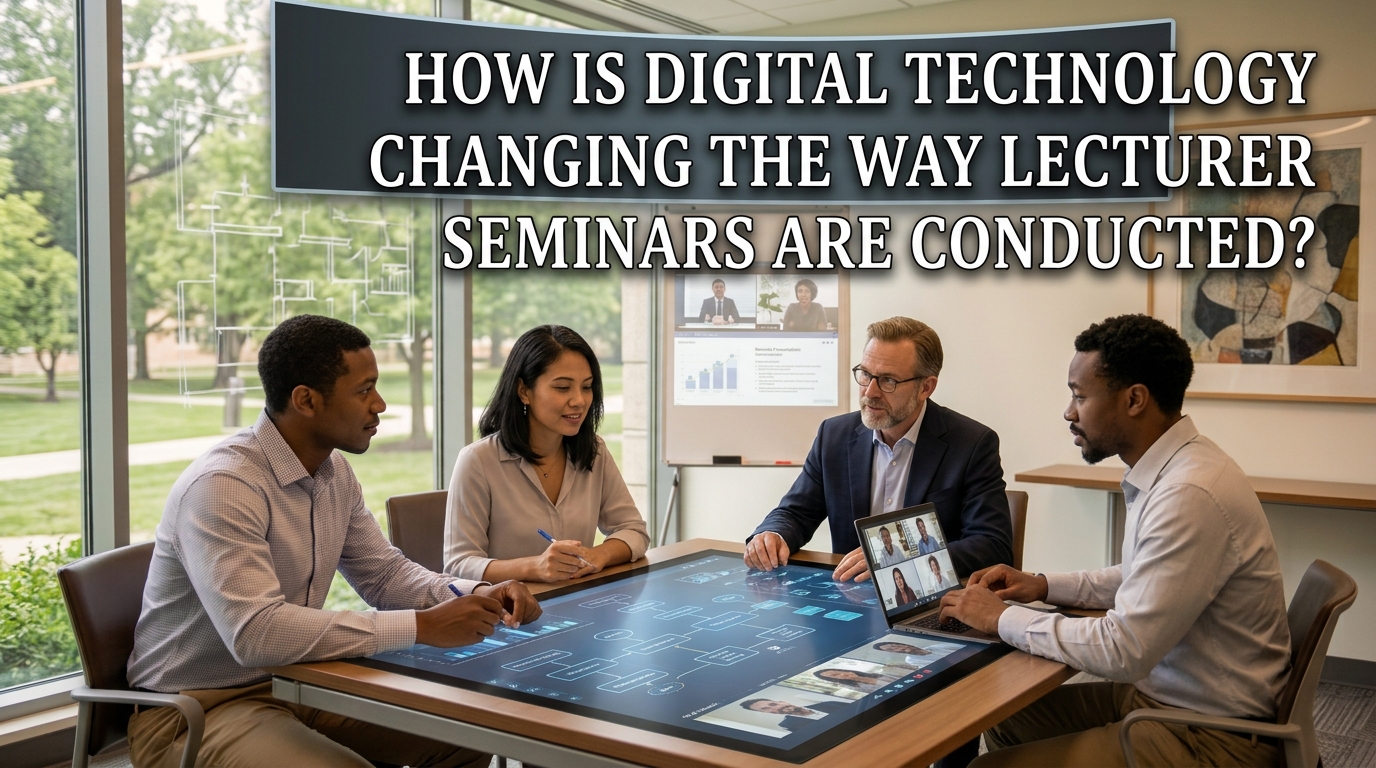
Digital technology is changing how lecturer seminars are planned, delivered, and experienced in higher education. In the past, most seminars required speakers and participants to meet in the same location. Today, universities can organize seminars through online platforms, video conferencing tools, and digital learning systems. These developments make academic discussions more flexible and accessible while creating new opportunities for collaboration. Understanding these changes helps universities organize more effective, interactive, and inclusive lecturer seminars.
HOW DIGITAL TECHNOLOGY TRANSFORMS LECTURER SEMINARS
Digital technology allows lecturer seminars to take place in different formats, including online, offline, and hybrid events. Online seminars enable lecturers to participate without traveling to a physical venue, while hybrid seminars combine in-person presentations with remote participation. These formats help universities connect speakers and participants from different cities or countries. They can also reduce certain travel and venue costs, depending on the technology and resources required.
Technology has also changed how seminar materials are distributed and accessed. Organizers can share digital presentations, research papers, recordings, and supporting documents before or after an event. Participants can review these resources at their own pace, making it easier to revisit important information. As a result, digital seminar platforms can support learning beyond the scheduled event.
THE ROLE OF ONLINE PLATFORMS IN LECTURER SEMINARS
Online platforms play an important role in organizing modern lecturer seminars. Video conferencing applications allow speakers to present research, explain academic concepts, and communicate with participants in real time. Features such as screen sharing, chat rooms, and breakout rooms help create opportunities for discussion. These tools make it possible to conduct academic events even when participants are located far apart.
Universities can also use event management platforms to handle registration, distribute invitations, send reminders, and collect participant feedback. Some systems provide attendance reports and access to recorded sessions. However, organizers should choose platforms based on ease of use, security, accessibility, and available features. Providing clear instructions and technical support can help participants join and follow the seminar more comfortably.
HOW DIGITAL TOOLS IMPROVE PARTICIPANT INTERACTION
Digital technology provides several ways to encourage active participation during lecturer seminars. Participants can ask questions through chat features, submit questions anonymously when supported, and respond to live polls. Breakout rooms can support small-group discussions, while collaborative digital documents allow participants to share ideas. These features can help quieter participants contribute without having to speak in front of a large audience.
Nevertheless, digital interaction does not automatically guarantee meaningful engagement. Speakers should plan activities that encourage participants to think critically, exchange opinions, and connect the discussion with their academic work. Moderators can organize question-and-answer sessions and monitor the discussion to ensure that different viewpoints receive attention. Effective use of interactive seminar tools helps transform a presentation into a more engaging learning experience.
THE BENEFITS OF DIGITAL TECHNOLOGY FOR LECTURERS
Digital lecturer seminars offer several benefits for professional development. First, they provide greater flexibility and accessibility, allowing lecturers to attend events without always leaving their campuses. Second, they can expand access to experts and research communities that might otherwise be difficult to reach. Third, recorded sessions and downloadable materials allow lecturers to review important information after the event, when recording and sharing permissions allow it.
Digital seminars can also help lecturers discover new teaching methods, research tools, and academic collaboration opportunities. For example, a lecturer may join an international discussion about educational technology or learn about a new research approach from an experienced specialist. These opportunities can support teaching improvement, research development, and professional networking. The benefits are strongest when lecturers actively apply what they learn to their academic responsibilities.
CHALLENGES OF USING DIGITAL TECHNOLOGY IN SEMINARS
Although digital technology offers many advantages, it also creates challenges. Unstable internet connections, limited devices, and unfamiliar software can prevent participants from joining or following a seminar effectively. Long online sessions may also cause fatigue and reduce concentration. In addition, technical problems can interrupt presentations and limit spontaneous discussions.
Universities can address these challenges by testing equipment and platforms before the event, preparing backup communication methods, and providing technical guidance. Speakers should use clear presentations, schedule appropriate breaks, and vary their activities to maintain attention. Organizers must also consider data privacy, cybersecurity, and accessibility for participants with disabilities. Addressing these issues helps ensure that digital seminars remain reliable and inclusive.
THE IMPORTANCE OF DIGITAL SECURITY AND ACADEMIC INTEGRITY
Digital lecturer seminars often involve registration details, research materials, presentations, and recorded discussions. Organizers should protect this information by using secure platforms, limiting access to authorized participants when necessary, and following institutional data protection policies. Recordings should only be made and shared with appropriate permission. Speakers should also avoid displaying confidential research data or personal information without authorization.
Academic integrity is equally important in digital seminar environments. Speakers should cite research sources accurately, distinguish evidence from personal opinions, and respect intellectual property rights. Participants should follow event rules when downloading, sharing, or reusing seminar materials. These practices help maintain trust and protect the credibility of academic discussions.
HOW UNIVERSITIES CAN ORGANIZE EFFECTIVE DIGITAL LECTURER SEMINARS
Universities should begin by defining the seminar's objectives and identifying the needs of the intended participants. They can then select a suitable format, platform, speaker, and schedule. Organizers should provide registration details, technical instructions, and learning materials in advance. A clear agenda and a designated moderator can help the seminar run smoothly and stay focused on its objectives.
After the event, universities should evaluate its effectiveness through participant feedback, attendance information, and evidence of learning. They can ask whether the seminar improved participants' understanding, introduced useful ideas, or encouraged future collaboration. The results can guide improvements to subsequent events. By combining careful planning, appropriate technology, and meaningful evaluation, universities can make lecturer seminars more productive and valuable.
THE FUTURE OF DIGITAL LECTURER SEMINARS
Digital technology is likely to remain an important part of academic seminars. Developments in artificial intelligence, automated transcription, translation tools, and collaborative platforms may help organizers improve accessibility and manage seminar activities more efficiently. These tools can support communication across languages and make academic materials easier to review. However, their usefulness depends on accuracy, privacy safeguards, and responsible implementation.
The future will not necessarily involve replacing every face-to-face seminar with an online event. Instead, universities can choose formats according to the purpose of each activity, the needs of participants, and available resources. Hybrid seminars and flexible digital learning tools may offer a practical balance between convenience and direct interaction. Human discussion, expert judgment, and academic collaboration will remain central to successful seminars.
CONCLUSION
Digital technology is changing lecturer seminars by making them more flexible, accessible, and interactive. Online platforms, digital resources, and collaboration tools allow lecturers to exchange knowledge across geographical boundaries and revisit learning materials after events. At the same time, universities must address technical barriers, participant engagement, data security, and academic integrity.
The most effective digital lecturer seminars combine suitable technology with clear objectives and thoughtful planning. By evaluating participant needs and improving each event based on feedback, universities can strengthen professional development, teaching quality, and research collaboration. Digital tools are most valuable when they support meaningful academic learning rather than simply move presentations onto a screen.
Recent Posts

Bagaimana Sistem SKS pada Program Kuliah... 22.11.2026/49 View

How Does Technology Make Daily Evaluation... 21.11.2026/77 View

Apa Strategi Menghadapi Kesenjangan antara Kompetensi... 21.11.2026/78 View

Mengapa Inventaris Aset Penting bagi Kelancaran... 21.11.2026/74 View

When Should Musicians Join a Record... 21.11.2026/79 View
