

How Is Digital Technology Driving the Development of Industry 4.0?
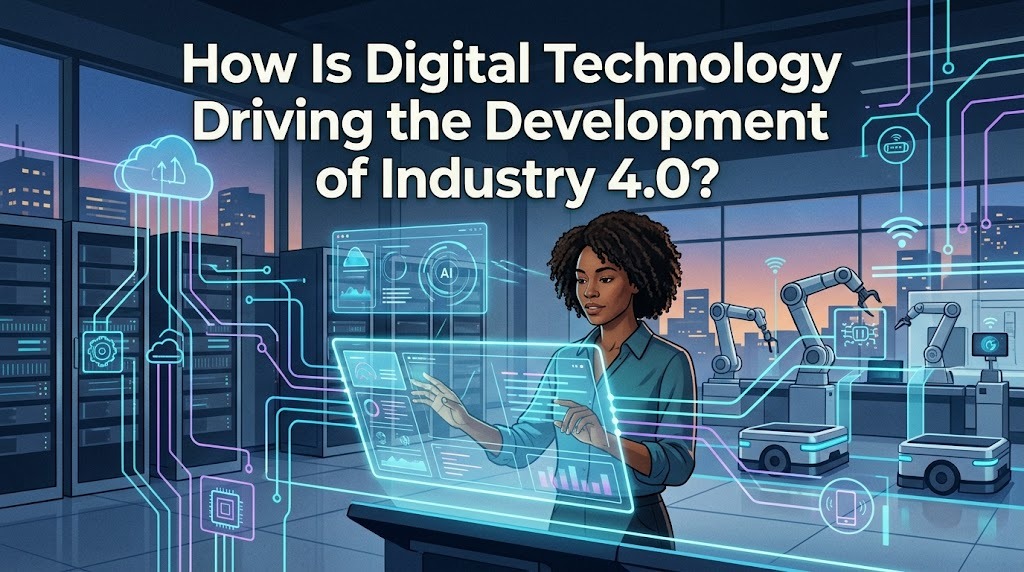
Digital technology plays a central role in the development of Industry 4.0, a modern industrial era characterized by connected machines, intelligent systems, automation, and real-time data processing. Unlike traditional industrial methods, Industry 4.0 allows machines, computers, and people to exchange information and coordinate activities more efficiently. Technologies such as artificial intelligence, the Internet of Things, cloud computing, and big data analytics help businesses improve productivity and make better decisions. These innovations are transforming manufacturing, logistics, healthcare, agriculture, and other economic sectors. Understanding the role of digital technology is essential for businesses and workers who want to remain competitive in an increasingly connected world.
THE ROLE OF DIGITAL TECHNOLOGY IN INDUSTRY 4.0
Digital technology provides the foundation for smart factories and connected industrial systems. Through digital networks, machines can collect information, communicate with other equipment, and respond to changing production conditions. Businesses can use these capabilities to monitor operations, identify problems, and improve the use of materials and energy. This approach helps companies reduce unnecessary costs while maintaining product quality.
Another important contribution is the integration of physical operations with digital systems. For example, a manufacturer can use connected sensors to monitor machine performance and a centralized platform to review production data. Managers can then make decisions based on current information instead of relying only on manual reports. Digital integration also makes it easier for different departments to coordinate production, inventory, and distribution. As a result, companies can respond more quickly to customer demands and changes in the market.
THE INTERNET OF THINGS AND CONNECTED MACHINES
The Internet of Things (IoT) is one of the key technologies supporting Industry 4.0. It refers to physical devices equipped with sensors and network connections that allow them to collect and exchange data. In industrial environments, IoT sensors can monitor temperature, pressure, vibration, machine speed, and other operating conditions. This information helps businesses understand how their equipment performs and identify potential problems before they cause major disruptions.
For example, a factory can install sensors on production machines to detect unusual vibrations that may indicate equipment damage. Maintenance teams can investigate the issue before the machine breaks down, reducing unexpected downtime and repair costs. IoT technology can also support inventory tracking, warehouse management, and transportation monitoring. When connected with other digital systems, real-time data enables companies to coordinate operations more effectively and improve overall productivity.
ARTIFICIAL INTELLIGENCE AND INDUSTRIAL AUTOMATION
Artificial intelligence (AI) helps Industry 4.0 systems analyze information, recognize patterns, and support decisions. In manufacturing, AI-powered tools can inspect products for defects, forecast equipment failures, and identify opportunities to improve production processes. Machine learning systems can use historical and current data to recognize patterns that may be difficult for humans to detect manually. These capabilities help businesses improve efficiency and maintain consistent quality.
Industrial automation also allows machines and robots to perform repetitive or physically demanding tasks. For example, robotic systems can assemble components, move materials, and package products with high levels of consistency. When automation is combined with AI, machines can adjust certain operations based on changing conditions or information from sensors. However, these technologies still require human supervision, maintenance, and responsible decision-making. Human expertise remains important for handling unexpected situations, ensuring safety, and determining whether automated recommendations are appropriate.
BIG DATA AND CLOUD COMPUTING FOR BETTER DECISIONS
Industry 4.0 generates large amounts of information from machines, sensors, transactions, and supply chains. Big data analytics helps businesses organize and examine this information to discover patterns, identify inefficiencies, and forecast demand. For example, a manufacturer can analyze production records to determine why certain products take longer to produce than others. Retailers can also study purchasing trends to improve inventory planning and reduce excess stock.
Cloud computing makes it possible to store and process data using computing resources accessed over the internet. Instead of maintaining every digital system on local computers, businesses can use cloud platforms to share information across offices, factories, and warehouses. This can improve collaboration and provide access to software without requiring extensive on-site infrastructure. However, organizations must consider data security, privacy, internet reliability, and service costs when adopting cloud services. Combining cloud computing with data analytics enables businesses to make more informed decisions and respond to operational changes more quickly.
THE BENEFITS AND CHALLENGES OF DIGITAL TRANSFORMATION
Digital technology offers several benefits for businesses adopting Industry 4.0. Higher productivity, improved product quality, reduced downtime, and more efficient resource use can help companies strengthen their competitiveness. Connected systems also make it easier to track products, monitor supply chains, and adjust production according to customer needs. Small and medium-sized enterprises can benefit from digital tools that support online sales, inventory management, accounting, and customer communication.
Despite these advantages, digital transformation also creates challenges. Purchasing advanced equipment and developing secure digital infrastructure can be expensive, especially for smaller businesses. Companies may struggle to find workers with the necessary technical skills, while increased connectivity can expose industrial systems to cybersecurity threats. Dependence on digital platforms may also create problems when networks fail or systems experience technical disruptions. To overcome these difficulties, businesses should invest in employee training, introduce new technologies gradually, strengthen cybersecurity measures, and establish clear procedures for managing digital systems.
KESIMPULAN
Digital technology is driving Industry 4.0 by connecting machines, automating processes, analyzing large amounts of data, and improving industrial decision-making. Technologies such as the Internet of Things, artificial intelligence, big data analytics, and cloud computing help businesses increase productivity, improve quality, and respond to market changes. However, successful implementation requires investment, skilled workers, reliable infrastructure, and strong cybersecurity practices. Companies should adopt digital solutions according to their needs while ensuring that employees can adapt to new working methods. With careful planning and continuous improvement, digital technology can support more efficient, innovative, and competitive industries.
Recent Posts

Bagaimana Sistem SKS pada Program Kuliah... 22.11.2026/50 View

How Does Technology Make Daily Evaluation... 21.11.2026/79 View

Apa Strategi Menghadapi Kesenjangan antara Kompetensi... 21.11.2026/79 View

Mengapa Inventaris Aset Penting bagi Kelancaran... 21.11.2026/75 View

When Should Musicians Join a Record... 21.11.2026/80 View
