

How Is Educational Digitalization Changing the Way Students Learn in the Modern Era?
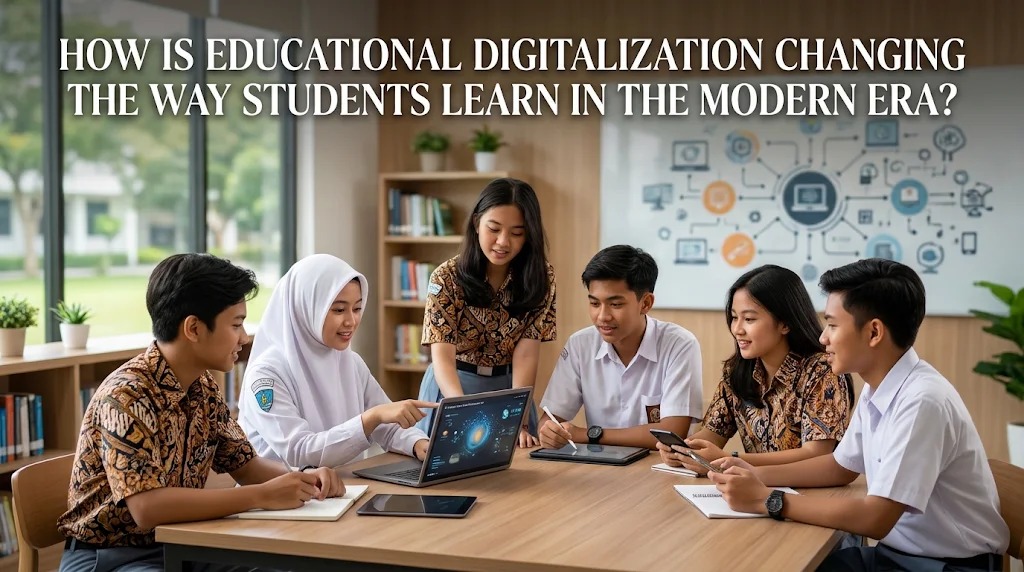
Educational digitalization is transforming the way students learn in the modern era. The development of digital technology has changed traditional learning methods into more flexible, interactive, and accessible educational experiences. Students are no longer limited to textbooks, printed materials, or face-to-face classroom activities because they can now access various learning resources through digital devices and online platforms.
The use of technology in education also provides opportunities for students to develop essential skills, such as critical thinking, creativity, communication, and digital literacy. Teachers can introduce more engaging learning methods, while students can explore information independently according to their individual needs. However, this transformation also requires schools, teachers, parents, and students to adapt to new learning environments.
THE TRANSFORMATION OF TRADITIONAL LEARNING INTO DIGITAL EDUCATION
Educational digitalization has changed the traditional learning process into a more modern and technology-based experience. In the past, students mainly depended on teachers, printed textbooks, and classroom explanations to understand lessons. Today, they can use digital learning platforms, educational videos, interactive applications, and electronic books to explore different subjects. These resources make learning more varied and allow students to understand difficult concepts through different explanations and visual presentations.
Another important change is the flexibility of the learning process. Students can access educational materials through computers, tablets, or smartphones without always being physically present in classrooms. They can review recorded lessons, complete online assignments, and participate in virtual discussions whenever their learning schedules allow. This flexibility helps students develop better learning habits while encouraging them to become more responsible for their academic progress.
IMPROVING STUDENT ENGAGEMENT THROUGH INTERACTIVE TECHNOLOGY
Digital technology makes learning activities more interesting by introducing interactive features that encourage students to participate actively. Teachers can use educational games, digital quizzes, animations, simulations, and multimedia presentations to explain lessons. These methods help students understand abstract concepts through practical examples and visual experiences. As a result, learning becomes more engaging than simply listening to explanations or reading textbooks.
Interactive technology also creates opportunities for students to collaborate with their classmates. Through online discussion forums, shared documents, and virtual classrooms, they can exchange ideas, work on group projects, and provide feedback to one another. These activities strengthen communication skills, teamwork, and problem-solving abilities. However, teachers still need to guide students so that technology supports meaningful learning rather than becoming a source of distraction.
PERSONALIZED LEARNING THROUGH DIGITAL RESOURCES
One of the most valuable benefits of educational digitalization is the opportunity to create more personalized learning experiences. Every student has different abilities, interests, learning speeds, and levels of understanding. Digital learning platforms can provide various materials and exercises that help students study according to their individual needs. For example, students who struggle with mathematics can access additional tutorials, practice questions, and explanatory videos until they understand the subject.
Some educational platforms also use Artificial Intelligence (AI) to analyze student performance and recommend suitable learning materials. This technology can identify topics that students find difficult and suggest exercises to improve their understanding. Teachers can use the information to recognize learning difficulties and provide more appropriate support. Nevertheless, technology should not replace the teacher's role because personal guidance, emotional support, and direct interaction remain essential parts of education.
DEVELOPING INDEPENDENCE AND DIGITAL LITERACY AMONG STUDENTS
Educational digitalization encourages students to become more independent when searching for information and completing academic activities. Instead of depending entirely on classroom explanations, they can explore reliable educational websites, attend online courses, and read digital references. This process trains students to take responsibility for their learning progress and manage their study schedules more effectively. It also encourages curiosity because students can explore subjects beyond the materials provided by their teachers.
At the same time, students need strong digital literacy to use technology responsibly and effectively. They must learn how to evaluate information sources, recognize misleading content, protect personal information, and communicate appropriately in digital environments. These abilities are increasingly important because not all information available on the internet is accurate or trustworthy. By developing digital literacy, students can become more critical, independent, and responsible technology users.
CHALLENGES OF IMPLEMENTING DIGITALIZATION IN EDUCATION
Although educational digitalization provides many advantages, its implementation still faces several challenges. One major problem is the unequal availability of internet connections, digital devices, and supporting infrastructure. Students in remote areas may experience difficulties accessing online learning because of limited internet coverage or expensive data packages. This situation creates a digital divide that can increase educational inequality between students from different economic and geographical backgrounds.
Another challenge is the readiness of teachers and educational institutions to use digital technology effectively. Not every teacher has sufficient digital skills or access to appropriate training programs. Schools also need to consider data security, student privacy, and the potential negative effects of excessive screen time. Therefore, successful digitalization requires more than providing technological equipment. It also needs proper infrastructure, continuous teacher development, responsible technology policies, and cooperation between schools, governments, parents, and communities.
THE FUTURE OF EDUCATION IN THE DIGITAL ERA
Educational digitalization will continue to influence how students acquire knowledge and develop skills in the future. Technologies such as artificial intelligence, cloud computing, virtual reality, and advanced learning platforms can provide more flexible and engaging educational experiences. Students may have greater opportunities to participate in virtual experiments, explore realistic simulations, and access international learning resources. These developments can make education more adaptable to changing academic and professional requirements.
However, the future of education should not depend entirely on technological development. Human interaction, teacher guidance, character development, and social relationships must remain important parts of the learning process. Schools need to balance digital innovation with meaningful face-to-face activities so students can develop both academic knowledge and social abilities. With appropriate implementation, educational digitalization can create a learning environment that is more inclusive, effective, creative, and relevant to future generations.
CONCLUSION
Educational digitalization is changing the way students learn by providing flexible access to information, interactive learning experiences, and personalized educational resources. It also encourages students to develop independence, creativity, critical thinking, and digital literacy. Although challenges such as limited infrastructure, unequal technology access, and teacher readiness remain important concerns, these obstacles can be addressed through proper planning and cooperation.
Ultimately, digital technology should be used as a tool to improve educational quality rather than replace the essential role of teachers. By combining technological innovation with effective teaching methods, schools can prepare students to face future challenges and participate confidently in an increasingly digital world.
Recent Posts

Bagaimana Sistem SKS pada Program Kuliah... 22.11.2026/33 View

How Does Technology Make Daily Evaluation... 21.11.2026/67 View

Apa Strategi Menghadapi Kesenjangan antara Kompetensi... 21.11.2026/67 View

Mengapa Inventaris Aset Penting bagi Kelancaran... 21.11.2026/65 View

When Should Musicians Join a Record... 21.11.2026/66 View
