

How Is Technology Changing the Future Role of a Vice Principal of Public Relations?
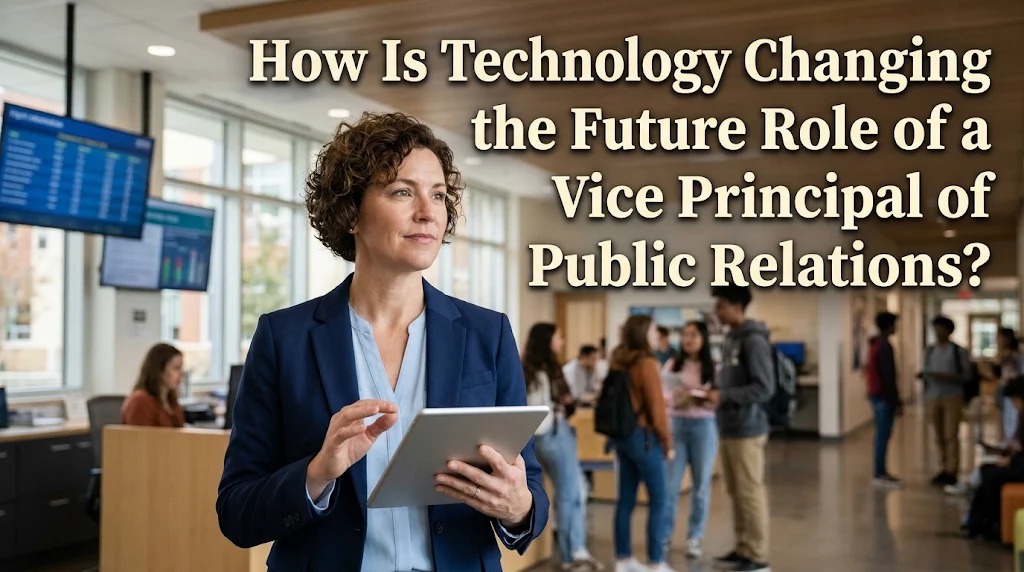
Technology is changing how schools communicate, manage information, and build relationships with the public. These developments are also transforming the responsibilities of a Vice Principal of Public Relations, who plays an important role in maintaining communication between educational institutions and their communities. In the past, school information was mainly delivered through printed announcements, letters, and face-to-face meetings. Today, digital platforms allow schools to share information more quickly, reach wider audiences, and interact with parents and educational partners more easily. As technology continues to develop, vice principals must adapt their skills and strategies to meet the changing needs of modern education.
THE SHIFT FROM TRADITIONAL TO DIGITAL COMMUNICATION
One of the most significant changes is the shift from traditional communication methods to digital platforms. Previously, schools often relied on printed letters, bulletin boards, brochures, and direct meetings to distribute important information. Although these methods remain useful, they can require more time and may limit how quickly information reaches the community.
Today, a Vice Principal of Public Relations can use email, messaging applications, school websites, and social media to share announcements and institutional updates. These platforms make communication more efficient because information can reach parents, students, teachers, and community members almost instantly. Digital communication also allows schools to provide regular updates without depending entirely on printed materials. As a result, the vice principal must understand how to select appropriate platforms and manage information professionally.
THE GROWING ROLE OF SOCIAL MEDIA AND DIGITAL PUBLICITY
Social media has become an important tool for introducing school programs, achievements, and activities to the public. Platforms such as Instagram, Facebook, YouTube, and other digital channels allow schools to share photographs, videos, educational content, and announcements. Through these platforms, a Vice Principal of Public Relations can help increase public awareness and create a stronger institutional identity.
However, effective social media management requires more than regularly publishing content. The vice principal must ensure that information is accurate, appropriate, and consistent with the school's communication policies. They also need to monitor public comments, respond to questions, and understand how audiences interact with published content. Responsible digital publicity can strengthen public trust and improve the school's visibility in an increasingly connected environment.
USING DATA AND DIGITAL TOOLS TO IMPROVE PUBLIC RELATIONS
Technology provides opportunities for schools to understand their communication performance through digital data. A Vice Principal of Public Relations can use website statistics, social media insights, online surveys, and digital feedback systems to evaluate public engagement. These tools help identify which information attracts attention and which communication methods are most effective.
For example, social media analytics can show how many people view or interact with school announcements. Online surveys can also help collect feedback from parents and community members about school programs and services. By analyzing this information, the vice principal can make better communication decisions and improve future publicity strategies. However, personal information must be handled responsibly, and data collection should follow applicable privacy requirements.
THE INFLUENCE OF ARTIFICIAL INTELLIGENCE AND AUTOMATION
Artificial intelligence is creating new opportunities for managing school communication and public relations activities. AI-powered tools can help prepare announcement drafts, summarize information, organize communication materials, translate content, and generate ideas for educational publications. These capabilities can reduce repetitive tasks and allow the vice principal to focus more on planning and relationship management.
Automation can also support routine communication, such as sending event reminders, distributing newsletters, and organizing digital documents. Nevertheless, AI-generated information must always be reviewed before publication to ensure accuracy, clarity, and appropriateness. The vice principal should also protect confidential school information and avoid entering sensitive student data into unauthorized platforms. Technology can support professional judgment, but it cannot replace human responsibility and direct communication.
DEVELOPING DIGITAL SKILLS AND PREPARING FOR FUTURE CHALLENGES
As educational technology continues to advance, a Vice Principal of Public Relations must develop digital skills to remain effective. Understanding social media management, digital content creation, online communication, data analysis, and basic information security is becoming increasingly important. These abilities help the vice principal manage modern communication channels and respond to the expectations of a digitally connected community.
At the same time, technology creates challenges that require careful attention. False information, negative online comments, privacy violations, and cybersecurity threats can affect a school's reputation. Therefore, the vice principal must understand digital ethics, verify information before sharing it, and coordinate with relevant school authorities when problems occur. Continuous learning and adaptability will be essential for handling these challenges and maintaining professional public relations management in the future.
CONCLUSION
Technology is transforming the future role of a Vice Principal of Public Relations by making school communication faster, more interactive, and increasingly data-driven. Digital platforms, social media, artificial intelligence, and automation provide new ways to manage information and strengthen relationships with the community. However, these developments also require stronger digital literacy, responsible information management, and awareness of privacy and security risks. By adapting to technological changes while maintaining professional judgment and human communication, vice principals can support more effective school management and build lasting public trust.
Recent Posts

How Does Technology Make Daily Evaluation... 21.11.2026/63 View

Apa Strategi Menghadapi Kesenjangan antara Kompetensi... 21.11.2026/64 View

Mengapa Inventaris Aset Penting bagi Kelancaran... 21.11.2026/60 View

When Should Musicians Join a Record... 21.11.2026/59 View

Daily Evaluation or Daily Planning Which... 21.11.2026/67 View
