

How Is the Industrial Revolution Changing Education in the Digital Age?
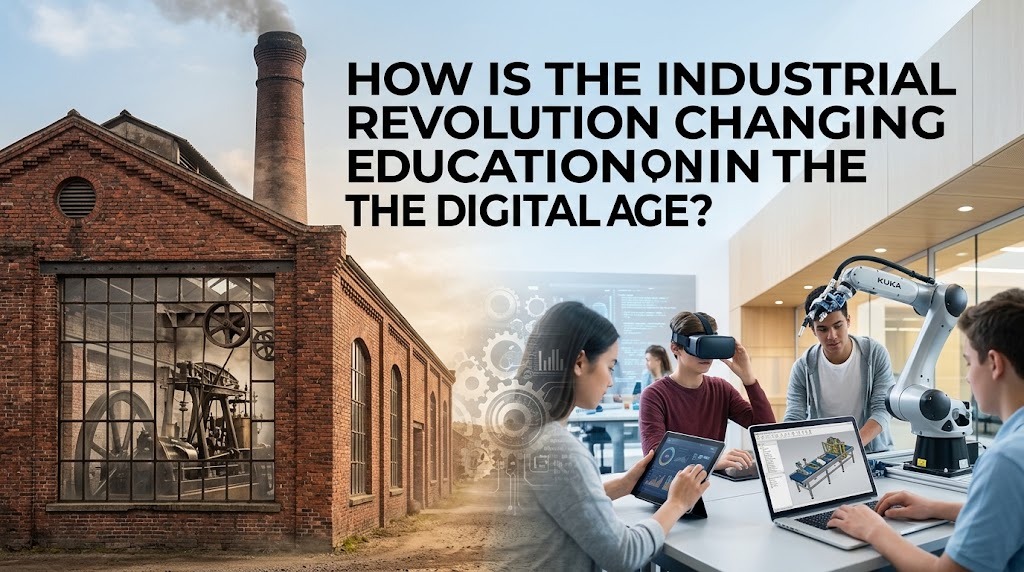
The Industrial Revolution has significantly transformed education, particularly through the development of digital technology and modern learning systems. In the past, education mainly depended on printed textbooks, classroom instruction, and face-to-face communication between teachers and students. Today, computers, smartphones, internet connections, and artificial intelligence have created new ways to access and understand information. These changes allow students to learn more flexibly and help teachers deliver lessons using interactive methods. However, technological development also introduces challenges, including unequal internet access, digital distractions, and the need for stronger digital literacy.
THE TRANSFORMATION OF TRADITIONAL LEARNING METHODS
The Industrial Revolution has gradually changed how educational institutions deliver knowledge. During earlier periods, industrial development increased the demand for formal education and workers with specialized skills. Schools and vocational institutions adapted their programs to prepare students for industrial workplaces. In the digital age, this transformation continues through the integration of computers, online platforms, and educational software into teaching and learning activities.
Traditional classroom learning now often combines face-to-face instruction with digital resources. Teachers can use presentations, videos, simulations, and interactive exercises to explain complex subjects more clearly. Students can also access electronic books, academic articles, and online learning materials without relying entirely on printed resources. Digital learning does not eliminate the importance of teachers or physical classrooms. Instead, it provides additional methods that can make education more accessible, engaging, and adaptable to different learning needs.
THE ROLE OF DIGITAL TECHNOLOGY IN EDUCATION
Digital technology is one of the most important factors changing modern education. Learning management systems allow teachers to distribute materials, collect assignments, monitor progress, and communicate with students through a single platform. Video conferencing applications also make remote lessons possible, enabling students to participate in educational activities from different locations. These tools became especially important when schools needed alternatives to conventional classroom instruction.
Digital resources also help students explore information independently. Online libraries, educational websites, and digital research databases provide access to a wide range of learning materials. Students can review recorded lessons, practice difficult concepts, and study at a pace that suits their needs. However, they must learn to evaluate the credibility of online information because not every website provides accurate or reliable content. Digital literacy is therefore essential for using technology effectively and responsibly in education.
ARTIFICIAL INTELLIGENCE AND PERSONALIZED LEARNING
Artificial intelligence (AI) is introducing new possibilities for teaching and learning. AI-powered educational tools can help students practice languages, generate explanations, organize study materials, and receive feedback on selected learning activities. Some adaptive learning systems analyze student responses and adjust exercises according to individual progress. These features can help learners identify weaknesses and focus on areas that require additional attention.
Teachers can also use AI to support lesson preparation, develop practice questions, and organize educational materials. Nevertheless, AI should complement rather than replace teachers because effective education requires human guidance, emotional understanding, and professional judgment. Students must verify AI-generated information and avoid relying on automated answers without understanding the underlying concepts. Responsible AI use also involves protecting personal information and following academic integrity rules. When applied appropriately, AI can support more personalized learning while preserving the essential role of educators.
THE CHANGING SKILLS REQUIRED FOR STUDENTS AND TEACHERS
The development of Industry 4.0 has increased the importance of skills that help people adapt to changing workplaces. Students need more than subject knowledge; they also need critical thinking, problem-solving, creativity, communication, and collaboration. Digital skills are increasingly valuable because many occupations involve software, online communication, data, or automated systems. Learning how to evaluate information and use digital tools can prepare students for further education and future employment.
Teachers must also continue developing their professional skills. They need to understand how digital platforms work, choose appropriate educational resources, and design activities that encourage active participation. Professional training can help educators integrate technology without allowing it to distract from learning objectives. Schools and universities should support teachers through workshops, technical assistance, and opportunities to exchange effective teaching practices. Lifelong learning is important for both students and educators because technology and workplace expectations continue to evolve.
THE BENEFITS AND CHALLENGES OF DIGITAL EDUCATION
Digital education offers several advantages, including flexible learning schedules, broader access to information, and opportunities for independent study. Students in remote areas may access online courses and educational resources that are not readily available in their local communities, provided they have suitable devices and internet connections. Interactive learning applications can also help explain difficult topics through visual demonstrations and practical exercises. For educational institutions, digital platforms can simplify communication, assignment management, and the distribution of learning materials.
Despite these benefits, digital education is not equally accessible to everyone. Some students lack reliable internet connections, suitable devices, or a quiet place to study. Excessive screen time and constant online notifications can also reduce concentration, while unreliable sources may spread misinformation. Educational institutions should address these issues by improving digital infrastructure, providing appropriate learning support, and teaching responsible technology use. Equal access to education requires more than distributing digital tools; it also involves ensuring that students have the skills, guidance, and resources needed to benefit from them.
KESIMPULAN
The Industrial Revolution is changing education by introducing digital learning platforms, artificial intelligence, online resources, and new approaches to teaching. These developments make learning more flexible and provide students with broader opportunities to develop knowledge and skills. However, technology cannot replace the importance of qualified teachers, critical thinking, and meaningful interaction. Educational institutions must also address digital inequality, information reliability, and responsible technology use. By combining digital innovation with effective teaching and equal access, education can better prepare students for the demands of modern society and the future of work.
Recent Posts

Bagaimana Sistem SKS pada Program Kuliah... 22.11.2026/50 View

How Does Technology Make Daily Evaluation... 21.11.2026/79 View

Apa Strategi Menghadapi Kesenjangan antara Kompetensi... 21.11.2026/79 View

Mengapa Inventaris Aset Penting bagi Kelancaran... 21.11.2026/75 View

When Should Musicians Join a Record... 21.11.2026/80 View
