

How Is the Industrial Revolution Driving Digital Business Growth in Indonesia?
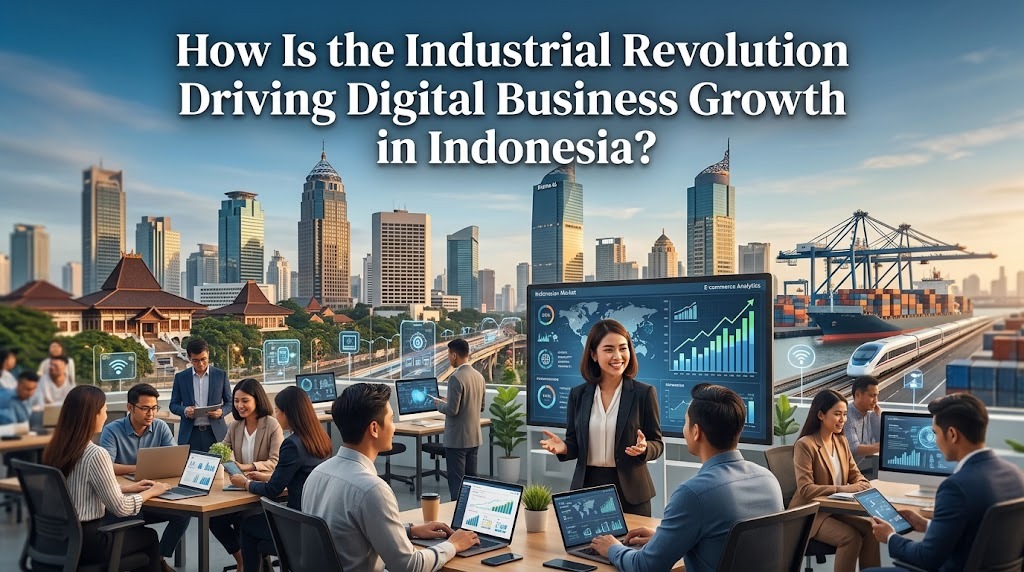
The Industrial Revolution has played an important role in transforming business activities in Indonesia, particularly through the development of digital technology and internet-based services. Businesses that once depended mainly on physical stores and traditional transactions can now reach customers through e-commerce platforms, social media, and digital payment systems. The development of Industry 4.0 has accelerated this transformation by introducing automation, data analytics, artificial intelligence, and connected technologies into business operations. These innovations create opportunities for companies to improve efficiency, expand their markets, and develop new products and services. However, businesses must also address challenges such as digital inequality, cybersecurity risks, and limited technological skills to achieve sustainable growth.
THE DEVELOPMENT OF DIGITAL BUSINESS IN INDONESIA
Digital business in Indonesia has grown alongside increasing internet access, smartphone adoption, and the expansion of online services. Consumers can now compare products, communicate with sellers, and complete transactions without visiting physical stores. Businesses have responded by using online marketplaces, mobile applications, and social media to promote and sell their products. This shift has created new opportunities for entrepreneurs to reach customers across different cities and regions.
The growth of digital business is also changing how companies organize their operations. Business owners can use digital accounting tools, inventory management systems, and online customer service platforms to handle daily activities more efficiently. These technologies reduce dependence on manual processes and make it easier to monitor business performance. Digital transformation enables businesses to respond more quickly to customer preferences and market changes. As a result, digital capabilities have become increasingly important for companies seeking to remain competitive in Indonesia's evolving economy.
THE ROLE OF E-COMMERCE AND DIGITAL PAYMENTS
E-commerce has become an important part of Indonesia's digital business development. Online marketplaces allow businesses to display products, manage orders, and reach customers beyond their immediate locations. Small and medium-sized enterprises can use these platforms to introduce local products to wider markets without necessarily establishing physical branches in every area. Online selling also provides opportunities for entrepreneurs who want to test new products and business ideas with relatively flexible operating models.
Digital payment systems further support this development by making transactions more convenient. Customers can pay through mobile banking, electronic wallets, and QR-based payment methods, including Indonesia's Quick Response Code Indonesian Standard (QRIS). These options can simplify the payment process for both businesses and consumers. Digital transaction records may also help business owners monitor revenue and manage finances more systematically. However, businesses must understand transaction fees, protect customer information, and maintain alternative payment arrangements when technical problems occur.
ARTIFICIAL INTELLIGENCE AND BUSINESS AUTOMATION
Artificial intelligence (AI) and automation are creating new opportunities for Indonesian businesses to improve their operations. Companies can use AI-powered tools to analyze customer preferences, generate marketing ideas, answer common questions, and support demand forecasting. For example, an online retailer can examine sales patterns to identify popular products and plan inventory more effectively. These capabilities help businesses make decisions using data rather than relying entirely on assumptions.
Automation can also reduce the time needed for repetitive administrative activities. Digital systems can organize invoices, send order notifications, update inventory records, and manage certain customer service tasks. This allows employees to focus more on activities that require creativity, negotiation, and personal interaction. Nevertheless, AI-generated information should be checked for accuracy, and sensitive business data should be handled carefully. Responsible AI adoption requires appropriate human supervision, employee training, and clear rules for data privacy and security.
OPPORTUNITIES FOR SMALL AND MEDIUM-SIZED ENTERPRISES
Small and medium-sized enterprises, commonly known as SMEs, can benefit significantly from Indonesia's digital transformation. Digital platforms help local businesses promote traditional crafts, food products, fashion, agricultural goods, and other offerings to broader audiences. Entrepreneurs can also use social media to communicate directly with customers and build stronger relationships. Compared with opening multiple physical outlets, online channels may offer a more flexible way to test new markets, although they still involve operating and promotional costs.
Digital technology can also improve the management of small businesses. Cloud-based accounting applications, digital payment tools, and inventory systems help owners organize financial records and track business activities. Online training programs can introduce entrepreneurs to digital marketing, product photography, customer service, and basic cybersecurity. However, successful digitalization requires more than creating an online account. Product quality, reliable delivery, competitive pricing, and customer trust remain essential for building a sustainable business. SMEs that combine these strengths with effective digital tools can improve their ability to compete in an increasingly connected marketplace.
CHALLENGES OF DIGITAL BUSINESS GROWTH IN INDONESIA
Despite its potential, digital business development in Indonesia faces several challenges. Internet access, infrastructure quality, and digital literacy differ across regions, which can limit the ability of some entrepreneurs to participate fully in the digital economy. Businesses in less-connected areas may experience difficulties managing online orders, accessing digital training, or communicating reliably with customers. Smaller companies may also lack the financial resources needed to adopt advanced software and maintain secure digital systems.
Cybersecurity and intense market competition create additional concerns. Online businesses can face phishing attempts, fraudulent transactions, account theft, and unauthorized access to customer information. At the same time, sellers may compete with many other businesses offering similar products on the same platforms. To address these issues, companies should strengthen account security, train employees, protect customer data, and evaluate the costs and benefits of new technology. Collaboration between businesses, educational institutions, technology providers, and government agencies can also support digital skills development and broader access to reliable infrastructure.
KESIMPULAN
The Industrial Revolution is driving digital business growth in Indonesia through e-commerce, digital payments, artificial intelligence, and business automation. These technologies help companies improve efficiency, reach wider markets, and develop new ways to serve customers. Small and medium-sized enterprises can benefit by adopting affordable digital tools and strengthening their online presence. However, digital inequality, cybersecurity risks, and limited technical skills remain important challenges. By investing in digital literacy, protecting customer information, and adopting technology according to their needs, Indonesian businesses can build stronger foundations for sustainable growth in the digital economy.
Recent Posts

Bagaimana Sistem SKS pada Program Kuliah... 22.11.2026/50 View

How Does Technology Make Daily Evaluation... 21.11.2026/80 View

Apa Strategi Menghadapi Kesenjangan antara Kompetensi... 21.11.2026/79 View

Mengapa Inventaris Aset Penting bagi Kelancaran... 21.11.2026/75 View

When Should Musicians Join a Record... 21.11.2026/80 View
