

How Is the State Budget Prepared Every Year in Indonesia?
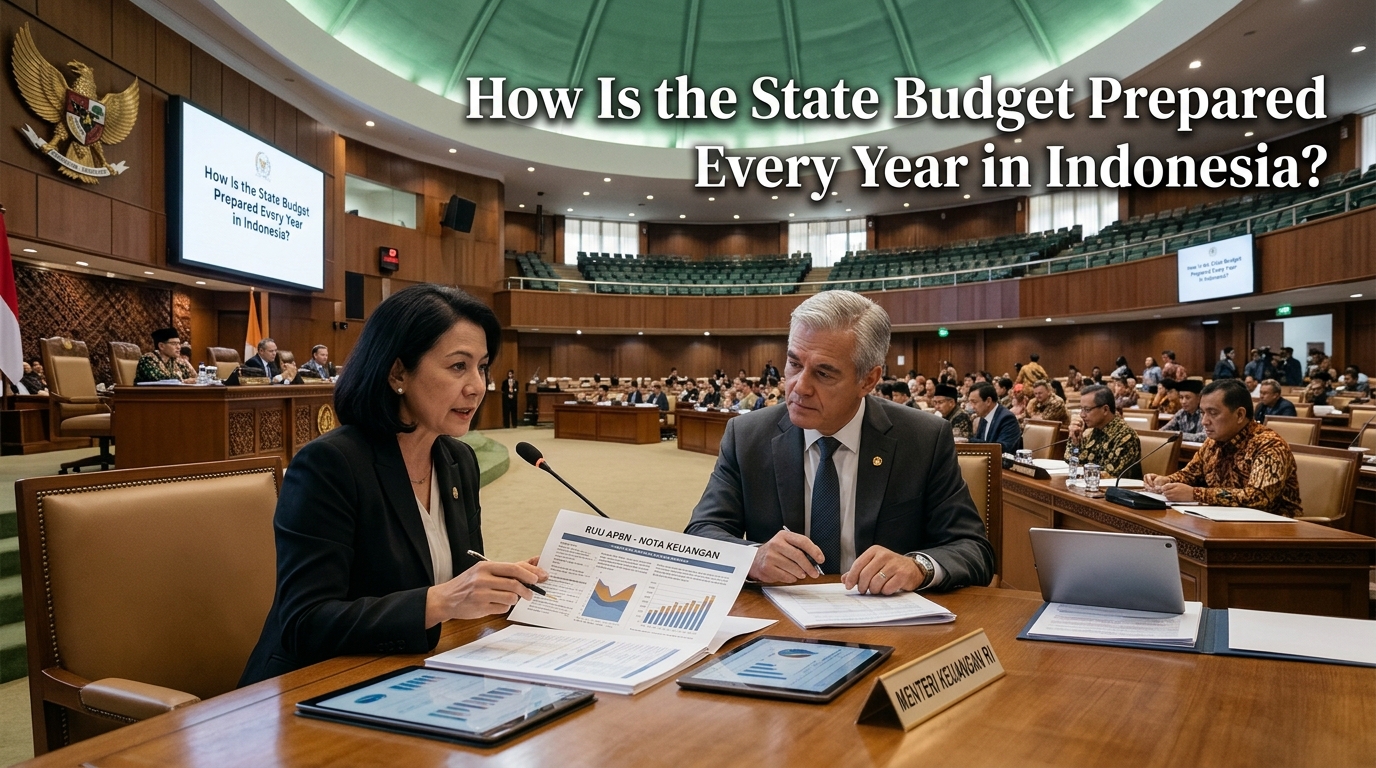
The state budget, known in Indonesia as the Anggaran Pendapatan dan Belanja Negara (APBN), is an annual financial plan that determines how the government collects revenue and spends public money. It supports national development, public services, infrastructure, education, healthcare, and social assistance. Preparing the APBN requires coordination between the government and the House of Representatives (DPR) to ensure that financial decisions reflect national priorities. The process follows a legal framework and includes planning, discussion, approval, implementation, and evaluation. Understanding how Indonesia prepares its state budget every year helps citizens see how public funds are managed and why transparency is essential.
WHAT IS THE STATE BUDGET IN INDONESIA?
The APBN is Indonesia's annual state budget, which records planned government revenue, expenditure, and financing. It serves as a financial guide for the central government during a particular fiscal year, which runs from January 1 to December 31. Government revenue mainly comes from taxes, non-tax state revenue, and grants. Expenditure covers areas such as education, healthcare, infrastructure, public administration, and social protection. If revenue and expenditure do not balance, the government may use financing mechanisms, including borrowing, in accordance with applicable laws.
The APBN also reflects the government's economic and development priorities. For example, the budget may support economic growth, poverty reduction, better public services, and improvements in regional connectivity. It helps ministries and government institutions determine how much money is available for their programs. The budget also provides a basis for monitoring public spending and evaluating government performance. Therefore, the APBN is both a financial plan and an important policy instrument for Indonesia's national development.
HOW DOES THE GOVERNMENT START PREPARING THE STATE BUDGET?
The preparation of Indonesia's state budget begins with the establishment of national development priorities by the President. These priorities are translated into the Government Work Plan (Rencana Kerja Pemerintah or RKP), which outlines the programs and development targets for the following year. The government also prepares the Macroeconomic Framework and Fiscal Policy Principles (Kerangka Ekonomi Makro dan Pokok-Pokok Kebijakan Fiskal or KEM-PPKF). These documents provide guidance on economic conditions, revenue expectations, spending policies, and fiscal targets. The Ministry of Finance and the Ministry of National Development Planning, known as Bappenas, coordinate to align financial plans with national development objectives.
DJPB Kemenkeu+1
During this stage, the government considers factors such as economic growth, inflation, exchange rates, commodity prices, and tax revenue. These factors influence how much money the state can collect and how much it can spend. The government also reviews the previous year's budget to identify successful programs and areas that need improvement. This information helps officials determine realistic spending limits for ministries and government institutions. Careful initial planning provides a strong foundation for preparing the next year's APBN.
HOW DO MINISTRIES AND GOVERNMENT INSTITUTIONS PROPOSE THEIR BUDGETS?
After the government establishes its priorities and preliminary financial limits, each ministry and government institution prepares a proposed budget. These proposals are presented in a document called the Work Plan and Budget of Ministries or Institutions (Rencana Kerja dan Anggaran Kementerian Negara/Lembaga or RKA-K/L). Each institution identifies the programs it wants to implement, the funding required, and the results it expects to achieve. For example, the Ministry of Education may propose funding for school facilities, educational programs, and learning improvements. The proposals must align with national priorities and demonstrate how public spending will support measurable development targets.
JDIH Kemenkeu+1
The Ministry of Finance reviews these proposals to ensure that the requested funds are reasonable and consistent with available resources. Bappenas helps assess whether the proposed programs support national development plans. Government institutions may need to revise their proposals if the costs are too high or the objectives are unclear. This review process helps prevent overlapping programs and unnecessary expenditure. As a result, budget coordination and performance-based planning help improve the efficiency of government spending.
HOW IS THE DRAFT STATE BUDGET DISCUSSED WITH THE DPR?
Once the government has developed the draft budget, it prepares the Draft State Budget (Rancangan Anggaran Pendapatan dan Belanja Negara or RAPBN), accompanied by a Financial Note and supporting documents. The President submits the proposal to the House of Representatives (DPR) for discussion and approval. Under Indonesia's state finance framework, the draft APBN is submitted to the DPR in August of the preceding year. During the discussions, lawmakers examine the government's revenue projections, spending priorities, and financing plans. They may raise questions, provide recommendations, and propose changes through the applicable legislative procedures.
JDIH Kemenkeu+1
The DPR discusses the proposal with the government through its Budget Committee and relevant commissions. These discussions help ensure that budget allocations are justified and reflect public needs and national priorities. The government must explain its proposed policies and respond to questions raised during the process. After the discussions are completed, the DPR makes a decision on whether to approve the draft budget. Legislative review is essential because it strengthens oversight and ensures that the state budget follows Indonesia's legal and constitutional framework.
WHEN IS THE STATE BUDGET APPROVED AND IMPLEMENTED?
After the DPR approves the draft APBN, it is established as the State Budget Law for the relevant fiscal year. This approval provides the legal basis for the government to collect revenue and carry out authorized spending. The Ministry of Finance then finalizes detailed budget allocations for ministries and government institutions. These allocations are reflected in the Budget Implementation List (Daftar Isian Pelaksanaan Anggaran or DIPA), which serves as an operational basis for implementing authorized programs. Government institutions can then carry out their activities according to the approved allocations and applicable financial regulations.
JDIH Kemenkeu+1
The fiscal year begins on January 1 and ends on December 31. During this period, government institutions use their allocated funds to deliver public services and implement development programs. The Ministry of Finance monitors budget execution, while internal and external oversight mechanisms help ensure that public money is used appropriately. If economic conditions change significantly, adjustments may be necessary under the relevant laws and procedures. Timely implementation and financial monitoring help the government maintain services and achieve its annual targets.
HOW DOES THE GOVERNMENT EVALUATE THE STATE BUDGET?
Budget evaluation is an important stage in determining whether government spending has achieved its intended objectives. The government compares actual revenue and expenditure with the targets established in the approved APBN. This comparison helps identify differences between planned and actual financial performance. For example, lower-than-expected tax revenue may require the government to reassess its financing position or spending plans. Evaluation also examines whether government programs have delivered the expected results for citizens.
Financial reporting and auditing support transparency and accountability throughout the process. Government institutions prepare financial reports, while the Audit Board of Indonesia (BPK) examines state financial management and accountability in accordance with its authority. The findings can reveal weaknesses, irregularities, or opportunities to improve public spending. The government can then use these lessons to strengthen the preparation of the next year's budget. Regular evaluation and independent auditing help ensure that public funds are managed responsibly and that future budgets become more effective.
Anggaran Kemenkeu+1
WHY IS THE ANNUAL STATE BUDGET PROCESS IMPORTANT FOR INDONESIA?
The annual state budget process is important because it helps Indonesia distribute public resources according to national needs and development priorities. It provides funding for education, healthcare, infrastructure, social assistance, and other essential services. Careful financial planning also helps the government maintain fiscal discipline and respond to economic challenges. Cooperation between the government and the DPR strengthens the review of public spending decisions. Meanwhile, transparent reporting allows citizens to understand how public money is collected and used.
An effective APBN can support economic growth, poverty reduction, job creation, and improved public welfare. However, these benefits depend on realistic revenue forecasts, appropriate spending priorities, and effective implementation. The government must also manage borrowing carefully to maintain sustainable public finances. Continuous evaluation helps identify programs that need improvement and encourages better use of limited resources. Therefore, a well-prepared annual budget is essential for Indonesia's long-term development and financial stability.
CONCLUSION
Indonesia prepares its state budget every year through a structured process involving national planning, revenue forecasting, budget proposals, discussions with the DPR, legal approval, implementation, and evaluation. The Ministry of Finance and Bappenas play important roles in coordinating financial planning and development priorities, while the DPR reviews and approves the proposed budget. Once approved, the APBN guides government spending throughout the fiscal year. Monitoring, reporting, and auditing help ensure that public funds are used responsibly. Ultimately, transparent and effective state budget preparation supports national development, strengthens public accountability, and improves the welfare of Indonesian citizens.
Recent Posts

Bagaimana Sistem SKS pada Program Kuliah... 22.11.2026/47 View

How Does Technology Make Daily Evaluation... 21.11.2026/75 View

Apa Strategi Menghadapi Kesenjangan antara Kompetensi... 21.11.2026/76 View

Mengapa Inventaris Aset Penting bagi Kelancaran... 21.11.2026/73 View

When Should Musicians Join a Record... 21.11.2026/77 View
