

How Long Does It Take to Complete a Thesis Revision?
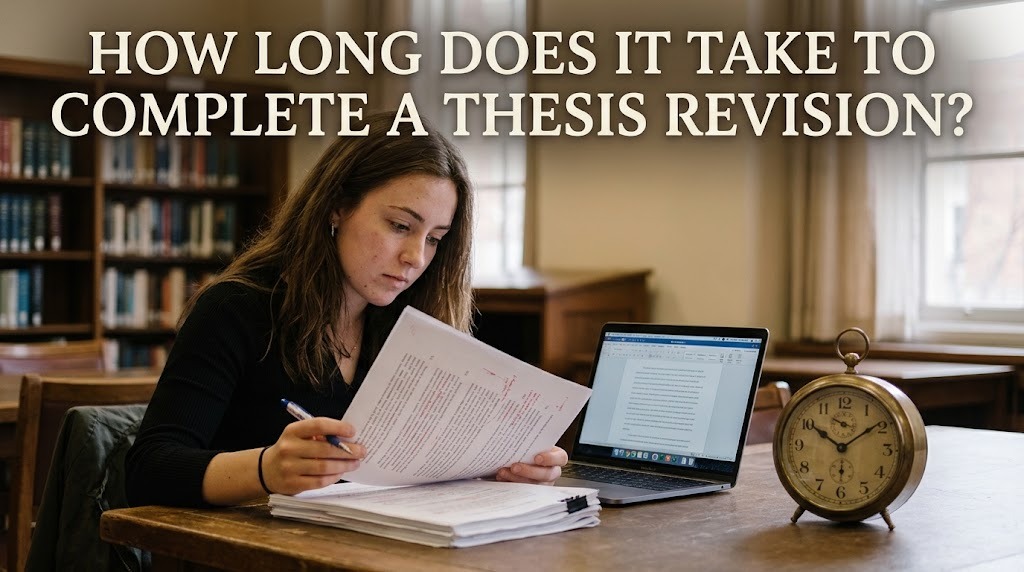
Completing a thesis revision can take different amounts of time depending on the number of corrections, the complexity of the research, and the requirements set by supervisors or examiners. Some students may only need to make minor adjustments to grammar, formatting, or references, while others may have to revise research methods, data analysis, or entire chapters. These differences make it difficult to establish one fixed timeline for every student.
Understanding how long thesis revision takes can help students prepare a realistic schedule and manage their academic responsibilities. The process is influenced not only by the amount of work involved but also by how quickly students understand feedback, complete corrections, and receive approval. With proper planning, students can estimate the time needed and make steady progress toward final submission.
THE TYPE AND COMPLEXITY OF REQUIRED REVISIONS
One of the main factors affecting thesis revision duration is the type of correction requested. Minor revisions usually require less time because they involve relatively small changes, such as correcting spelling, improving sentence structure, adjusting formatting, or completing references. Students may be able to finish these tasks within a few days, depending on the number of corrections and their availability.
Major revisions generally take longer because they may involve changes to research arguments, theoretical frameworks, methodology, or data interpretation. Students might need to review academic sources, conduct additional analysis, or reorganize several sections. In some situations, they may also need to collect supplementary information if the research process requires it. Therefore, the more complex the requested changes, the more time students may need to complete their thesis corrections properly.
THE NUMBER OF COMMENTS FROM SUPERVISORS AND EXAMINERS
The number of comments provided by supervisors and examiners can also influence the time required for revision. A thesis with only a few corrections may be easier to manage than one containing detailed feedback across multiple chapters. However, the number of comments does not always determine the difficulty because one substantial correction may require more work than several simple adjustments.
Students should review all comments and group them according to the relevant sections. This makes it easier to estimate the time needed for each task and identify corrections that depend on one another. For example, changes to research objectives may require adjustments to the methodology and conclusion. Organizing feedback into a checklist can help students manage multiple thesis revisions without overlooking important details.
STUDENTS' TIME MANAGEMENT AND WORKING HABITS
A student's ability to manage time is another important factor in determining how quickly revisions can be completed. Students who establish a consistent schedule and work toward realistic daily targets may find it easier to maintain progress. On the other hand, delaying corrections or attempting to complete everything shortly before the deadline can make the process more difficult.
Other responsibilities may also affect the revision timeline. Students who are attending classes, working, completing internships, or handling personal commitments may have fewer hours available for thesis work. To manage these conditions, students can divide large corrections into smaller tasks and assign specific time blocks to each one. Effective time management during thesis revision helps students use their available time more efficiently while maintaining the quality of their work.
SUPERVISOR AVAILABILITY AND THE APPROVAL PROCESS
The revision timeline does not depend entirely on students. Supervisor availability and the university's academic procedures can also affect the overall process. After submitting a revised chapter or complete document, students may need to wait for their supervisor to review the changes and provide further feedback. If additional corrections are requested, the process may involve several rounds of review.
Approval procedures can also differ between universities and study programs. Some institutions require students to obtain confirmation from multiple examiners, complete administrative documents, or submit the final thesis through a designated academic system. Because of these differences, students should understand the applicable thesis approval process and communicate with the relevant academic staff about deadlines and submission requirements.
HOW STUDENTS CAN ESTIMATE AND PLAN THE REVISION TIMELINE
Students can estimate their revision timeline by identifying the number and complexity of corrections before creating a schedule. Start by listing every comment, determining which tasks are simple or substantial, and estimating how much time each one may require. It is also useful to consider whether a correction depends on another task, such as revising the research background before adjusting the research objectives.
After creating the schedule, reserve additional time for proofreading, supervisor feedback, and possible follow-up corrections. Students should avoid planning to finish everything on the final submission date because unexpected changes or review delays may occur. A flexible thesis revision schedule provides room for adjustments and helps students monitor their progress. Regularly checking completed tasks also makes it easier to identify delays and revise the plan when necessary.
CONCLUSION
The time required to complete a thesis revision depends on several factors, including the complexity of corrections, the number of comments, student time management, supervisor availability, and university approval procedures. Minor revisions may take only a few days, while more substantial changes can require several weeks or longer. These time estimates are not fixed because every thesis has different academic requirements and research conditions.
Students can manage the process more effectively by organizing feedback, setting realistic targets, communicating with supervisors, and allowing enough time for final review. Rather than focusing only on completing revisions quickly, students should prioritize accuracy and academic quality. With careful planning, they can make consistent progress and prepare their final thesis according to the required deadline.
Recent Posts

Bagaimana Sistem SKS pada Program Kuliah... 22.11.2026/47 View

How Does Technology Make Daily Evaluation... 21.11.2026/74 View

Apa Strategi Menghadapi Kesenjangan antara Kompetensi... 21.11.2026/75 View

Mengapa Inventaris Aset Penting bagi Kelancaran... 21.11.2026/72 View

When Should Musicians Join a Record... 21.11.2026/75 View
