

How Long Does the Lecturer Certification Process Take?
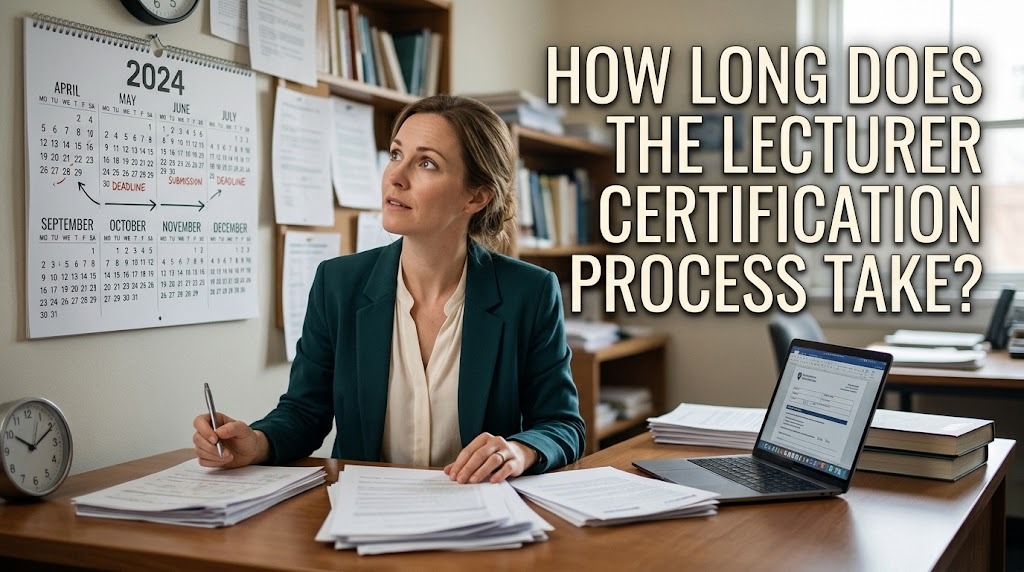
The lecturer certification process involves several stages, including eligibility verification, document preparation, registration, assessment, and the announcement of results. Each stage requires time to ensure that applicants meet the applicable professional standards. For lecturers in Indonesia, the total duration can vary depending on the certification program, administrative procedures, and schedule established by the relevant authorities.
There is no single processing time that applies to every lecturer certification application. Some applicants may complete the process within a scheduled certification period, while others may need to wait longer because of document corrections, institutional verification, or assessment arrangements. Understanding the factors that influence the timeline can help lecturers prepare more effectively.
UNDERSTANDING THE STAGES OF LECTURER CERTIFICATION
The duration of lecturer certification depends partly on the number of stages that applicants must complete. The process generally begins with checking eligibility and confirming that the lecturer's academic and employment information meets the required conditions. After that, eligible applicants may proceed with registration and the submission of supporting documents.
The next stages can involve administrative verification and professional assessment. Each stage must be completed according to the applicable guidelines before an application can move forward. Because the process involves several parties, including universities and relevant higher education authorities, the time required may differ between certification periods.
ADMINISTRATIVE VERIFICATION CAN AFFECT THE TIMELINE
One factor that can influence how long lecturer certification takes is administrative verification. Universities and relevant authorities may need to check academic qualifications, employment status, lecturer registration, and other supporting information. If all records are complete and consistent, the verification process may proceed without additional corrections.
However, differences between documents and institutional data can create delays. Applicants may need to update information, provide missing files, or request confirmation from their university. Preparing documents carefully before registration can help reduce avoidable administrative problems and make the process more organized.
ASSESSMENT SCHEDULES DETERMINE THE NEXT STAGE
After administrative requirements are fulfilled, lecturers must follow the assessment schedule established for the relevant certification program. Lecturer certification assessment may involve evaluating professional performance, academic activities, teaching competence, or other criteria specified in the official guidelines.
The schedule depends on the number of applicants, institutional readiness, assessment arrangements, and the policies applied during that period. As a result, applicants from different institutions or registration periods may not receive their results at the same time. Lecturers should follow official announcements rather than relying on estimated timelines from previous certification periods.
DOCUMENT CORRECTIONS AND ADDITIONAL REQUIREMENTS MAY CAUSE DELAYS
Incomplete or inaccurate documents can extend the lecturer certification process. For example, applicants may need to correct personal information, update academic records, or provide additional evidence of professional activities. These corrections can require coordination between the lecturer and the university administration.
Additional requirements may also apply depending on the certification program. Some applicants may need to complete specific activities or follow further instructions before their applications can be evaluated. Checking the official guidelines and reviewing all submitted information can help lecturers avoid unnecessary delays.
HOW LECTURERS CAN MONITOR THE CERTIFICATION PROCESS
Lecturers can monitor their certification application status through the official channels provided by their universities and the relevant government authorities. They should pay attention to announcements about registration, verification results, assessment schedules, and certification outcomes. Maintaining communication with the university's academic administration can also help applicants understand whether further action is required.
It is important to use current information because certification schedules and procedures may change between periods. Lecturers should keep copies of submitted documents and follow any instructions provided by authorized institutions. If an application is delayed, contacting the appropriate administrative office is more reliable than assuming that the process follows a fixed duration.
CONCLUSION
The lecturer certification process does not have one fixed duration for every applicant. Its timeline depends on eligibility verification, document completeness, assessment schedules, administrative coordination, and the regulations applied during the relevant certification period. These factors explain why some lecturers may complete the process sooner than others.
To avoid unnecessary delays, lecturers should prepare their documents carefully, maintain accurate academic records, and monitor official announcements. They should also confirm the current schedule with their universities or the relevant higher education authorities. By understanding each stage, applicants can follow the professional certification process with clearer expectations and better preparation.
Recent Posts

Bagaimana Sistem SKS pada Program Kuliah... 22.11.2026/45 View

How Does Technology Make Daily Evaluation... 21.11.2026/73 View

Apa Strategi Menghadapi Kesenjangan antara Kompetensi... 21.11.2026/75 View

Mengapa Inventaris Aset Penting bagi Kelancaran... 21.11.2026/71 View

When Should Musicians Join a Record... 21.11.2026/75 View
