

How Much Daily Radiation Exposure Is Still Safe for You?
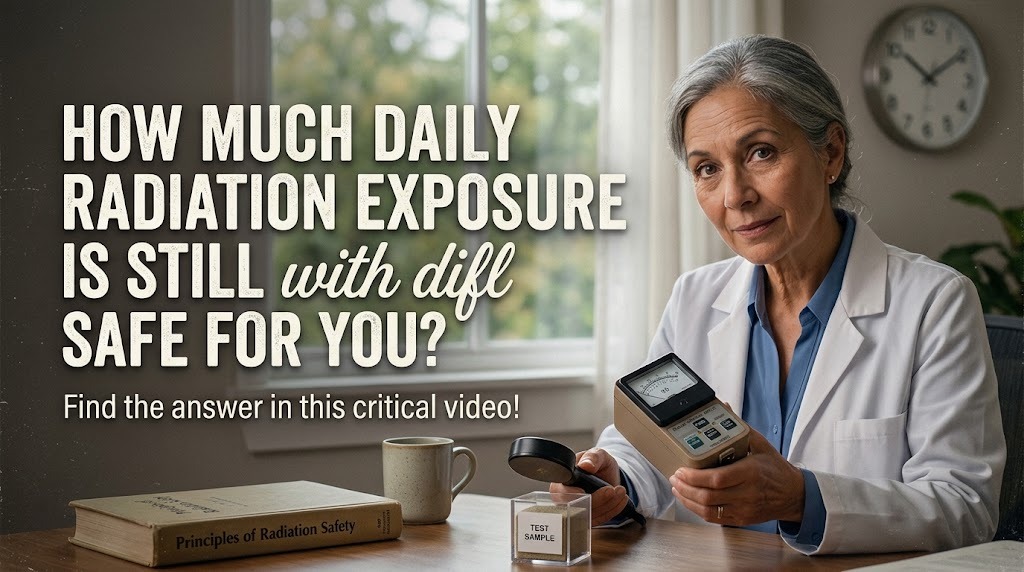
Every single day, humans are exposed to small amounts of natural background radiation from the environment. This radiation comes from cosmic rays entering Earth's atmosphere, as well as naturally occurring radioactive minerals found in soil, rocks, water, and food.
Globally, the average natural background radiation exposure is about 2.4 millisieverts (mSv) per year, which translates to roughly 0.0066 mSv per day. Human bodies have naturally evolved alongside this ambient radiation, meaning our cells possess built-in repair systems to easily manage and repair any mild biological impact from these daily natural levels.
OCCUPATIONAL RADIATION SAFETY LIMITS
For people who work around radiation—such as radiographers, nuclear plant technicians, and specialized researchers—international scientific bodies set strict annual exposure limits. The internationally recognized safety limit for occupational exposure is 20 mSv per year, averaged over five years, with no single year exceeding 50 mSv.
When converted to a daily routine, worker exposure is kept well below an average of 0.05 mSv per day. Health monitoring agencies require radiation workers to wear dosimeter badges that continuously track their cumulative dose, ensuring that no worker exceeds safe operational thresholds.
RADIATION FROM MEDICAL PROCEDURES
Medical imaging procedures contribute to human radiation exposure, but these doses are administered selectively and safely. For example, a standard chest X-ray delivers about 0.1 mSv, which is equivalent to roughly 10 to 15 days of normal natural background radiation.
More detailed procedures, such as a full abdominal CT scan, deliver a higher dose of around 10 mSv, equal to several years of background radiation. Because these procedures are performed only as needed, the immediate diagnostic benefits far outweigh the minor, infrequent radiation exposure.
ACUTE VS CUMULATIVE DOSES
A critical factor in radiation safety is whether energy is absorbed all at once or gradually over a long period. Receiving a dose of 100 mSv accumulated slowly over a lifetime poses no measurable immediate health risk because the body continuously repairs biological tissue.
In contrast, receiving an acute dose of 1,000 mSv (1 Sv) all at once can cause temporary radiation sickness, such as nausea and lowered blood counts. This difference highlights why regular daily exposure at low levels is completely safe and manageable for the body.
DAILY SAFETY RECOMMENDATIONS AND LIMITS
For the general public, regulatory bodies recommend keeping non-medical, man-made radiation exposure below 1 mSv per year above natural background levels. This standard translates to an additional daily safe limit of approximately 0.0027 mSv per day.
By keeping artificial public exposures far below natural background levels, regulatory agencies ensure that everyday life remains entirely safe from harmful radiation risks. Consumers do not need to worry about routine daily exposure from smartphones, Wi-Fi, or ambient sunlight.
CONCLUSION
In conclusion, daily radiation exposure is safe as long as it remains within natural background and regulatory limits. Our bodies easily adapt to an average natural daily exposure of roughly 0.0066 mSv per day, supported by healthy cellular repair mechanisms.
Whether through natural sources, occupational monitoring, or diagnostic medical care, radiation exposure is closely regulated worldwide. Understanding safe dosage levels empowers individuals to navigate technology and medicine confidently and safely.
Recent Posts

Bagaimana Sistem SKS pada Program Kuliah... 22.11.2026/53 View

How Does Technology Make Daily Evaluation... 21.11.2026/82 View

Apa Strategi Menghadapi Kesenjangan antara Kompetensi... 21.11.2026/81 View

Mengapa Inventaris Aset Penting bagi Kelancaran... 21.11.2026/77 View

When Should Musicians Join a Record... 21.11.2026/82 View
