

How Should Companies Handle Reputation-Damaging Controversies?
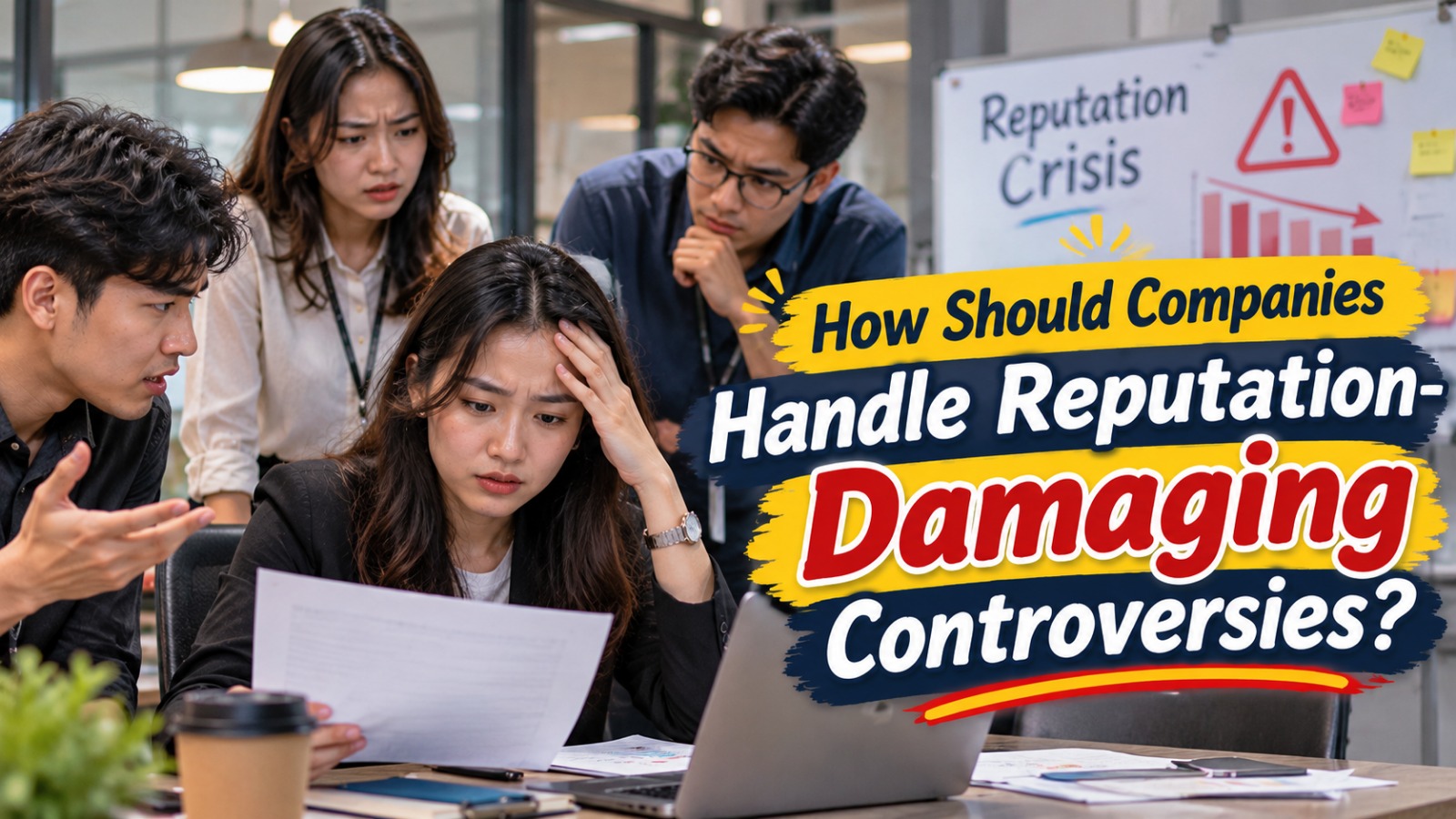
Reputation-damaging controversies can create serious challenges for companies by weakening public trust, attracting negative attention, and affecting relationships with customers, employees, investors, and business partners. These situations may arise from unethical decisions, misleading advertisements, product failures, employee misconduct, data privacy issues, or insensitive public statements. In the digital era, controversial information can spread rapidly through social media and online news platforms.
How a company responds to a controversy can influence the extent of its reputational damage. Ignoring public concerns, providing unclear explanations, or shifting blame may increase criticism. Companies need a structured response that prioritizes accurate information, accountability, and meaningful corrective action. Handling controversies responsibly can help organizations manage the immediate situation and protect their long-term credibility.
ASSESS THE CONTROVERSY BEFORE RESPONDING
The first step is understanding what happened and how the situation affects different stakeholders. Companies should collect relevant information, examine available evidence, and identify the individuals or groups involved.
Management should distinguish verified facts from rumors, assumptions, and misleading claims. This assessment helps prevent rushed statements that could create additional problems. It also allows the company to determine whether the controversy involves a communication mistake, operational failure, ethical violation, or more serious organizational issue.
RESPOND QUICKLY WITH ACCURATE INFORMATION
Timely communication is important when a controversy begins attracting public attention. If a company remains silent for too long, customers and other stakeholders may rely on incomplete information or speculation.
However, responding quickly should not mean publishing unverified explanations. Companies should communicate what is known, acknowledge any uncertainty, and explain when further updates will be provided. Clear and accurate information helps reduce confusion while demonstrating that the organization is taking the situation seriously.
TAKE RESPONSIBILITY FOR COMPANY ACTIONS
When a controversy results from the company's decisions or behavior, management should accept responsibility rather than automatically blaming external factors. Attempting to avoid accountability can make stakeholders question the organization's integrity.
Taking responsibility involves recognizing the impact of the problem and explaining what the company intends to do about it. For example, if misleading product information has affected customers, the company should correct the information and provide appropriate assistance. Accountability demonstrates a willingness to address the consequences of business decisions.
PROVIDE A SINCERE PUBLIC STATEMENT
A public statement can help clarify the company's position and communicate its response to stakeholders. It should explain the relevant facts, acknowledge legitimate concerns, and outline the next steps being taken.
If the company has caused harm or disappointment, a sincere apology may also be necessary. The statement should avoid defensive language, unsupported promises, and attempts to minimize the issue. Most importantly, public communication must be consistent with the company's actual actions.
PROTECT AFFECTED CUSTOMERS AND STAKEHOLDERS
Companies should identify who has been affected by the controversy and determine what assistance they need. Depending on the situation, affected customers may require refunds, product replacements, corrected information, or additional support.
If employees, suppliers, or business partners are involved, the company should communicate with them through appropriate channels. Providing relevant assistance demonstrates that the organization prioritizes the people affected rather than focusing exclusively on its public image.
USE SOCIAL MEDIA RESPONSIBLY
Social media can intensify controversies because users can quickly share opinions, complaints, screenshots, and videos. Companies should monitor relevant discussions to understand public concerns and identify inaccurate information that requires clarification.
Responses should remain professional and respectful, even when criticism becomes difficult to manage. Businesses should avoid arguing with users, publishing private information, or deleting legitimate criticism simply to improve their online appearance. Official accounts should provide consistent updates and direct sensitive cases to appropriate support channels.
INVESTIGATE THE ROOT CAUSE
Resolving the immediate controversy is not enough if the underlying problem remains. Companies should conduct an appropriate investigation to determine why the incident occurred and whether internal procedures contributed to it.
For example, repeated employee misconduct may indicate weaknesses in supervision, training, or organizational policies. A product safety issue may require a review of quality control and supplier management. Identifying the root cause allows the company to develop corrective measures that reduce the risk of similar incidents.
IMPLEMENT CORRECTIVE ACTIONS
Stakeholders need to see evidence that the company is making meaningful improvements. Corrective actions should directly address the problem and include clear responsibilities, realistic deadlines, and measurable outcomes.
Depending on the controversy, improvements may involve revising company policies, strengthening employee training, improving product inspections, changing management procedures, or enhancing data protection. Businesses should communicate relevant progress without exaggerating the results. Demonstrable changes are more valuable than repeated promises.
MAINTAIN TRANSPARENT COMMUNICATION
Transparency helps companies explain their decisions and demonstrate accountability throughout the recovery process. Stakeholders should receive relevant information about the investigation, corrective measures, and developments that affect them.
Companies do not need to disclose confidential employee records, private customer information, or sensitive investigation details. Instead, they should share accurate information that can reasonably be made public while respecting legal and privacy obligations. This balance helps maintain credibility without creating additional risks.
MONITOR PUBLIC RESPONSE AND REPUTATION
After taking corrective action, companies should evaluate how stakeholders respond. Online reviews, social media discussions, customer surveys, media coverage, and complaint records can provide useful insights into changing public perceptions.
Management should also monitor practical indicators such as customer retention, complaint resolution times, and recurring service problems. These measurements help determine whether the company's response is improving customer experiences or whether further action is needed.
PREVENT SIMILAR CONTROVERSIES IN THE FUTURE
A controversy should encourage companies to strengthen their internal systems and improve risk management. Organizations can review ethical guidelines, communication procedures, employee responsibilities, and crisis response plans.
Regular training can help employees understand appropriate conduct and recognize situations that may create reputational risks. Companies should also establish clear reporting channels so potential problems can be identified before they become larger controversies. Prevention requires continuous attention to organizational behavior, not just preparation for public criticism.
CONCLUSION
Companies should handle reputation-damaging controversies through careful investigation, timely communication, accountability, and meaningful corrective action. Protecting affected stakeholders and responding professionally on social media are also important steps in managing the situation.
A company's reputation cannot be restored through public statements alone. It must be supported by consistent improvements and responsible behavior. By addressing the causes of controversies and preventing similar incidents, businesses can gradually rebuild public confidence and strengthen their long-term credibility.
Recent Posts

How Does Technology Make Daily Evaluation... 21.11.2026/63 View

Apa Strategi Menghadapi Kesenjangan antara Kompetensi... 21.11.2026/64 View

Mengapa Inventaris Aset Penting bagi Kelancaran... 21.11.2026/60 View

When Should Musicians Join a Record... 21.11.2026/59 View

Daily Evaluation or Daily Planning Which... 21.11.2026/67 View
