

How Should Employees Prepare A Report After Completing A Business Trip?
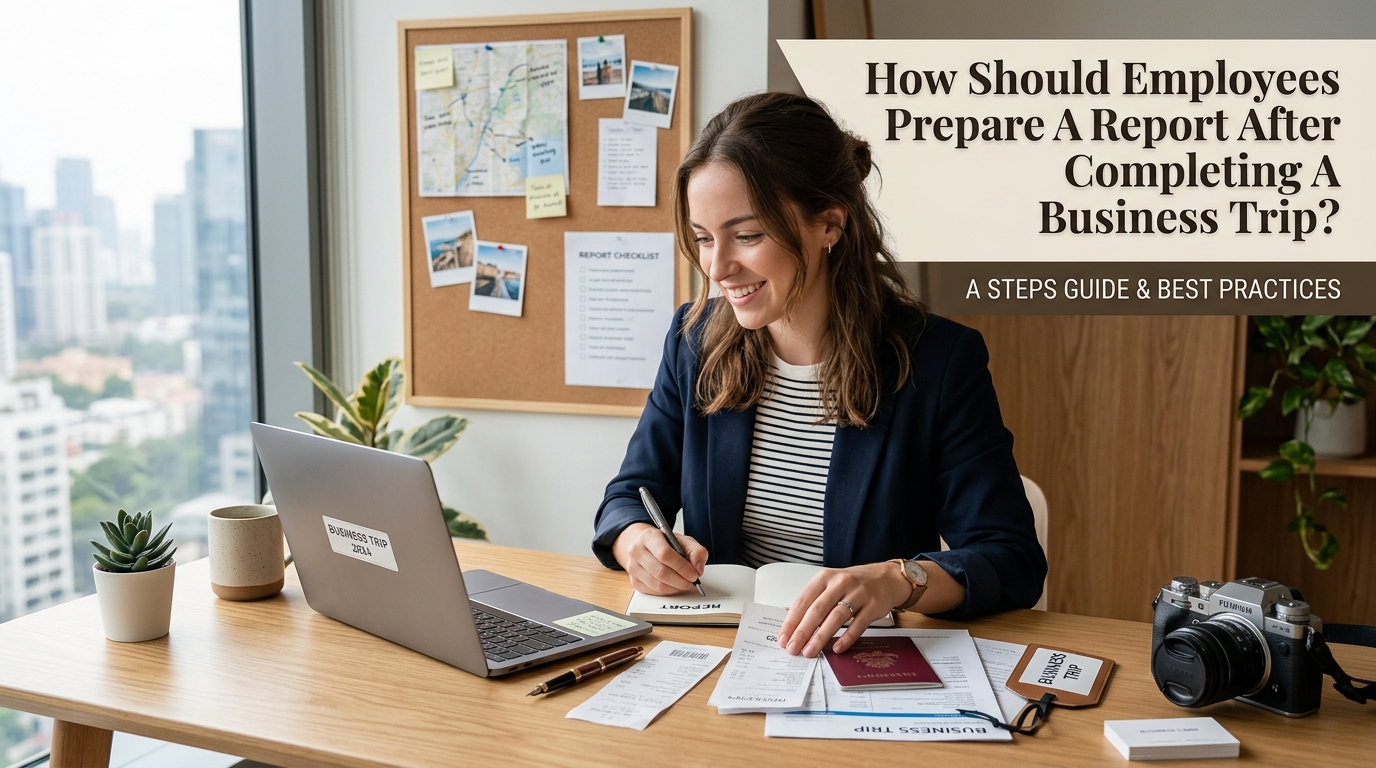
Preparing a report after completing a business trip is an important responsibility for employees. The report helps the company understand the activities completed, the results achieved, the expenses incurred, and any challenges encountered during the journey. It also provides useful information for evaluating business decisions and planning future trips. A well-prepared report should be clear, accurate, organized, and relevant to the purpose of the trip. By documenting important findings and outcomes, employees can demonstrate accountability and help their company make better decisions.
REVIEW THE PURPOSE AND OBJECTIVES OF THE TRIP
Before writing the report, employees should review the original purpose of the business trip. They need to identify the main objectives, such as meeting clients, negotiating agreements, attending training, visiting business partners, or inspecting company operations. Understanding these objectives helps employees focus on information that is relevant to the assignment. They should also compare the expected outcomes with the activities actually completed. Reviewing the original objectives ensures that the report explains whether the trip achieved its intended goals.
Employees should gather their meeting notes, schedules, presentation materials, and other relevant documents before starting the report. They can use these records to confirm important details and avoid relying entirely on memory. If the trip involved several activities, the information should be grouped according to each task or objective. This approach makes the report easier to prepare and review. Organized source information improves the accuracy and completeness of the final report.
ORGANIZE THE REPORT STRUCTURE
A business trip report should follow a clear structure so that readers can find important information quickly. It commonly includes the employee's name, department, destination, travel dates, purpose, activities, results, expenses, and recommendations. Companies may provide a standard template that employees must follow. If no template exists, employees should use clear headings and arrange the information in a logical order. A consistent report structure makes business information easier to understand and evaluate.
The report should begin with a brief introduction explaining why the trip took place. The main section should describe the activities completed and the results obtained. A conclusion can summarize the most important outcomes and identify any actions that need to follow. Supporting documents, such as approved expense records or meeting notes, can be attached when required. A well-organized structure helps managers review the trip without searching through unnecessary details.
DESCRIBE THE ACTIVITIES COMPLETED
Employees should explain the main activities they carried out during the business trip. These may include attending meetings, visiting clients, inspecting facilities, participating in training, or discussing possible business agreements. The description should identify the relevant dates, locations, participants, and purpose of each important activity. Employees should focus on information that helps the company understand what happened and why it mattered. Clear activity descriptions provide a reliable record of the work performed during the trip.
The report should also mention significant discussions, decisions, and issues that arose. For example, employees may explain the topics discussed with a client and identify any follow-up documents that must be sent. They should distinguish confirmed decisions from suggestions or proposals that still require approval. Unimportant details should be omitted to keep the report concise. Accurate and relevant descriptions help managers understand the progress of business activities.
PRESENT THE RESULTS AND ACHIEVEMENTS
One of the most important parts of a business trip report is explaining the results. Employees should state whether the trip achieved its objectives and provide evidence to support their conclusions. Results may include a completed inspection, useful market information, an agreement reached, new client leads, or improved understanding of a business problem. If a goal was only partly achieved, the report should explain the current status honestly. Reporting actual outcomes helps the company evaluate the value of the trip.
Employees should avoid making unsupported claims or exaggerating their achievements. When possible, they should include measurable information, such as the number of meetings completed, tasks finished, or proposals submitted. They can also describe how the results may benefit the company in the future. If an expected result was not achieved, they should explain the reasons and suggest practical next steps. Honest reporting supports better evaluation and more realistic business planning.
RECORD BUSINESS TRAVEL EXPENSES
Employees should document the expenses incurred during the trip according to company policy. Common categories include transportation, accommodation, meals, local travel, and other approved business costs. The report should use accurate amounts and clearly identify expenses that require reimbursement. Employees should also retain receipts, invoices, and other supporting documents required by the finance department. Complete expense records promote financial transparency and make reimbursement easier to process.
Before submitting the report, employees should compare the recorded expenses with their receipts and approved budget. Any unusual costs, booking changes, or unexpected payments should be explained clearly. Personal expenses must not be included as business costs unless company policy specifically allows the relevant item. Employees should follow the required reporting format and deadline. Accurate expense reporting helps the company control costs and maintain reliable financial records.
EXPLAIN CHALLENGES AND PROBLEMS
A useful business trip report should include significant problems that affected the journey or its results. These may involve transportation delays, schedule changes, communication difficulties, technical issues, or unexpected client requirements. Employees should explain what happened, how the problem affected the work, and what actions they took to address it. The explanation should remain factual and professional rather than focusing on blame. Documenting challenges helps the company understand risks and prevent similar problems in the future.
Employees should also identify any issues that remain unresolved after the trip. For example, a client may still need to approve a proposal, or a technical problem may require support from another department. The report should state who needs to take action and whether a deadline has been agreed upon. Where appropriate, employees can recommend ways to improve future travel arrangements or work procedures. Clear problem reporting turns difficult experiences into opportunities for improvement.
INCLUDE RECOMMENDATIONS AND FOLLOW-UP ACTIONS
Recommendations help the company decide what to do after the business trip. Employees should base their suggestions on the information collected, the results achieved, and the challenges encountered. For example, they may recommend contacting a potential client again, reviewing a supplier's proposal, or improving coordination between departments. Each recommendation should be realistic and connected to the company's objectives. Practical recommendations make the report more useful for future business decisions.
Follow-up actions should be stated clearly so that important tasks are not forgotten. Employees can identify the next activity, the responsible person or team, and any agreed deadline. If a decision requires managerial approval, this should be mentioned in the report. Employees should also share relevant findings with colleagues who need the information. Clear follow-up plans help turn business trip results into concrete actions.
USE CLEAR AND PROFESSIONAL LANGUAGE
The report should use simple, formal, and direct language. Employees should avoid unclear expressions, unnecessary repetition, and overly long explanations. Each paragraph should focus on one main idea, such as activities, results, expenses, or recommendations. Headings and bullet points can be used when they make information easier to scan. Clear writing allows managers to understand the report quickly and accurately.
Employees should also check spelling, grammar, dates, names, figures, and other important details before submission. They should ensure that the information is consistent across the report and its supporting documents. Confidential business information must be handled according to company rules and shared only with authorized recipients. If the company requires a particular format, employees should follow it carefully. Professional presentation and careful proofreading improve the report's credibility and reliability.
SUBMIT THE REPORT ON TIME
Employees should submit their business trip reports within the deadline established by the company. Prompt submission helps managers review the results while the details are still fresh. It also allows the finance department to process eligible expenses and reimbursement claims according to its procedures. If an unexpected situation prevents timely completion, employees should inform their supervisor and follow the company's instructions. Submitting the report on time supports efficient administration and decision-making.
After submission, employees should be ready to answer questions or provide additional information if requested. They may need to clarify expenses, explain an outcome, or attach missing documents. Any corrections should be made accurately and through the appropriate process. Employees should also complete the follow-up actions identified in the report. Timely reporting and responsible follow-up help ensure that the business trip delivers lasting value.
CONCLUSION
Employees should prepare a business trip report by reviewing the trip objectives, organizing relevant information, describing completed activities, reporting results, and recording expenses accurately. They should also explain challenges, provide practical recommendations, and identify necessary follow-up actions. Clear language, careful proofreading, and timely submission make the report more useful for managers and other relevant departments. Every statement should be factual, supported by available records, and consistent with company policy. A well-prepared business trip report promotes accountability, improves future planning, and helps the company evaluate the effectiveness of its business travel.
ses and recommendations to support accurate reporting and better decisions.
Recent Posts

Bagaimana Sistem SKS pada Program Kuliah... 22.11.2026/56 View

How Does Technology Make Daily Evaluation... 21.11.2026/86 View

Apa Strategi Menghadapi Kesenjangan antara Kompetensi... 21.11.2026/84 View

Mengapa Inventaris Aset Penting bagi Kelancaran... 21.11.2026/82 View

When Should Musicians Join a Record... 21.11.2026/86 View
