

How Will Digital Signatures Transform the Future of Business Transactions?
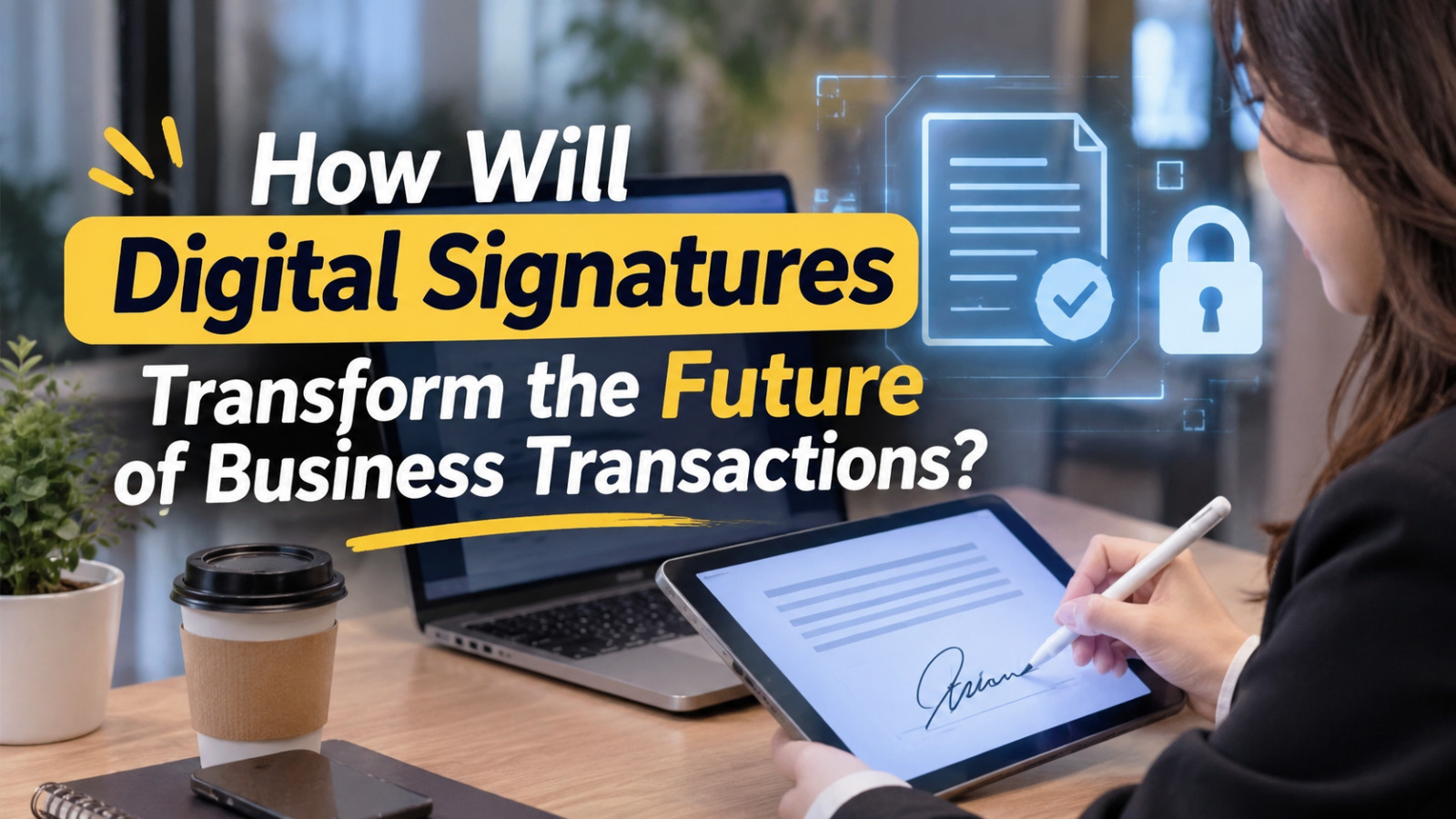
The development of digital technology continues to change how businesses communicate, manage documents, and complete transactions. Activities that once required physical meetings, printed agreements, and handwritten signatures can now be handled through digital platforms. This transformation creates opportunities for companies to conduct business more efficiently while adapting to the needs of customers and partners in an increasingly connected world.
One technology that plays an important role in this development is the digital signature. By supporting electronic document authentication and verification, digital signatures can simplify agreements and reduce administrative barriers. As businesses continue to adopt digital systems, this technology is expected to contribute to the future of secure and efficient business transactions.
ACCELERATING DIGITAL BUSINESS AGREEMENTS
Digital signatures can make business agreements faster by reducing the need for physical document exchanges. In traditional processes, parties may need to print contracts, sign each page, scan the documents, and send them to other participants. These activities can create delays, especially when the parties are located in different cities or countries.
Through electronic document signing, businesses can distribute agreements using digital platforms and allow authorized individuals to sign remotely. This approach can be useful for employment contracts, supplier agreements, service arrangements, and partnership documents. Once the signing process is completed, the document can be stored and distributed electronically.
In the future, digital signing systems may become more closely connected with contract management and business administration platforms. This integration could help companies manage document preparation, approval, signing, and storage through more organized workflows. However, the actual time savings will depend on the platform, the number of approval stages, and the procedures used by each organization.
STRENGTHENING SECURITY AND TRUST IN ONLINE TRANSACTIONS
Security will remain a major concern as more business transactions move to digital environments. Companies need reliable methods to verify who signed a document and whether its contents have changed after signing. Without appropriate protection, digital agreements may be exposed to identity misuse, unauthorized access, or document manipulation.
Cryptographic digital signatures can help address these concerns through mechanisms that support signer authentication and document integrity. They use cryptographic techniques to connect a signature with the signed document, allowing recipients to verify whether the document has been modified. Digital certificates can also provide information about the identity associated with a signing credential.
Future digital signature platforms may combine these mechanisms with stronger identity verification, access controls, and security monitoring. Businesses will still need to protect private signing keys, choose trustworthy service providers, and establish clear procedures for handling sensitive documents. Technology alone cannot eliminate every risk, but proper implementation can strengthen digital transaction security and business trust.
SUPPORTING INTERNATIONAL BUSINESS COLLABORATION
Global business activities often involve companies, suppliers, customers, and investors from different countries. Managing agreements across international borders can be challenging when documents must be signed, delivered, and verified through different administrative systems. Digital signatures offer a practical way to reduce some of these geographical barriers.
For example, a company in Indonesia may work with a supplier in another country without requiring representatives from both organizations to meet physically. Documents can be exchanged electronically, reviewed by authorized parties, and signed through compatible platforms. This can make international cooperation more convenient and support business activities involving multiple locations.
However, cross-border digital transactions also require attention to differences in legal frameworks and electronic signature standards. A signature that is recognized under one country's regulations may not automatically receive the same treatment in another jurisdiction. Businesses should therefore review applicable laws, verification requirements, and contractual provisions before using digital signatures for international agreements.
INTEGRATING DIGITAL SIGNATURES WITH BUSINESS TECHNOLOGY
The future of digital signatures will likely involve closer integration with other business technologies. Companies already use enterprise resource planning systems, customer relationship management platforms, cloud storage, and document management applications to organize their operations. Connecting digital signature services with these systems can help create more consistent administrative workflows.
For instance, a company may prepare a contract through its document management platform, send it for approval, and request signatures from authorized parties without repeatedly transferring files between separate applications. This integration can reduce manual tasks and help maintain organized records of business agreements. It may also make it easier for employees to track the progress of documents that require approval.
Emerging technologies such as artificial intelligence and workflow automation may further support document management. AI tools could assist with identifying relevant contract information or organizing documents, while automated workflows could notify participants when an approval or signature is required. Nevertheless, important decisions and legal reviews should remain subject to appropriate human oversight, particularly when agreements involve significant financial or legal responsibilities.
EXPANDING ACCESS TO PAPERLESS AND SUSTAINABLE BUSINESS OPERATIONS
Digital signatures can also support businesses in reducing their dependence on physical paperwork. Printing, storing, copying, and delivering documents require resources that may increase operational costs over time. Moving suitable administrative processes to digital platforms can help companies reduce these activities and manage information more efficiently.
A paperless business environment allows organizations to prepare, sign, distribute, and store many documents electronically. Employees can access authorized files through digital systems, while businesses can organize records without relying entirely on physical archives. This approach may be especially useful for organizations that process large volumes of contracts, invoices, and approval documents.
Digital operations can also support more responsible resource management by reducing unnecessary paper consumption. However, businesses should consider the environmental impact of digital infrastructure, including energy use and electronic storage. The most effective approach is to combine digital documentation with responsible technology management and appropriate data retention policies.
CONCLUSION
Digital signatures are expected to play an increasingly important role in the future of business transactions. Their ability to accelerate agreements, strengthen document security, support international collaboration, and integrate with business technology makes them valuable for organizations undergoing digital transformation. As more companies adopt digital platforms, electronic signing can become an essential part of everyday business operations.
However, the future development of digital signatures will depend on security improvements, legal recognition, technological compatibility, and user awareness. Businesses must ensure that their signing methods comply with applicable regulations and provide adequate protection for confidential information. With responsible implementation, digital signatures can help create business transactions that are more efficient, accessible, and trustworthy.
Recent Posts

How Does Technology Make Daily Evaluation... 21.11.2026/62 View

Apa Strategi Menghadapi Kesenjangan antara Kompetensi... 21.11.2026/63 View

Mengapa Inventaris Aset Penting bagi Kelancaran... 21.11.2026/59 View

When Should Musicians Join a Record... 21.11.2026/58 View

Daily Evaluation or Daily Planning Which... 21.11.2026/66 View
