

How Will Learning Research Shape the Future of Education and Digital Learning?
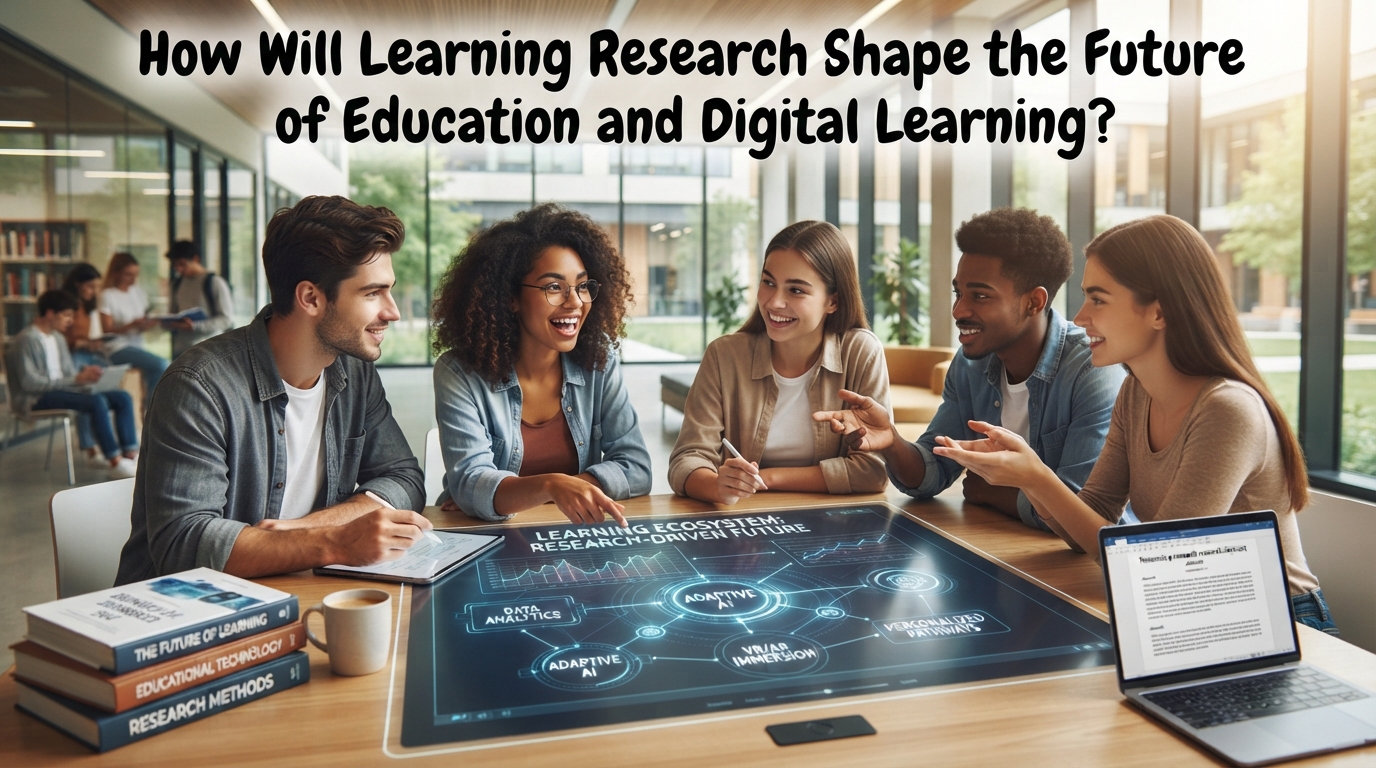
Education is continuously changing as technology, research, and students' learning needs develop. Traditional classroom activities are increasingly supported by digital platforms, interactive learning tools, and technology-based educational resources. In this changing environment, learning research plays an important role in helping teachers, researchers, and educational institutions understand how learning can become more effective. Through systematic studies, educators can identify educational challenges, evaluate new technologies, and discover better teaching strategies. In the future, learning research is expected to support more flexible, inclusive, and personalized education while ensuring that technological developments provide meaningful benefits for students.
THE ROLE OF LEARNING RESEARCH IN FUTURE EDUCATION
Learning research provides valuable information about how students acquire knowledge, develop skills, and respond to different teaching methods. Researchers examine classroom activities, student performance, educational resources, and learning environments to identify opportunities for improvement. These findings help teachers make decisions based on evidence rather than relying only on assumptions. In the future, research will become increasingly important as educational institutions face new challenges related to technology, student diversity, and changing professional requirements. By understanding these developments, schools and universities can create educational programs that are more relevant to future needs.
SUPPORTING THE DEVELOPMENT OF DIGITAL LEARNING
Digital learning will continue to influence how students access information and participate in educational activities. Online platforms, virtual classrooms, educational applications, and digital libraries allow students to study beyond traditional classroom environments. Learning research helps educators evaluate whether these technologies improve student understanding, participation, and academic performance. Researchers can also investigate problems such as limited internet access, digital distractions, and differences in technological skills. Through these studies, educational institutions can select suitable digital tools and develop learning systems that are accessible and effective.
ENCOURAGING PERSONALIZED LEARNING THROUGH TECHNOLOGY
One important direction for future education is personalized learning, which adapts educational activities to students' individual needs and progress. Learning research helps teachers understand differences in students' abilities, interests, learning speeds, and academic challenges. Digital platforms can support this approach by providing learning materials, practice exercises, and feedback based on student performance. For example, an educational application may recommend additional exercises when a student has difficulty understanding a particular topic. However, personalized learning still requires teacher guidance to ensure that technology supports meaningful educational development rather than replacing human interaction.
USING ARTIFICIAL INTELLIGENCE IN EDUCATION
Artificial intelligence is creating new opportunities for teaching, assessment, and educational research. AI-powered tools can assist students with explanations, practice questions, language learning, and access to learning resources. Teachers can also use certain AI systems to organize educational materials, generate practice activities, and identify patterns in student performance. Learning research is important for examining the accuracy, fairness, privacy, and educational value of these technologies. In the future, artificial intelligence may support more efficient learning experiences, but its use must remain responsible and supervised by educators.
IMPROVING TEACHING METHODS THROUGH RESEARCH
Future teaching methods will increasingly combine traditional instruction with interactive and technology-supported activities. Learning research helps educators identify which approaches work best for different subjects and student groups. For example, project-based learning, collaborative discussions, flipped classrooms, and digital simulations can provide opportunities for students to apply knowledge in practical situations. Researchers can evaluate these methods through classroom observations, student feedback, and academic assessments. The findings allow teachers to improve lesson planning and develop instructional strategies that encourage critical thinking, creativity, and active participation.
DEVELOPING DIGITAL LITERACY AND FUTURE SKILLS
The future of education requires students to develop more than academic knowledge. They also need digital literacy, critical thinking, communication, creativity, collaboration, and problem-solving skills. Learning research helps educators understand how these abilities can be developed through classroom activities and digital learning resources. For example, students can practice evaluating online information, working on digital projects, and solving real-world problems using technology. These experiences prepare learners to use digital tools responsibly and adapt to changing professional environments. Educational institutions can use research findings to design programs that support both academic achievement and practical skills.
MAKING EDUCATION MORE INCLUSIVE AND ACCESSIBLE
Technology and research can help create educational opportunities for students with different backgrounds, abilities, and learning conditions. Online learning resources may provide access to educational materials for students who face geographical or scheduling limitations. Assistive technologies, such as screen readers, captions, and speech-to-text tools, can also support students with disabilities. Learning research helps identify barriers that prevent students from participating fully in educational activities. By studying these challenges, schools and universities can develop more inclusive learning environments and ensure that digital education benefits a wider range of learners.
USING LEARNING DATA TO IMPROVE EDUCATIONAL DECISIONS
Digital learning platforms can generate useful information about student participation, assessment results, learning progress, and resource usage. Researchers and educators can analyze this information to identify learning patterns and areas that require improvement. For example, learning data may reveal which topics students frequently struggle with or which educational activities receive the most participation. This information supports data-driven education, allowing teachers and institutions to make more informed decisions. However, collecting and using student data must follow appropriate privacy, security, and ethical standards to protect personal information.
ADDRESSING CHALLENGES IN FUTURE DIGITAL EDUCATION
Although digital technology offers many advantages, its implementation also creates important challenges. Differences in internet access, device availability, digital skills, and educational resources can prevent some students from benefiting equally. Excessive dependence on technology may also reduce face-to-face interaction and create distractions during learning activities. In addition, concerns about data privacy, misinformation, and inaccurate AI-generated information require careful attention. Learning research helps educators understand these risks and develop practical solutions. By combining technological innovation with responsible policies and teacher guidance, educational institutions can build safer and more effective digital learning environments.
CONCLUSION
Learning research will shape the future of education by helping educators understand changing student needs, evaluate digital technologies, and develop more effective teaching strategies. Its contributions will support personalized learning, artificial intelligence applications, digital literacy, inclusive education, and evidence-based decision-making. However, technological development must be accompanied by responsible implementation, appropriate teacher guidance, and equal access to educational resources. Research will remain essential for ensuring that innovation improves the quality of learning rather than simply introducing new tools. Ultimately, the future of education will depend on combining reliable research, effective teaching, and responsible digital technology to create better learning opportunities for everyone.
Recent Posts

How Does Technology Make Daily Evaluation... 21.11.2026/62 View

Apa Strategi Menghadapi Kesenjangan antara Kompetensi... 21.11.2026/63 View

Mengapa Inventaris Aset Penting bagi Kelancaran... 21.11.2026/59 View

When Should Musicians Join a Record... 21.11.2026/58 View

Daily Evaluation or Daily Planning Which... 21.11.2026/66 View
