

How Will Radiation Technology Shape the Future of Modern Medicine?
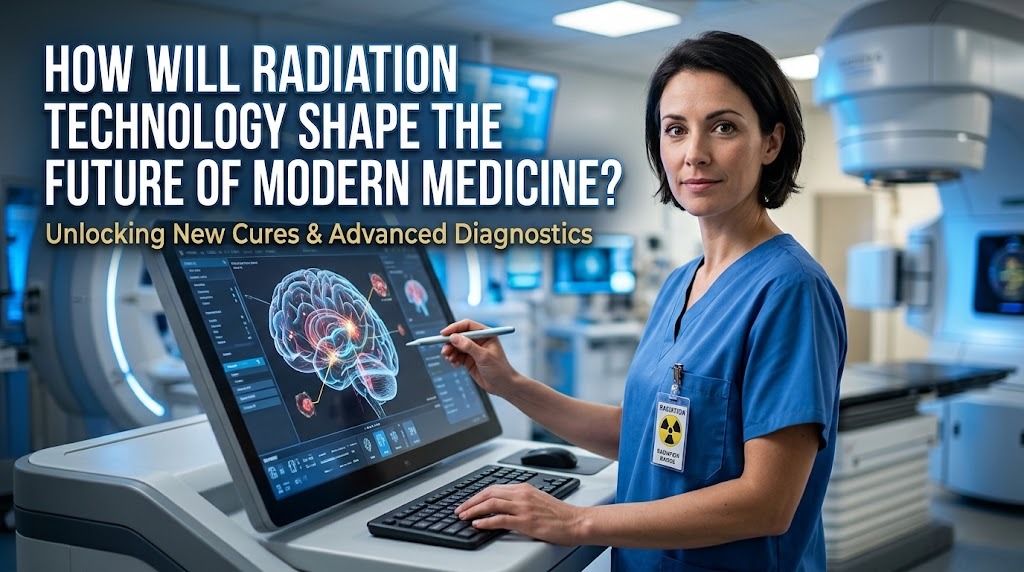
Radiation therapy has long been a cornerstone of cancer treatment, but future developments are making these therapies significantly more precise. Advanced techniques like Proton Beam Therapy and FLASH Radiotherapy allow oncologists to deliver ultra-high doses of radiation to tumor cells in fractions of a second.
By minimizing the exposure of surrounding healthy tissue, these cutting-edge therapies reduce treatment side effects and improve recovery times. This precision ensures that radiation targets bad cells with pinpoint accuracy while preserving normal organ function.
NEXT-GENERATION NUCLEAR MEDICINE AND THERANOSTICS
One of the most exciting frontiers in medical science is theranostics—a field that combines diagnostic imaging with targeted radioisotope therapy.
- Targeted Alpha Therapy (TAT): Uses radioisotopes emitting heavy alpha particles to destroy specific cancer cells at a microscopic level without harming nearby healthy cells.
- Smart Biomarkers: Specialized radiopharmaceuticals lock onto specific cellular receptors, allowing doctors to both visualize disease locations and deliver precise therapeutic doses simultaneously.
This dual-action approach shifts oncology from generalized treatments to highly personalized medicine.
AI-POWERED DIAGNOSTIC IMAGING
Artificial intelligence is accelerating the capabilities of radiation-based diagnostic tools like CT scans, PET scans, and digital X-rays. AI algorithms can analyze high-resolution medical images in real time, detecting microscopic structural anomalies far earlier than standard visual reviews.
Furthermore, AI algorithms optimize scanning equipment to produce crystal-clear images while using significantly lower radiation doses. This ensures safer procedures for patients of all ages, especially pediatric patients who are more sensitive to radiation exposure.
ADVANCES IN RADIOPHARMACEUTICAL PRODUCTION
The future of medical radiation also relies on improvements in how radioactive isotopes are produced and transported. Innovations in compact particle accelerators (cyclotrons) allow hospitals to manufacture short-lived medical isotopes on-site.
This localized production eliminates supply chain delays, ensuring that patients receive fresh, highly potent diagnostic and therapeutic agents right when they need them.
CONCLUSION
In conclusion, radiation technology is transforming from a broad therapeutic tool into an ultra-precise, personalized medical engine. Through targeted therapies, theranostics, AI integration, and improved isotope production, medical teams can diagnose conditions earlier and treat illnesses more effectively.
As these technologies continue to evolve, radiation will remain at the forefront of saving lives and advancing human health.
Recent Posts

Bagaimana Sistem SKS pada Program Kuliah... 22.11.2026/53 View

How Does Technology Make Daily Evaluation... 21.11.2026/82 View

Apa Strategi Menghadapi Kesenjangan antara Kompetensi... 21.11.2026/81 View

Mengapa Inventaris Aset Penting bagi Kelancaran... 21.11.2026/77 View

When Should Musicians Join a Record... 21.11.2026/82 View
