

Is a Color Blindness Test Required for Job Applications?
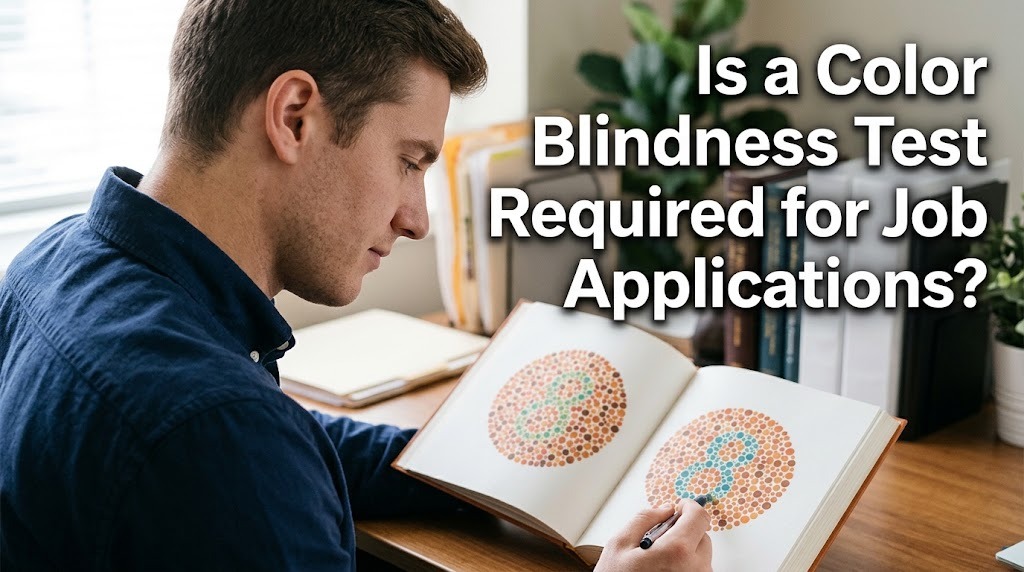
A color blindness test may be required for certain job applications, depending on the position, industry, and visual abilities needed to perform specific tasks. Some professions require employees to distinguish colors accurately because mistakes in color recognition can affect workplace safety, operational procedures, and the quality of their work. Examples include aviation, transportation, electrical work, laboratory activities, and certain healthcare professions.
However, not every company or employer requires applicants to undergo a color blindness test. Many occupations do not depend heavily on accurate color perception, so having color blindness does not automatically prevent someone from getting a job. Understanding why employers conduct these examinations, which professions may require them, and how the results are evaluated can help applicants prepare for the recruitment process.
WHY EMPLOYERS REQUIRE A COLOR BLINDNESS TEST
Employers may require a color blindness test to determine whether applicants can recognize colors accurately when performing essential job responsibilities. In certain workplaces, colors are used to communicate important information, identify equipment, distinguish warning indicators, and follow safety procedures. Employees who have difficulty recognizing specific colors may face challenges when completing tasks that depend on accurate color identification. Therefore, employers sometimes include color vision assessments as part of occupational health examinations.
Another important reason is workplace safety. For example, workers in electrical installations may need to distinguish colored wires to avoid incorrect connections. Transportation employees may also need to recognize signal lights and other visual indicators correctly. However, employers should consider the actual requirements of each position rather than automatically rejecting applicants based on a color blindness diagnosis. The assessment should focus on whether an individual can perform the essential duties of the job safely and effectively.
TYPES OF JOBS THAT MAY REQUIRE COLOR BLINDNESS TESTING
Certain professions are more likely to require color vision examinations because their daily responsibilities involve recognizing specific colors. Aviation is one example because pilots and some aviation personnel must interpret visual signals, navigation information, and other color-coded indicators. Transportation and railway operations may also involve recognizing signal lights that communicate important instructions. In these occupations, accurate color perception can be an important part of professional safety standards.
Other professions that may require color vision assessments include electrical technicians, laboratory workers, medical personnel, and certain industrial operators. Electricians may need to identify wire colors, while laboratory workers may interpret color changes during testing procedures. Some healthcare professionals also encounter tasks involving color recognition, such as evaluating certain visual indicators or laboratory results. Nevertheless, the requirements differ between employers, professional licensing authorities, and individual job responsibilities. Not every position within these industries necessarily has identical color vision standards.
HOW A COLOR BLINDNESS TEST IS CONDUCTED DURING JOB APPLICATIONS
A color blindness test is generally included in a medical examination or occupational health assessment during recruitment. Applicants may be asked to complete a visual screening conducted by a healthcare professional or an authorized medical examiner. One of the most common methods is the Ishihara test, which uses plates containing colored dots arranged into numbers or patterns. Applicants must identify the numbers or symbols they can recognize, and their responses are evaluated according to standardized testing criteria.
If the initial examination indicates a possible color vision deficiency, additional tests may be necessary. For example, the Farnsworth D-15 test evaluates how individuals distinguish and arrange different colored objects. Some specialized examinations can also provide more detailed information about the type and severity of color vision deficiency. The results are then compared with the visual requirements established for the position. Applicants should follow the examiner's instructions and provide accurate information about their visual health.
DOES COLOR BLINDNESS AUTOMATICALLY DISQUALIFY JOB APPLICANTS?
Having color blindness does not automatically mean someone will fail every job application. The impact of this condition depends on the type of color vision deficiency, its severity, and the responsibilities associated with the position. Some individuals experience mild difficulty distinguishing certain colors but can still perform many professional activities effectively. Therefore, employers should evaluate applicants according to relevant occupational requirements rather than relying only on the general diagnosis.
For positions that do not require precise color identification, color blindness may have little or no effect on job performance. For example, many administrative, writing, customer service, and general office positions rely more heavily on communication, problem-solving, and organizational skills. In contrast, professions with strict visual safety requirements may have specific color vision standards. Applicants should understand that recruitment decisions can depend on professional regulations, medical assessments, and the essential functions of the job.
HOW TO PREPARE FOR A COLOR BLINDNESS TEST BEFORE APPLYING FOR A JOB
Applicants can prepare for a color blindness test by understanding the visual requirements of the position they want to pursue. Checking official recruitment announcements and relevant professional standards can help clarify whether color vision screening is required. Applicants who have never taken a color vision examination may consider visiting an eye care professional before submitting their application. This can provide an initial understanding of their color perception and help identify possible visual difficulties.
Before the examination, individuals should ensure that their eyes are comfortable and follow any instructions provided by the examiner. Testing should be conducted under appropriate lighting conditions because poor illumination can affect color recognition. Applicants should also avoid relying entirely on online color blindness tests because screen settings and display quality can influence the results. If a color vision deficiency is identified, discussing the findings with a qualified professional can help applicants understand their options and determine whether further evaluation is necessary.
CONCLUSION
A color blindness test may be required for job applications, particularly for professions that depend on accurate color recognition and workplace safety. Aviation, transportation, electrical work, laboratory activities, and certain healthcare positions may have specific color vision requirements. However, color blindness does not automatically disqualify someone from employment because many occupations do not require perfect color perception. Applicants should understand the visual standards of their chosen profession and undergo appropriate examinations when necessary. By identifying their visual abilities early, they can make better career decisions and prepare for recruitment requirements.
Recent Posts

Bagaimana Sistem SKS pada Program Kuliah... 22.11.2026/40 View

How Does Technology Make Daily Evaluation... 21.11.2026/71 View

Apa Strategi Menghadapi Kesenjangan antara Kompetensi... 21.11.2026/73 View

Mengapa Inventaris Aset Penting bagi Kelancaran... 21.11.2026/69 View

When Should Musicians Join a Record... 21.11.2026/73 View
