

Is Cell Phone Radiation Really Harmful to Your Brain Health?
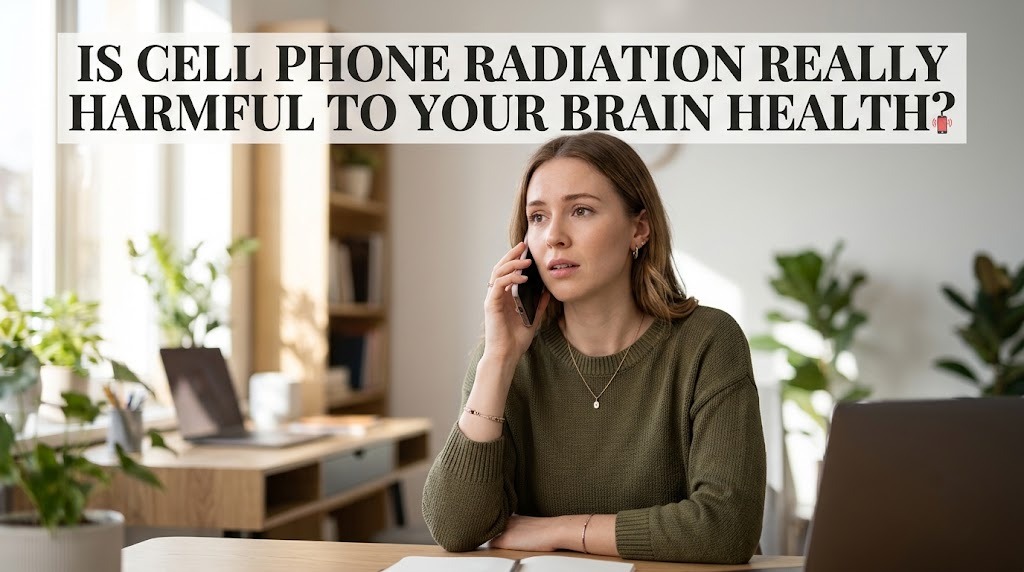
Cell phones emit a specific type of energy known as radiofrequency energy. This radiation travels through space in waves to allow mobile devices to communicate with surrounding cell towers.
Unlike X-rays or gamma rays, radiation from mobile devices is strictly classified as non-ionizing radiation. This means it lacks the energy required to strip electrons from atoms or directly break chemical bonds in human cells.
HOW RADIOFREQUENCY INTERACTS WITH THE BRAIN
Because people hold mobile phones close to their heads while speaking, nearby biological tissues absorb small amounts of emitted radiofrequency energy. Scientists measure the rate at which human tissue absorbs this energy using the Specific Absorption Rate.
The main biological effect of radiofrequency radiation on physical tissue is a minor heating effect. However, the energy levels released by everyday mobile devices are extremely low, causing no significant temperature changes or damage to biological tissues.
WHAT SCIENTIFIC EVIDENCE SHOWS
Global health institutions have spent decades examining whether mobile phone usage increases the likelihood of brain tumors or health risks. Massive long-term research projects, including the international INTERPHONE study, observed thousands of users over extended periods.
The overall consensus among major authorities like the World Health Organization is that there is no consistent scientific evidence connecting regular cell phone usage to brain cancer or negative neurological effects.
CLASSIFICATION BY INTERNATIONAL HEALTH AGENCIES
The International Agency for Research on Cancer categorizes radiofrequency electromagnetic fields as Group 2B, or possibly carcinogenic. This designation reflects a cautious approach due to limited evidence rather than proof of direct harm.
To provide realistic context, everyday substances like pickled vegetables and aloe vera fall into this exact same classification category. Regulatory bodies regularly review new scientific findings to ensure public protection standards remain accurate as technology advances.
SAFETY LIMITS AND CONSUMER PROTECTION
Government regulatory bodies enforce strict maximum absorption boundaries before any mobile phone model is approved for public sale. These legal exposure limits are set well below levels that could trigger harmful thermal effects.
Manufacturers test each device model in specialized laboratories to confirm that maximum energy emissions stay well within established international safety guidelines.
PRACTICAL TIPS TO MINIMIZE EXPOSURE
If you prefer to reduce your daily radiofrequency exposure out of extra caution, simple adjustments can dramatically lower absorption:
- Utilize hands-free accessories like wired earphones, Bluetooth headsets, or built-in speakerphones during calls.
- Maintain a short physical distance between the device and your body when downloading large media files.
- Opt for text messaging instead of voice calls, as keeping the phone away from your head reduces direct tissue exposure.
CONCLUSION
Current scientific research demonstrates that cell phone radiation is not harmful to human brain health. Because mobile devices release low-energy non-ionizing waves, they cannot damage cellular DNA or cause brain tumors.
Enforced regulatory guidelines ensure that everyday mobile devices remain safe for consumer use. Understanding the physics of non-ionizing energy allows everyone to use modern mobile tech confidently and safely.
Recent Posts

Bagaimana Sistem SKS pada Program Kuliah... 22.11.2026/53 View

How Does Technology Make Daily Evaluation... 21.11.2026/82 View

Apa Strategi Menghadapi Kesenjangan antara Kompetensi... 21.11.2026/81 View

Mengapa Inventaris Aset Penting bagi Kelancaran... 21.11.2026/77 View

When Should Musicians Join a Record... 21.11.2026/82 View
