

Is Human Evolution Still Happening Today?
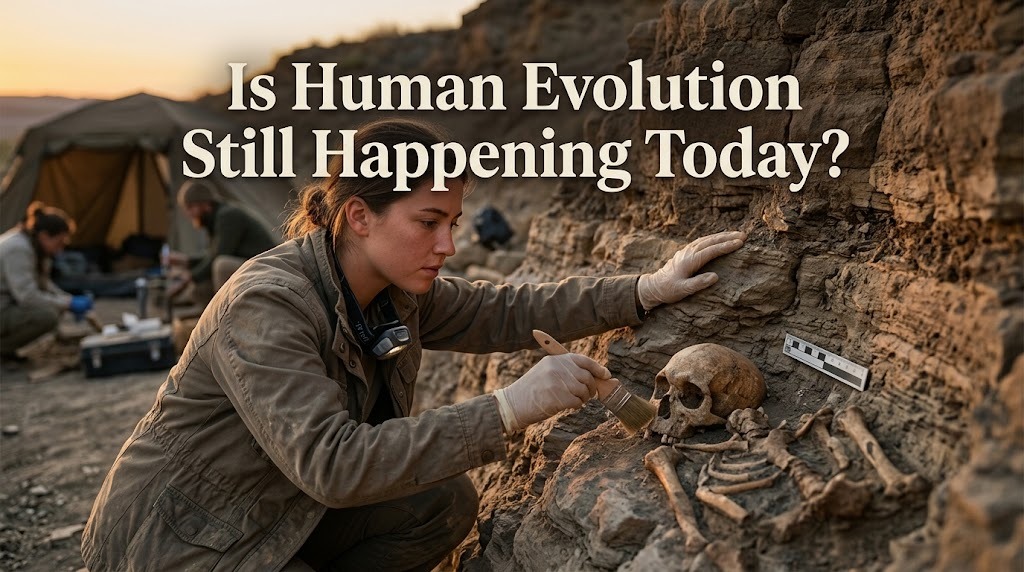
Human evolution is still happening today because evolution is a continuous biological process that affects populations across generations. Although modern humans live in a very different environment from our ancient ancestors, our genes continue to change through mutation, natural selection, genetic drift, and migration. These processes can influence how certain traits become more or less common within human populations. Modern medicine, technology, cultural practices, and changing lifestyles also affect the environments in which humans live and reproduce. Understanding ongoing human evolution helps explain why the human species is not biologically fixed, even though evolutionary changes may take many generations to become noticeable.
WHAT DOES HUMAN EVOLUTION MEAN TODAY?
Human evolution refers to changes in inherited genetic characteristics within human populations over successive generations. These changes occur when genetic variations become more or less common over time. Mutations introduce new genetic variations, while natural selection can favor inherited traits that improve reproductive success under particular conditions. Genetic drift can also change the frequency of genetic variants by chance, especially in small populations. These mechanisms continue to operate in modern human populations.
However, evolution does not mean that every individual gradually transforms into a different kind of human during their lifetime. Instead, evolutionary change occurs across generations as genetic characteristics are passed from parents to children. Some changes may spread relatively quickly when they provide an advantage in a particular environment, while others may remain rare or disappear. Human evolution also has no predetermined final destination or universal goal. Modern humans are not the endpoint of evolution but a living species that continues to experience biological change.
HOW NATURAL SELECTION CONTINUES TO AFFECT HUMANS
Natural selection remains an important mechanism of human evolution. It occurs when inherited differences influence how successfully individuals survive and reproduce in a particular environment. For example, genetic variations that help people resist certain infectious diseases may become more common when those diseases create strong selection pressures. However, a trait that is advantageous in one environment may offer little benefit or even have disadvantages in another. Natural selection therefore depends on specific environmental and reproductive conditions.
One well-known example is the persistence of lactase production into adulthood. In some human populations with long histories of dairying, genetic variants that allow adults to digest lactose became common because they could provide nutritional benefits in cultures where milk was an important food source. This trait is known as lactase persistence, and different populations developed it through distinct genetic changes. Another example involves adaptations to high-altitude environments, where some populations have inherited characteristics that help them cope with low oxygen levels. These examples demonstrate that human populations have continued to adapt biologically to different conditions in relatively recent history.
THE ROLE OF GENETIC MUTATIONS IN HUMAN EVOLUTION
Genetic mutations are changes in DNA that can introduce new inherited variations into human populations. They may occur when DNA is copied during cell division or as a result of certain environmental influences. Most mutations have no noticeable effect on an individual's characteristics, while some can be harmful and others can provide benefits under particular conditions. Mutations in reproductive cells can be passed to future generations, whereas most mutations in ordinary body cells are not inherited by children. Over many generations, inherited mutations contribute to the genetic diversity on which evolution acts.
Modern humans continue to acquire new genetic mutations, meaning the raw material for evolution is still being produced. However, a new mutation does not automatically become widespread throughout a population. Its future depends on factors such as inheritance, reproductive success, natural selection, and chance. Some variants remain rare for many generations, while others increase in frequency. The ongoing appearance and transmission of genetic variation ensure that human populations can continue to evolve.
HOW MODERN MEDICINE AND TECHNOLOGY INFLUENCE HUMAN EVOLUTION
Modern medicine has changed many aspects of human survival and reproduction. Vaccines, antibiotics, surgery, and other medical treatments allow people to survive conditions that might once have been fatal or severely limited their ability to have children. These developments can change the strength of certain natural selection pressures, but they do not stop evolution entirely. Genetic differences can still influence health, fertility, and reproductive outcomes, even in societies with advanced healthcare. Evolution continues whenever inherited variation affects how genes are passed to future generations.
Technology and cultural practices also shape human environments. Air conditioning, housing, clothing, food production, and transportation help people cope with conditions that once posed greater challenges. These changes can reduce some selection pressures while creating or maintaining others. For example, cultural practices such as agriculture and animal domestication have historically changed human diets and contributed to the spread of certain genetic adaptations. The relationship between culture and biology is complex because human behavior can influence which inherited traits become advantageous.
HOW HUMAN MIGRATION AND MIXING POPULATIONS AFFECT EVOLUTION
Human migration contributes to evolution by moving genetic variations between populations. When people from different populations have children together, their descendants inherit combinations of genetic variants from both parental backgrounds. This process, known as gene flow, can increase genetic diversity within populations and change the frequency of particular variants. Migration has influenced human genetic history for thousands of years and continues today through travel, relocation, and relationships across geographic regions. These changes can make populations genetically more connected over time.
Gene flow does not mean that all human populations will become genetically identical. Geographic, cultural, social, and reproductive patterns can continue to influence how genes are distributed. Some genetic variants may remain more common in particular populations because of historical ancestry or local environmental conditions. Human genetic differences are generally distributed in complex patterns, rather than forming clear biological boundaries between groups. Studying migration and genetic mixing helps scientists understand how human populations change and how their shared ancestry connects them.
ARE HUMANS BECOMING MORE INTELLIGENT OR PHYSICALLY DIFFERENT?
There is no clear scientific evidence that humans as a whole are evolving toward a universally more intelligent or physically superior form. Evolution does not automatically produce greater intelligence, strength, or complexity. Instead, it changes inherited characteristics according to environmental conditions, reproductive outcomes, and chance. A trait that provides an advantage in one situation may not offer the same benefit in another. Therefore, claims that humans are inevitably becoming smarter, stronger, or more advanced biologically oversimplify the evolutionary process.
Human bodies and populations have experienced measurable biological changes throughout recent history, but these changes do not always reflect genetic evolution. For example, improvements in nutrition and healthcare have influenced average height in many populations over recent generations. Such changes can occur because environmental conditions affect development, even when inherited genetic characteristics remain relatively stable. To determine whether a trait is evolving genetically, scientists need evidence of inherited variation and changes in its frequency across generations. This distinction is essential for understanding modern human biology accurately.
HOW SCIENTISTS STUDY HUMAN EVOLUTION TODAY
Scientists investigate ongoing human evolution using genetic data, population studies, medical research, and comparisons between present-day and ancient DNA. By examining genetic variants across generations, researchers can identify patterns that suggest natural selection, migration, or genetic drift. Ancient DNA provides additional information about how human populations changed over thousands of years. Researchers can compare older genetic samples with modern ones to identify changes in inherited characteristics. These methods allow scientists to study evolution even when physical differences between generations are not immediately visible.
Scientists must interpret genetic evidence carefully because similar patterns can result from different evolutionary processes. A genetic variant may become common because it offers a reproductive advantage, because people migrated into a region, or simply because of chance. Researchers therefore combine genetic findings with archaeological, historical, environmental, and medical evidence. Long-term studies can also help reveal how genetic characteristics change across generations. Together, these approaches provide a more reliable picture of how human evolution continues in the modern world.
CONCLUSION
Human evolution is still happening today because genetic mutations, natural selection, genetic drift, and gene flow continue to change human populations across generations. Examples such as lactase persistence and high-altitude adaptation demonstrate that inherited traits can respond to particular environmental conditions. Modern medicine and technology have changed the pressures humans face, but they have not brought evolution to an end. At the same time, changes in physical appearance or health are not always evidence of genetic evolution because environmental influences also affect human development. Ultimately, human evolution remains an ongoing process without a predetermined direction, reflecting the continuing interaction between genetics, culture, reproduction, and the environment.
Recent Posts

Bagaimana Sistem SKS pada Program Kuliah... 22.11.2026/51 View

How Does Technology Make Daily Evaluation... 21.11.2026/81 View

Apa Strategi Menghadapi Kesenjangan antara Kompetensi... 21.11.2026/81 View

Mengapa Inventaris Aset Penting bagi Kelancaran... 21.11.2026/77 View

When Should Musicians Join a Record... 21.11.2026/82 View
