

Is The National Assessment Effectively Measuring School Education Quality?
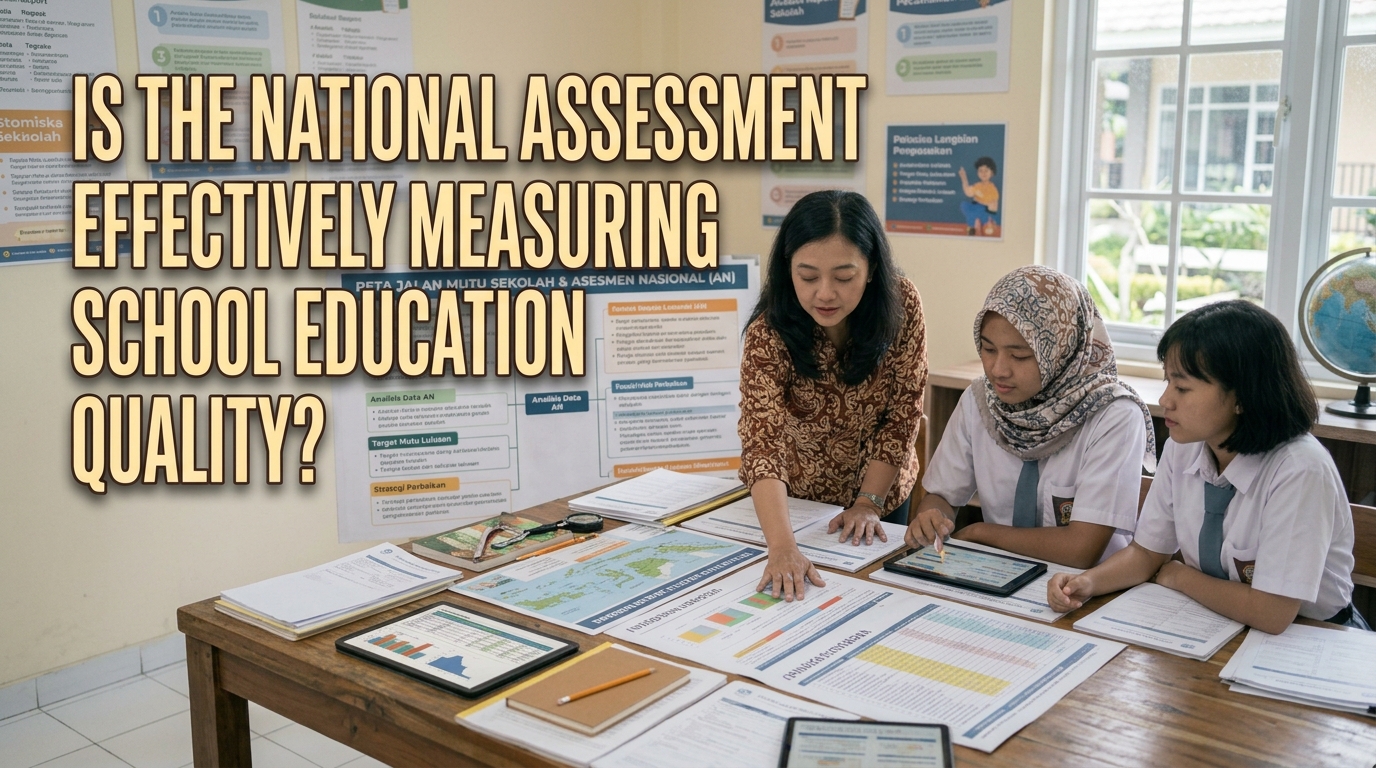
The implementation of the National Assessment has sparked widespread discussion regarding its true capability in evaluating school education quality across Indonesia. Unlike traditional high-stakes exams, this modern evaluation system is specifically designed to provide a comprehensive picture of institutional performance rather than judging individual student graduation. Many educators and policymakers continually question whether this system provides an accurate benchmark for academic standards. This article will examine in detail how effectively the national evaluation measures overall educational achievement.
SHIFTING FROM MEMORIZATION TO CRITICAL THINKING
The introduction of the new evaluation framework successfully shifted the traditional classroom focus from rote memorization toward deep conceptual understanding. Students are no longer pressured to memorize vast amounts of factual data just to pass a single high-stakes test. Instead, the assessment measures higher-order thinking skills that require analytical reasoning and real-world problem solving. This fundamental change compels teachers to redesign their daily instructional methods to foster genuine academic engagement among learners. Consequently, educational institutions must prioritize meaningful learning experiences over superficial test preparation practices.
Evaluating critical thinking provides a much clearer indicator of true institutional capability than traditional scoring methods ever did. When students learn how to evaluate information independently, schools demonstrate their ability to nurture intellectual growth and adaptability. This shift ensures that educational quality is measured by cognitive depth rather than simple test score averages. Therefore, the assessment framework captures the actual intellectual development of students within the classroom environment.
THE ROLE OF RAPOR PENDIDIKAN IN EVALUATING SCHOOLS
A core pillar of the current evaluation system is the integration of institutional data into the comprehensive Rapor Pendidikan platform. School administrators can access transparent metrics detailing their specific academic strengths and operational weaknesses. This digital report eliminates guesswork by offering evidence-based performance insights directly to local leaders. Principals utilize these metrics to conduct thorough self-evaluations and design targeted improvement programs.
Relying on empirical data transforms how educational institutions plan their annual budgets and resource allocations. Schools can directly address underperforming indicators such as literacy gaps or inadequate infrastructure maintenance. This data-driven approach ensures that interventions are precisely tailored to solve specific institutional challenges. Ultimately, the transparent reporting mechanism empowers schools to monitor their continuous progress toward achieving long-term educational excellence.
ASSESSING LITERACY AND NUMERACY COMPETENCIES
The assessment specifically targets foundational reading comprehension and mathematical reasoning as core indicators of academic success. Measuring literacy and numeration skills provides an objective baseline for comparing educational standards across diverse regions. Students are tested on their ability to interpret complex texts and solve practical quantitative dilemmas. These essential competencies serve as the absolute foundation for lifelong learning and professional achievement.
By focusing on these core capabilities, the evaluation highlights whether schools successfully impart practical knowledge to their pupils. Low scores in these areas alert authorities to systemic issues requiring immediate curricular intervention. Educators receive clear guidance on which specific subjects need enhanced instructional emphasis during class hours. Measuring these fundamental skills guarantees that school quality is judged by real-world student competencies.
MEASURING THE LEARNING ENVIRONMENT AND CHARACTER
Beyond academic metrics, the evaluation incorporates detailed surveys regarding the overall school climate and student well-being. Schools are evaluated on their success in preventing bullying, ensuring safety, and fostering inclusive social values. Measuring these non-cognitive aspects ensures that educational quality encompasses moral development alongside intellectual growth. A positive school climate directly contributes to lower stress levels and higher student motivation.
Cultivating strong character traits aligns directly with the national goal of producing well-rounded citizens. Institutional efforts to promote tolerance and integrity are now officially recognized within the national evaluation framework. This holistic approach proves that school quality cannot be separated from the emotional safety of its pupils. Consequently, the assessment successfully promotes a balanced environment where student welfare remains paramount.
CHALLENGES IN IMPLEMENTATION ACROSS REGIONS
Despite its comprehensive design, evaluating nationwide educational standards faces persistent logistical and infrastructural hurdles. Disparities in internet connectivity and computer availability create uneven testing conditions between urban and remote regions. Schools in underdeveloped areas often struggle with technical limitations that can complicate smooth assessment execution. Addressing these technological gaps requires ongoing governmental intervention and equitable resource distribution.
Furthermore, ensuring that all educators fully understand how to interpret assessment data remains an ongoing operational challenge. Continuous professional development is vital to help teachers translate statistical reports into practical classroom strategies. Without adequate training, data-driven policymaking risks becoming an abstract administrative exercise rather than a practical tool. Overcoming these hurdles is essential for the evaluation system to fulfill its promise of accurate quality measurement.
CONCLUSION
In conclusion, the National Assessment effectively measures school education quality by shifting the focus toward critical thinking, utilizing data-driven reporting, evaluating core literacies, and assessing environmental safety. While regional infrastructure disparities present ongoing challenges, the comprehensive framework provides a reliable foundation for continuous educational reform. By prioritizing objective data over high-stakes pressure, the evaluation system successfully drives sustainable improvements across institutions nationwide.
Recent Posts

Bagaimana Sistem SKS pada Program Kuliah... 22.11.2026/54 View

How Does Technology Make Daily Evaluation... 21.11.2026/83 View

Apa Strategi Menghadapi Kesenjangan antara Kompetensi... 21.11.2026/81 View

Mengapa Inventaris Aset Penting bagi Kelancaran... 21.11.2026/78 View

When Should Musicians Join a Record... 21.11.2026/82 View
