

Online or Offline Psychometric Tests Which Is Better for Job Applicants?
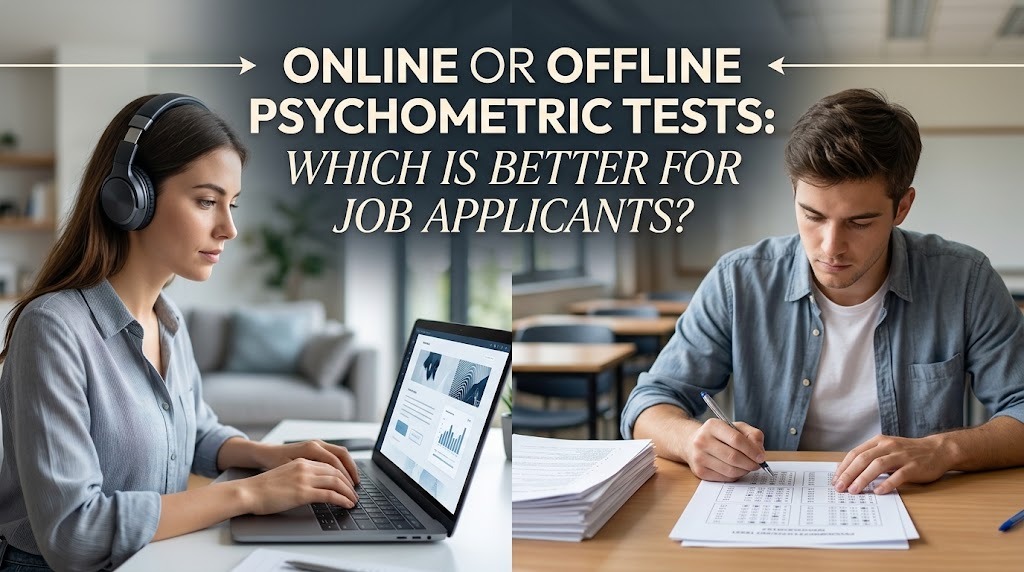
Psychometric tests are widely used in recruitment to assess candidates' reasoning abilities, problem-solving skills, and behavioral preferences. These assessments can be administered online through digital platforms or offline in supervised testing environments. Both formats aim to provide information that helps employers evaluate applicants, but they differ in accessibility, testing conditions, and the way assessments are conducted.
Choosing between online and offline psychometric tests depends on the employer's recruitment process, the type of assessment, and the candidate's circumstances. Online tests may offer greater flexibility, while offline tests can provide a controlled environment with direct supervision. Understanding the advantages and limitations of each format can help job applicants prepare appropriately and avoid unnecessary difficulties during the selection process.
UNDERSTANDING ONLINE PSYCHOMETRIC TESTS
An online psychometric test is completed through a website, digital platform, or assessment application. Candidates may receive a link from an employer or recruitment provider and complete the assessment using a computer or another permitted device. Depending on the testing arrangements, applicants may be able to take the test remotely without traveling to a recruitment center.
Online assessments can make recruitment more accessible for candidates who live far from the employer's office. They may also allow organizations to administer tests to many applicants across different locations. However, candidates need to check the technical requirements, internet connection, device compatibility, and time limits before starting. Some online tests are supervised remotely, while others are completed independently, so the exact conditions depend on the employer and assessment provider.
UNDERSTANDING OFFLINE PSYCHOMETRIC TESTS
An offline psychometric test is generally conducted at a designated location, such as a company office, assessment center, or recruitment venue. Candidates may complete the assessment on paper or use a computer provided at the testing site. The process often includes instructions from an administrator who explains the procedures and monitors the testing session.
One characteristic of offline testing is that the environment can be more controlled. Administrators may be able to manage the schedule, explain procedural requirements, and respond to certain testing issues directly. Candidates may also have fewer concerns about their own internet connection or device compatibility when the necessary equipment is provided. Nevertheless, offline assessments require applicants to travel to the venue and follow the scheduled testing arrangements, which may create additional costs or logistical challenges.
COMPARING ACCESSIBILITY AND TESTING CONDITIONS
When comparing online and offline psychometric assessments, accessibility is an important consideration. Online testing can reduce travel requirements and provide greater flexibility when employers permit remote completion. This can be helpful for applicants who live in different cities or have limited access to recruitment centers. However, access still depends on having the required technology, a suitable environment, and a reliable internet connection.
Offline testing provides a designated environment where candidates can complete the assessment according to a structured schedule. This arrangement may be helpful for applicants who prefer direct instructions or do not have suitable equipment at home. On the other hand, travel time, transportation expenses, and fixed schedules may make participation more difficult. Employers should consider these practical differences when deciding which format is appropriate for their recruitment needs.
EVALUATING FAIRNESS, SECURITY, AND RELIABILITY
Both online and offline psychometric tests can support recruitment decisions when they are properly designed and administered. The quality of an assessment depends on factors such as its validity, reliability, relevance to the job, and consistency of administration. The testing format alone does not automatically determine whether the results are accurate or fair.
Online assessments may use identity verification, remote supervision, or other security measures to protect the integrity of the test. However, technical problems and differences in testing environments can affect the candidate experience. Offline assessments allow direct supervision, although they also require appropriate procedures and standardized conditions. Employers should ensure that candidates receive clear instructions, reasonable accommodations where needed, and assessments that measure skills relevant to the position rather than unrelated technical or environmental factors.
HOW JOB APPLICANTS CAN PREPARE FOR BOTH FORMATS
Preparing for online psychometric tests involves becoming familiar with the assessment format and checking technical requirements in advance. Candidates should ensure that their device works properly, review the instructions, and prepare a quiet location if the test is taken remotely. Practicing sample questions under timed conditions can also help applicants become more comfortable with numerical reasoning, verbal reasoning, and logical reasoning tasks.
For offline assessments, candidates should confirm the test location, schedule, required documents, and any instructions from the employer. Arriving with enough time to settle in can help reduce avoidable stress. Regardless of the format, applicants should read each question carefully, manage their time, and answer personality questionnaires honestly. The most effective preparation focuses on understanding the assessment and developing relevant skills rather than trying to predict every question.
CONCLUSION
Online and offline psychometric tests both offer ways to assess candidates during recruitment. Online testing can provide greater geographical flexibility and reduce travel requirements, while offline testing can offer a more controlled environment with direct supervision. Each format also has limitations related to technology, scheduling, accessibility, and testing conditions.
For job applicants, the most appropriate format depends on the employer's arrangements and the candidate's circumstances. Rather than focusing only on whether a test is online or offline, applicants should understand the assessment requirements, practice relevant questions, and prepare for the specific testing environment. Employers can support fairer recruitment by selecting reliable assessments, applying consistent procedures, and ensuring that the testing format is suitable for the role and the candidates involved.
Recent Posts

Bagaimana Sistem SKS pada Program Kuliah... 22.11.2026/61 View

How Does Technology Make Daily Evaluation... 21.11.2026/87 View

Apa Strategi Menghadapi Kesenjangan antara Kompetensi... 21.11.2026/85 View

Mengapa Inventaris Aset Penting bagi Kelancaran... 21.11.2026/83 View

When Should Musicians Join a Record... 21.11.2026/87 View
