

Should You Worry About Natural Radiation from Soil and Rocks?
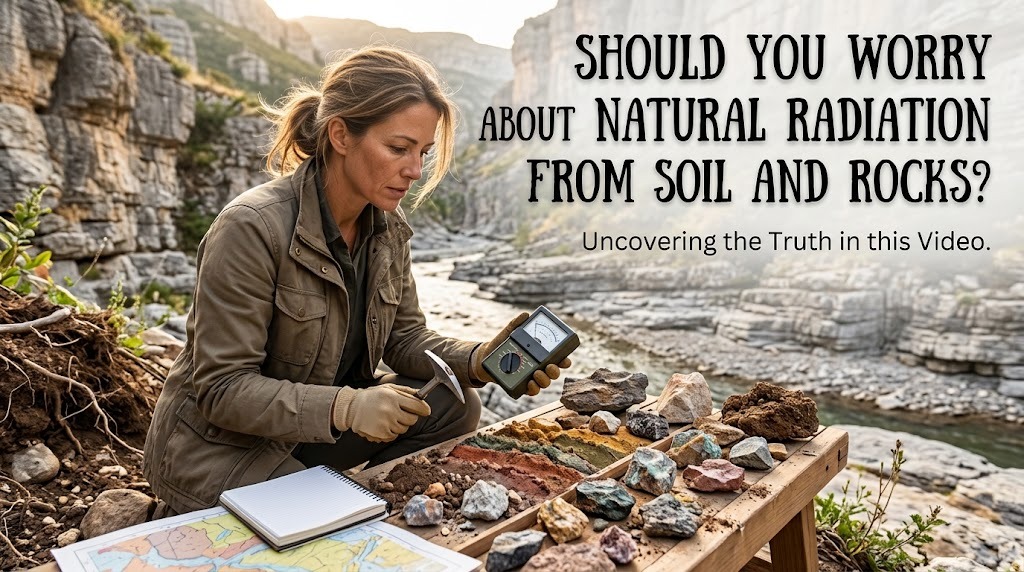
Every day, we interact with the Earth beneath our feet, which naturally contains low levels of radioactive elements. This phenomenon is known as terrestrial radiation.
As Earth formed billions of years ago, heavy radioactive isotopes were trapped within its crust and mantle. Elements like uranium, thorium, radium, and potassium-40 slowly decay over time, releasing small amounts of gamma rays and alpha/beta particles into the surrounding soil, rock, and building materials like brick and concrete.
NATURAL BACKGROUND CONTRIBUTION
Terrestrial radiation is a major component of the natural background radiation that every human experiences globally. On average, natural minerals in the ground contribute about 0.4 to 0.6 millisieverts (mSv) per year to an individual's total annual background exposure.
Because these radiation levels are extremely low and evenly distributed across the planet, human bodies easily manage them using natural cellular repair mechanisms. Living near granite mountains or rocky terrain can slightly increase this baseline, but it poses no measurable health risk to everyday residents.
THE REAL CONCERN: RADON GAS ACCUMULATION
While general soil and rock radiation is harmless outdoors, there is one specific byproduct of radioactive decay that requires attention: radon gas.
Radon is a colorless, odorless, and tasteless radioactive gas produced by the natural decay of uranium found in soil and rock. When radon gas forms underground, it can seep up through the ground and accumulate inside enclosed spaces like basements and ground-floor rooms.
- Lung Cancer Risk: Breathing in high concentrations of radon gas over many decades increases the long-term risk of lung cancer, especially for cigarette smokers.
- Indoor Seepage: Radon can enter homes through cracks in foundation floors, construction joints, and gaps around pipes.
TESTING AND MITIGATION IN HOMES
Because radon gas is invisible and odorless, the only way to know if your home has elevated levels is through direct indoor testing. Inexpensive DIY radon test kits are widely available, or professional testers can evaluate a home's air quality over a few days.
If radon levels exceed recommended safety guidelines, homeowners can easily install a radon mitigation system. These systems typically use a sub-slab ventilation pipe and a small continuous fan to pull radon gas from beneath the foundation and safely vent it outdoors, effectively protecting indoor air quality.
GEOLOGICAL VARIATIONS AROUND THE WORLD
Radiation levels from soil and rocks vary significantly depending on local geology. Regions with granite bedrock, phosphate deposits, or high concentrations of uranium-bearing shale naturally exhibit higher terrestrial radiation levels than areas with sedimentary limestone or sandy soils.
Despite these regional differences, epidemiological studies show that populations living in high-background radiation areas do not experience higher rates of health issues, demonstrating the body's remarkable ability to adapt to low-level environmental exposures.
CONCLUSION
In conclusion, you do not need to worry about the everyday radiation emitted by outdoor soil and rocks, as natural levels are extremely low and harmless. However, being aware of indoor radon accumulation in homes is an important, proactive step for long-term health.
By understanding the difference between harmless outdoor terrestrial radiation and indoor radon gas, you can maintain a safe, healthy living environment without unnecessary anxiety.
Recent Posts

Bagaimana Sistem SKS pada Program Kuliah... 22.11.2026/53 View

How Does Technology Make Daily Evaluation... 21.11.2026/82 View

Apa Strategi Menghadapi Kesenjangan antara Kompetensi... 21.11.2026/81 View

Mengapa Inventaris Aset Penting bagi Kelancaran... 21.11.2026/77 View

When Should Musicians Join a Record... 21.11.2026/82 View
