

What Activities Are Suitable For People With Bodily Kinesthetic Intelligence?
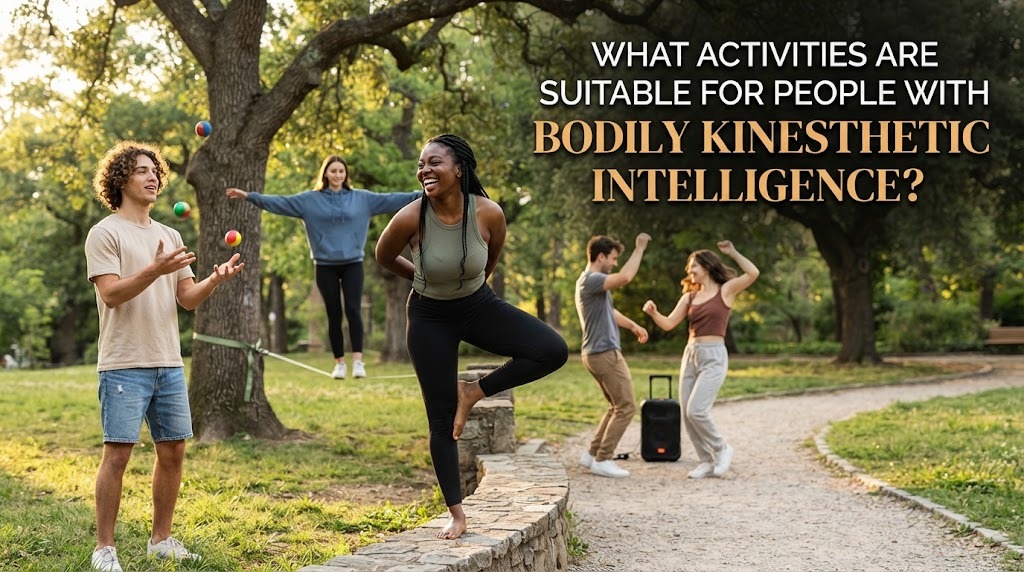
Bodily kinesthetic intelligence is the ability to use the body effectively for movement, expression, and practical problem-solving. People with this intelligence often enjoy activities that involve physical movement, coordination, hands-on practice, and direct experience. They may learn more comfortably when they can practice something instead of only reading or listening to instructions. This ability can be useful in many areas, from sports and performing arts to crafts and practical work. Choosing suitable activities can help people develop their abilities while making learning and daily activities more enjoyable.
SPORTS AND PHYSICAL EXERCISE
Sports are suitable activities for people who enjoy movement and physical challenges. Activities such as swimming, cycling, running, basketball, football, gymnastics, and martial arts can help develop coordination and body control. These activities also require people to understand timing, balance, and movement. Regular practice can improve physical skills while encouraging discipline and persistence. People can choose activities based on their interests, physical condition, and personal goals.
Not everyone with bodily kinesthetic intelligence needs to participate in competitive sports. Activities such as walking, yoga, stretching, or recreational exercise can also provide valuable physical experiences. The main purpose is to give the body opportunities to move, practice, and develop control. Enjoyment is also important because people are more likely to continue activities that match their interests.
DANCING AND PERFORMING ARTS
Dancing is another activity that can develop body coordination, rhythm, balance, and flexibility. Dancers need to control different parts of their bodies while following music and remembering movement sequences. This combination requires physical awareness and concentration. Different styles, such as traditional dance, ballet, modern dance, or street dance, provide different movement experiences. People can select a style that matches their preferences and abilities.
Performing arts such as acting can also be useful because actors communicate through body language, facial expressions, gestures, and movement. Role-playing can help people become more comfortable expressing ideas physically. It also combines movement with creativity and communication. For someone who enjoys learning through experience, acting exercises can be an engaging way to develop both physical and expressive skills.
CRAFTS AND HANDMADE PROJECTS
Craft activities can be especially useful for people who enjoy working with their hands. Activities such as pottery, woodworking, knitting, paper crafts, sewing, and model building require controlled movements and attention to detail. They can strengthen hand-eye coordination and fine motor skills. These activities also provide opportunities to turn ideas into physical objects. The process can be both practical and creative.
Crafting often involves solving problems when materials do not work as expected. A person may need to change a technique, adjust measurements, or find another way to complete a project. This encourages practical thinking and creativity. People can start with simple projects and gradually try more complex techniques as their skills improve.
COOKING AND BAKING
Cooking can be a suitable activity because it involves physical action and practical problem-solving. People need to measure ingredients, mix materials, prepare food, control cooking equipment, and follow a sequence of steps. These actions require coordination and attention. Cooking also allows people to learn through direct experience because they can immediately observe changes in ingredients and results. Over time, repeated practice can improve their confidence and accuracy.
Baking can provide additional opportunities to practice precision. Measuring ingredients, shaping dough, decorating food, and following specific procedures require careful hand movements and concentration. People can also experiment with recipes and learn from mistakes. This combination of physical practice and creativity makes cooking a useful hands-on activity.
GARDENING AND OUTDOOR ACTIVITIES
Gardening provides opportunities to move, touch materials, and work directly with the environment. Planting seeds, digging soil, watering plants, arranging pots, and caring for a garden involve different physical movements. These activities can also teach patience because plants require time and regular care. Gardening can be done individually or with other people, making it flexible for different preferences.
Other outdoor activities can also provide useful physical experiences. Hiking, camping, gardening projects, and nature exploration can encourage people to move while interacting with their surroundings. These activities may improve balance, coordination, endurance, and body awareness. They can also provide practical situations where people need to adapt their movements to different environments.
BUILDING AND REPAIRING PROJECTS
People with bodily kinesthetic intelligence may enjoy activities that involve building, assembling, and repairing objects. Examples include assembling furniture, creating models, fixing simple household items, or working with construction materials under appropriate safety conditions. These activities require hand control, spatial awareness, and practical reasoning. They also provide a clear connection between physical action and the final result.
Building projects can encourage people to understand how different parts work together. If something does not fit correctly, they can inspect the problem and make adjustments. This develops problem-solving skills through direct experience. Beginners can start with simple projects and use appropriate tools and safety instructions.
MUSIC AND PLAYING MUSICAL INSTRUMENTS
Playing a musical instrument can combine physical coordination, concentration, rhythm, and memory. Instruments such as piano, guitar, drums, violin, and flute require controlled movements and repeated practice. Players need to coordinate their hands, fingers, eyes, and sometimes their feet while following rhythm or musical notation. Regular practice can gradually improve accuracy and control.
Musical activities can also support creativity and self-expression. People can learn songs, practice techniques, and eventually create their own musical ideas. The physical aspect of playing an instrument makes it a useful activity for individuals who enjoy learning by doing. As with other activities, progress usually comes through consistent practice rather than immediate perfection.
PRACTICAL LEARNING AND EXPERIMENTS
Practical experiments can be suitable for people who prefer direct experience and active learning. Science experiments, simple engineering projects, and educational demonstrations allow participants to manipulate materials and observe results. Instead of only reading about a concept, they can see how it works through an activity. This can make certain ideas easier to understand and remember.
Practical learning can also encourage curiosity and problem-solving. When an experiment produces an unexpected result, participants can examine what happened and consider possible changes. This process helps connect thinking with physical action. Safe procedures and appropriate supervision should always be used when activities involve tools, equipment, heat, or chemicals.
CONCLUSION
Many activities can suit people with bodily kinesthetic intelligence because this ability can be expressed through movement, coordination, hands-on practice, and practical problem-solving. Sports, dancing, crafts, cooking, gardening, building projects, music, and practical experiments are some examples. The most suitable activity depends on a person's interests, abilities, goals, and physical condition. People do not need to be highly athletic to benefit from these activities. By practicing regularly and choosing enjoyable experiences, they can continue developing their physical and practical skills.
Recent Posts

Bagaimana Sistem SKS pada Program Kuliah... 22.11.2026/27 View

How Does Technology Make Daily Evaluation... 21.11.2026/65 View

Apa Strategi Menghadapi Kesenjangan antara Kompetensi... 21.11.2026/65 View

Mengapa Inventaris Aset Penting bagi Kelancaran... 21.11.2026/62 View

When Should Musicians Join a Record... 21.11.2026/63 View
