

What Are Government Subsidies and Why Are They Important?
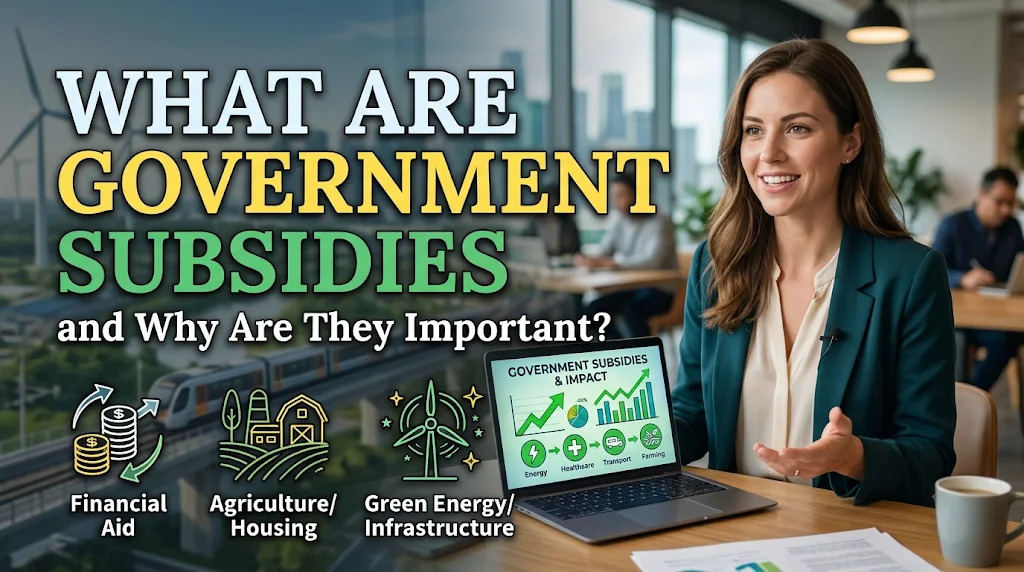
Government subsidies are financial support provided by the government to help individuals, businesses, and specific economic sectors. They are designed to reduce financial burdens, maintain affordable prices, and encourage activities that benefit society. Subsidies can be provided in various forms, including direct financial assistance, price reductions, tax incentives, and support for essential services. In many countries, including Indonesia, government subsidies play an important role in maintaining economic stability and improving public welfare. Understanding how subsidies work is essential because they influence people's daily lives, business activities, and national economic development.
UNDERSTANDING THE MEANING OF GOVERNMENT SUBSIDIES
Government subsidies are forms of financial assistance provided by public authorities to support particular individuals, industries, or economic activities. The government allocates part of its budget to reduce costs or make certain products and services more affordable. This support can help people access essential needs without having to pay the full market price. Subsidies may also encourage businesses to continue operating, especially in sectors that are important for national development.
In general, subsidies are intended to address economic challenges and improve access to essential resources. For example, the government may provide fuel subsidies to help control transportation and distribution costs. It may also support electricity, education, healthcare, and agricultural services to make them more accessible to the public. Government subsidies are therefore an important fiscal policy instrument that allows the government to influence economic activities and support social welfare.
TYPES OF GOVERNMENT SUBSIDIES
Government subsidies come in several forms, depending on the needs of society and the economic sectors being supported. One common type is price subsidies, which help reduce the cost of essential goods and services such as fuel, electricity, and food. Another form is direct financial assistance, where eligible individuals or households receive financial support to help cover certain expenses. These programs are generally designed to protect people from rising living costs.
The government also provides subsidies to businesses and specific industries. Agricultural subsidies, for example, can help farmers obtain fertilizers, seeds, or other production resources at lower prices. Meanwhile, education and healthcare subsidies help reduce the financial barriers that prevent people from accessing important public services. Each type has a different purpose, but they share a common objective: supporting economic activities and improving people's quality of life.
WHY GOVERNMENT SUBSIDIES ARE IMPORTANT FOR SOCIETY
One of the main reasons government subsidies are important is that they help make essential goods and services more affordable. Rising prices can create financial difficulties, particularly for low-income families that spend a significant portion of their income on basic necessities. Subsidies can reduce some of these expenses and help households maintain their purchasing power. As a result, people may have more financial flexibility to meet other important needs.
Subsidies also contribute to social welfare and economic equality by improving access to essential services. Education subsidies can help students continue their studies, while healthcare support can make medical services more accessible. In addition, agricultural assistance can help maintain food production and support the livelihoods of farmers. When properly designed and distributed, subsidies can reduce economic pressure and create better opportunities for different groups within society.
HOW GOVERNMENT SUBSIDIES SUPPORT ECONOMIC STABILITY
Government subsidies can help maintain economic stability by reducing the impact of price fluctuations on households and businesses. When the prices of essential commodities increase significantly, subsidies may help prevent sudden increases in the cost of living. This can protect consumers' purchasing power and support domestic economic activity. Subsidies may also help businesses manage production expenses, especially in sectors that depend on essential resources.
Furthermore, subsidies can support industries that contribute to employment and national development. Assistance for agriculture, energy, transportation, and small businesses may help maintain production and economic activity. However, subsidies must be managed carefully because excessive government spending can place pressure on the national budget. Effective subsidy management requires a balance between public assistance, fiscal sustainability, and long-term economic priorities.
CHALLENGES IN IMPLEMENTING GOVERNMENT SUBSIDIES
Although subsidies offer many benefits, their implementation can involve several challenges. One major issue is inaccurate distribution, which occurs when assistance does not reach the people or businesses that need it most. In some cases, individuals who are financially capable may receive benefits intended for more vulnerable groups. This situation can reduce the effectiveness of government spending and create inequalities in access to public support.
Another challenge is the financial burden that subsidies can place on the state budget. If subsidy spending becomes too large, the government may have fewer resources available for infrastructure, education, healthcare, and other development priorities. There is also a risk that certain subsidies may encourage excessive consumption or reduce incentives for businesses to become more efficient. Therefore, the government needs transparent regulations, accurate beneficiary data, and regular evaluations to ensure that subsidy programs remain effective and sustainable.
CONCLUSION
Government subsidies are financial support programs designed to make essential goods and services more affordable, support businesses, and improve public welfare. They play an important role in maintaining economic stability, reducing financial pressure on households, and supporting important industries. However, subsidies also involve challenges such as inaccurate distribution and increasing government expenditure. By improving targeting, transparency, and budget management, governments can ensure that subsidies provide meaningful benefits while supporting long-term economic development.
Recent Posts

Bagaimana Sistem SKS pada Program Kuliah... 22.11.2026/28 View

How Does Technology Make Daily Evaluation... 21.11.2026/65 View

Apa Strategi Menghadapi Kesenjangan antara Kompetensi... 21.11.2026/65 View

Mengapa Inventaris Aset Penting bagi Kelancaran... 21.11.2026/62 View

When Should Musicians Join a Record... 21.11.2026/63 View
