

What Are Main Challenges In Implementing Global Vocational Curriculum Standards?
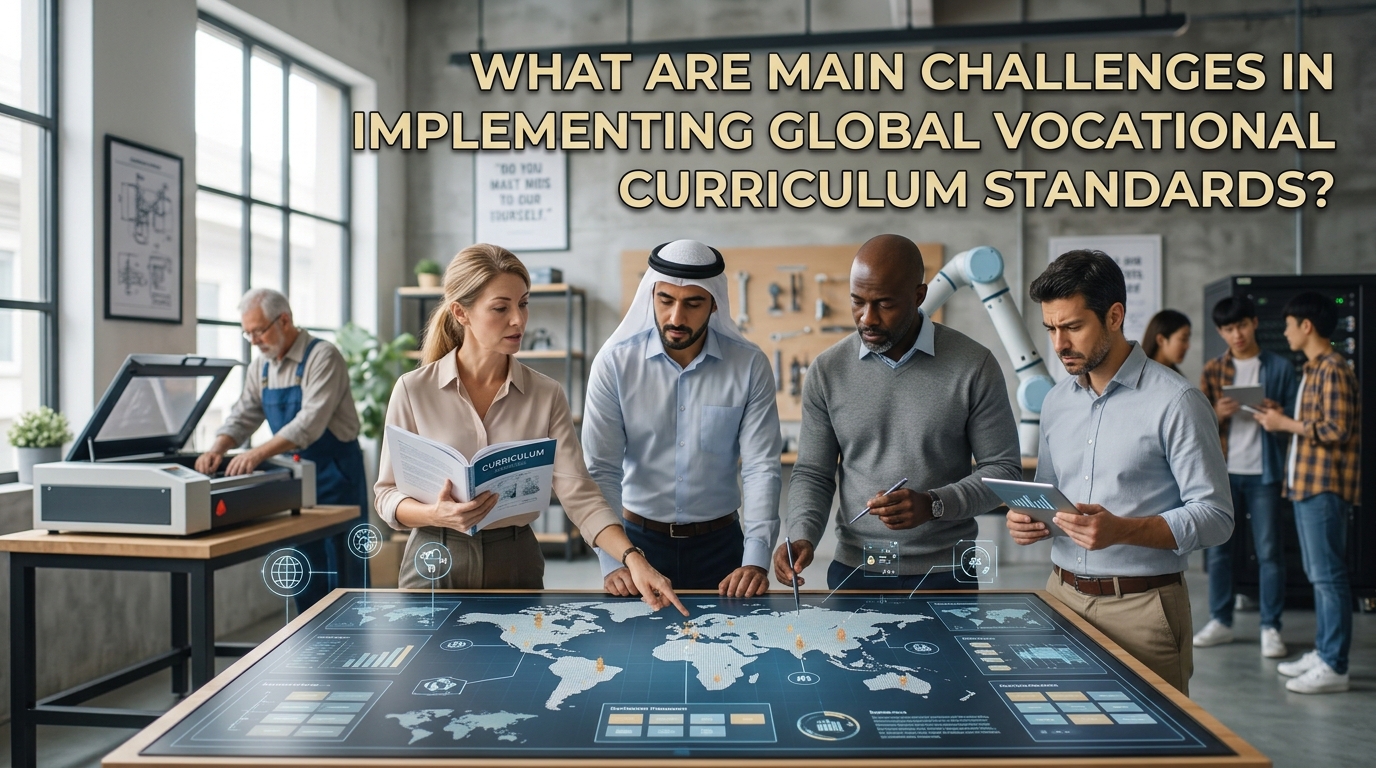
Adopting international standards in technical education is crucial for producing a skilled and globally competitive workforce. Educational leaders around the world actively investigate what challenges arise when integrating a vocational curriculum with global standards. Shifting toward international frameworks requires aligning local academic policies with rapidly evolving corporate expectations and technological benchmarks. However, bridging the gap between localized educational systems and international requirements involves complex operational, financial, and pedagogical hurdles. This article explores the primary obstacles institutions face when implementing global vocational benchmarks and how overcoming them enhances overall graduate employability.
NAVIGATING INFRASTRUCTURE AND FINANCIAL DISPARITIES
One of the most significant barriers to implementing international vocational frameworks is the severe disparity in institutional funding and physical resources. Modern international benchmarks demand state-of-the-art laboratory machinery, advanced digital simulation tools, and industry-standard software platforms that require substantial capital investment. Many regional educational institutions operate under strict budget constraints, making it extremely difficult to purchase and maintain high-tech equipment.
Without modern physical infrastructure, students cannot gain the hands-on exposure necessary to master advanced technical concepts. This resource gap prevents local schools from delivering training that fully meets global quality expectations. Securing sustainable funding and corporate sponsorships remains a critical priority for institutions striving to upgrade their facilities.
BRIDGING THE FACULTY QUALIFICATION AND SKILLS GAP
Implementing a high-level technical curriculum requires educators who possess both deep academic knowledge and up-to-date practical expertise. A major challenge facing many vocational institutions is the lack of certified instructors who are trained in modern international industry workflows. Many faculty members have limited exposure to current corporate practices, making it challenging to teach cutting-edge technologies effectively.
To deliver authentic instruction, institutions must invest heavily in continuous professional development and faculty upskilling programs. Establishing exchange initiatives and industry sabbaticals allows instructors to refresh their practical knowledge in real-world corporate environments. Upgrading faculty qualifications is essential for ensuring that classroom instruction reflects current international workplace expectations.
ALIGNING LOCAL REGULATIONS WITH GLOBAL COMPETENCY CERTIFICATION
Harmonizing local educational regulations with international qualification frameworks presents a complex administrative challenge for academic leaders. Educational institutions must navigate conflicting accreditation requirements, national qualification frameworks, and rigid government policies when updating course modules. Aligning traditional grading systems with standardized competency certification testing often requires extensive policy revisions and bureaucratic approvals.
Furthermore, securing recognition from international certification bodies involves rigorous audits and ongoing compliance checks. Obtaining official validation is essential for ensuring that diplomas carry international legitimacy and value. Overcoming these regulatory hurdles is vital for providing graduates with verified credentials that enhance their global job mobility.
ADDRESSING CULTURAL AND REGIONAL MARKET DEMANDS
A global vocational framework must remain flexible enough to address specific regional industrial needs without sacrificing international quality. Standardized global courses may not always align perfectly with local economic priorities, regional labor needs, or specialized industrial sectors. Educational institutions struggle to balance universal technical competencies with localized market demands required by domestic employers.
Curriculum designers must carefully adapt international learning modules to reflect local workplace realities and cultural contexts. Customizing practical assignments ensures that students remain highly employable in their immediate regional job markets. Achieving this balance requires active collaboration between academic boards, regional business leaders, and international accreditation advisors.
FOSTERING ADAPTABILITY AND LIFELONG LEARNING MINDSETS
Rapid technological advancement constantly reshapes global industry expectations, causing technical skill standards to become obsolete quickly. Vocational institutions must build flexible educational structures that support continuous updates and encourage a lifelong learning mindset among students. Teaching learners how to adapt independently to new automation tools and digital workflows is essential for long-term career durability.
Encouraging self-directed learning helps technical professionals stay resilient when facing industrial disruptions and automation shifts. Educational frameworks should instill a proactive attitude toward continuous skill upgrading throughout a graduate's professional journey. Fostering this adaptable character ensures that technical workers maintain long-term career growth in dynamic global markets.
CONCLUSION
Implementing global standards within a vocational curriculum involves overcoming infrastructure deficits, faculty skill gaps, regulatory hurdles, and regional market demands. By securing recognized competency certification and instilling a strong commitment to lifelong learning, educational institutions can successfully overcome these challenges to boost graduate employability worldwide.
Recent Posts

Bagaimana Sistem SKS pada Program Kuliah... 22.11.2026/54 View

How Does Technology Make Daily Evaluation... 21.11.2026/83 View

Apa Strategi Menghadapi Kesenjangan antara Kompetensi... 21.11.2026/82 View

Mengapa Inventaris Aset Penting bagi Kelancaran... 21.11.2026/78 View

When Should Musicians Join a Record... 21.11.2026/84 View
