

What Are Regional Government Owned Enterprises and Why Are They Important?
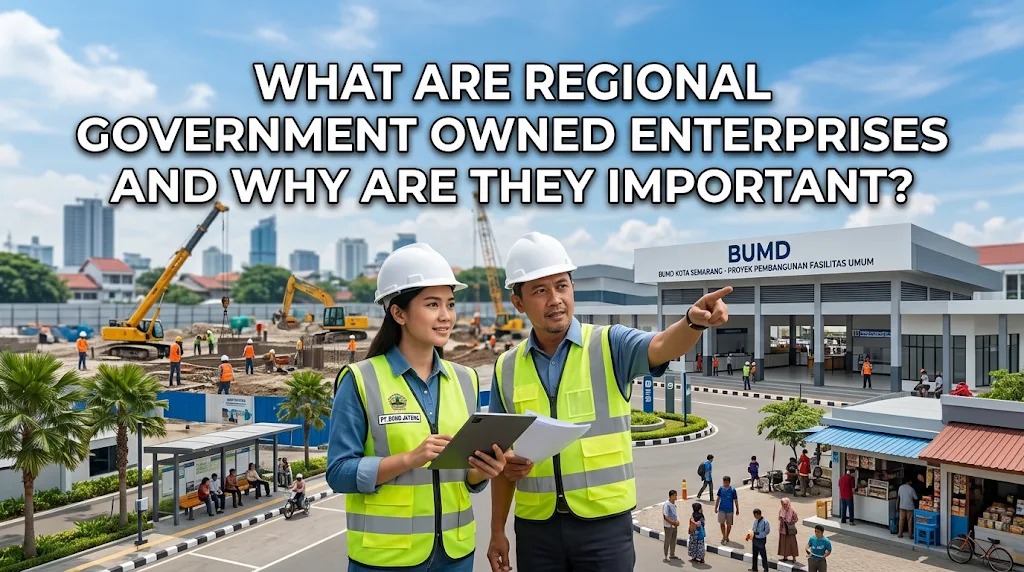
Regional Government Owned Enterprises, commonly known as BUMD (Badan Usaha Milik Daerah) in Indonesia, are business entities established and owned by regional governments. These enterprises are created to manage local economic resources, provide essential services, and support regional development. Their activities cover various sectors, including banking, transportation, water supply, energy, and regional tourism.
Regional Government Owned Enterprises play an important role in connecting government responsibilities with business activities. Through professional management, they can generate income for local governments while providing services that benefit the community. Understanding their purpose, functions, and benefits helps people recognize how these enterprises contribute to regional economic growth.
UNDERSTANDING REGIONAL GOVERNMENT OWNED ENTERPRISES
Regional Government Owned Enterprises are companies in which regional governments invest part or all of their capital. In Indonesia, these businesses are established to support local economic development and provide services according to regional needs. Their ownership may belong entirely to one regional government or involve several regional governments, depending on the company's legal structure and establishment.
Unlike ordinary private companies, Regional Government Owned Enterprises have responsibilities beyond generating profits. They must also consider public interests, service quality, and the effective use of regional resources. Their operations are generally managed according to business principles while remaining subject to applicable laws and government supervision.
In Indonesia, BUMD is regulated under Government Regulation Number 54 of 2017 concerning Regional Government Owned Enterprises. The regulation recognizes two main forms of BUMD, namely Regional Public Companies and Regional Limited Liability Companies. Both forms have different ownership and organizational structures, but they share the broader objective of supporting regional development.
THE MAIN TYPES OF REGIONAL GOVERNMENT OWNED ENTERPRISES
Regional Government Owned Enterprises have two main legal forms, each with different characteristics and responsibilities. Understanding these forms is important because they determine how a company is managed, how its capital is structured, and what objectives it prioritizes.
Regional Public Companies (Perusahaan Umum Daerah or Perumda) are enterprises whose capital is entirely owned by one regional government and is not divided into shares. These companies generally focus on providing public services while maintaining financial sustainability. Examples include regional drinking water companies that distribute clean water to households and businesses. Their operations must balance service responsibilities with effective financial management.
Regional Limited Liability Companies (Perseroan Daerah or Perseroda) are enterprises established as limited liability companies in which the regional government owns at least 51 percent of the shares. Their capital is divided into shares, allowing ownership structures that may involve other shareholders. These companies generally emphasize business development and profitability while supporting regional economic objectives. Their management must follow company regulations and maintain accountability to shareholders.
WHY ARE REGIONAL GOVERNMENT OWNED ENTERPRISES IMPORTANT?
Regional Government Owned Enterprises are important because they help regional governments manage economic activities and improve public welfare. They can develop businesses that may be difficult to operate effectively through government departments alone. By applying professional business management, these enterprises can improve efficiency, expand services, and create economic opportunities.
One of their most significant contributions is generating Regional Original Revenue, commonly known as Pendapatan Asli Daerah or PAD. Profits earned by these companies can contribute to regional income through dividends and other legally applicable mechanisms. Additional regional revenue can help local governments finance infrastructure, education, healthcare, and other public development programs.
These enterprises also support the availability of essential services. For example, regional water companies help provide clean water, while regional banks offer financial services to individuals, businesses, and local institutions. In areas where private investment is limited, BUMD can help maintain access to important services and support local economic activities.
Another important contribution is job creation. Regional enterprises employ workers in different fields, including administration, finance, engineering, customer service, and business management. Their activities can also create opportunities for local suppliers, small businesses, and other economic partners. As a result, their impact can extend beyond the companies themselves and benefit the wider regional economy.
THE ROLES AND CHALLENGES OF REGIONAL GOVERNMENT OWNED ENTERPRISES
Regional Government Owned Enterprises have several responsibilities in supporting regional development. They manage business opportunities, utilize local resources, provide essential services, and contribute to government revenue. They can also encourage investment by developing strategic business sectors that have the potential to grow.
However, managing these enterprises is not always easy. Some BUMD face financial difficulties, limited capital, weak management systems, and competition from private companies. Changes in technology and consumer expectations also require them to improve their services and business strategies continuously.
Another challenge is maintaining transparency and accountability. Since regional governments invest public resources in these companies, their financial activities and business decisions must be managed responsibly. Weak supervision, inefficient spending, and conflicts of interest can reduce company performance and damage public trust.
To overcome these challenges, BUMD need professional leadership, clear business strategies, regular performance evaluations, and stronger internal controls. Digital technology can also improve administrative efficiency, financial reporting, and customer services. With proper management and consistent supervision, these enterprises can become more competitive and deliver greater benefits to their communities.
CONCLUSION
Regional Government Owned Enterprises are important business entities that help local governments strengthen their economies, provide essential public services, and increase Regional Original Revenue. Through their activities in sectors such as banking, transportation, water supply, and tourism, they contribute to regional development and community welfare.
However, their success depends on professional management, financial stability, transparency, and effective government supervision. By addressing operational challenges and adapting to technological developments, BUMD can improve their competitiveness and fulfill their responsibilities. Ultimately, well-managed Regional Government Owned Enterprises can become valuable drivers of sustainable economic growth and better public services.
Recent Posts

Bagaimana Sistem SKS pada Program Kuliah... 22.11.2026/35 View

How Does Technology Make Daily Evaluation... 21.11.2026/69 View

Apa Strategi Menghadapi Kesenjangan antara Kompetensi... 21.11.2026/70 View

Mengapa Inventaris Aset Penting bagi Kelancaran... 21.11.2026/67 View

When Should Musicians Join a Record... 21.11.2026/69 View
