

What Are Regional Languages and Why Are They Important to Preserve?
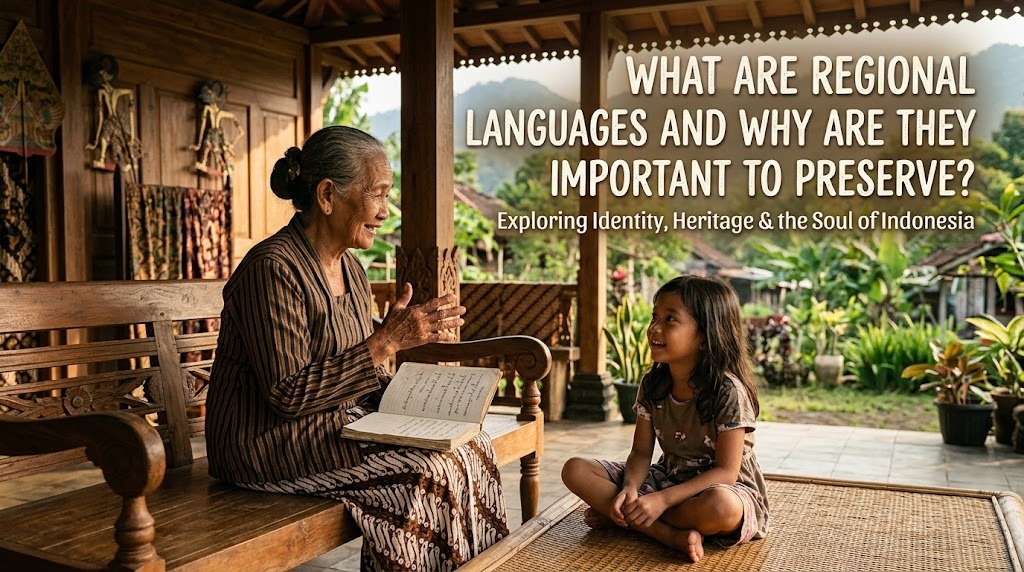
Regional languages are an important part of human communication and cultural heritage. In Indonesia, hundreds of regional languages are used by communities to communicate, share knowledge, and maintain traditions. Each language has its own vocabulary, expressions, and ways of describing the world. However, some regional languages are becoming less frequently used, especially among younger generations. Understanding what regional languages are and why they are important to preserve can encourage people to protect linguistic diversity for future generations.
WHAT ARE REGIONAL LANGUAGES?
Regional languages are languages used by communities in particular geographical areas and passed down through generations. They are often used in daily conversations, family interactions, traditional ceremonies, and local cultural activities. In Indonesia, examples include Javanese, Sundanese, Balinese, Minangkabau, Bugis, and Batak languages. Each language has distinctive vocabulary, pronunciation, and grammatical structures that reflect the experiences of its speakers. Some regional languages also have their own traditional writing systems, while others are primarily transmitted through spoken communication.
Regional languages are different from Indonesian, which serves as the national language and a common means of communication among people from different regions. A person may speak Indonesian at school or work and use a regional language at home or during community activities. Many Indonesians are multilingual and switch between languages depending on the situation. This ability allows people to communicate with wider society while maintaining connections with their local communities. Therefore, regional languages are not simply local communication tools but also an important part of Indonesia's linguistic richness.
WHY ARE REGIONAL LANGUAGES IMPORTANT FOR CULTURAL IDENTITY?
Regional languages help people understand their cultural identity, family history, and community values. Through language, people learn traditional expressions, forms of politeness, local stories, and ways of showing respect to others. Certain words and expressions may carry meanings that are difficult to communicate fully in another language. For example, some languages have specific terms for family relationships, social responsibilities, or customary practices. These expressions provide insight into how a community understands relationships and organizes its social life.
Language also creates a sense of belonging among people who share the same cultural background. Speaking a regional language can strengthen relationships between grandparents, parents, children, and other community members. It can also help younger generations understand the experiences and traditions of their ancestors. When people use their regional languages in everyday life, they help maintain cultural knowledge that might otherwise become less familiar. For this reason, preserving regional languages also means protecting the cultural identity and collective memory of communities.
HOW DO REGIONAL LANGUAGES PRESERVE TRADITIONS AND LOCAL KNOWLEDGE?
Many regional languages contain traditional knowledge passed down through stories, songs, proverbs, poetry, and oral histories. These forms of communication may explain local customs, historical events, agricultural practices, medicinal plants, and relationships with the natural environment. Elders often share this knowledge through conversations and storytelling rather than written documents. If a language disappears before its knowledge is recorded or passed on, some cultural information may become difficult to recover. Preserving a language can therefore help protect valuable knowledge that has developed over many generations.
Regional languages are also closely connected to traditional ceremonies, performing arts, and community celebrations. Local songs, traditional theater, prayers, and customary speeches may rely on expressions that have special meanings within their cultural settings. Translating these expressions into another language can communicate their general meaning, but some cultural nuances may be lost. Communities can preserve these traditions by encouraging younger people to participate in cultural events and learn directly from experienced speakers. Recording oral histories and documenting traditional vocabulary can also help ensure that local knowledge remains accessible in the future.
WHAT CAUSES REGIONAL LANGUAGES TO DECLINE?
Regional languages may decline when fewer people use them in everyday communication. One major factor is the increasing preference for Indonesian as a common language in education, workplaces, public services, and interactions between people from different regions. Globalization and digital media also expose young people to Indonesian and international languages through entertainment, online games, videos, and social networks. These influences are not necessarily harmful, but regional languages may receive less attention when they are rarely used at home or in public spaces. Over time, children may understand a regional language without becoming confident enough to speak it.
Migration, urbanization, and changing family habits can also affect language transmission. Families who move to different regions may choose a widely understood language so that everyone can communicate comfortably. Parents may also speak Indonesian to their children because they believe it will help them succeed academically or socially. In some situations, regional languages are mistakenly viewed as less modern or less useful than other languages. The most serious risk occurs when children no longer learn a language naturally from their families and communities. Without regular use and opportunities to learn, the number of fluent speakers may decrease from one generation to the next.
HOW CAN REGIONAL LANGUAGES BE PRESERVED IN MODERN SOCIETY?
Preserving regional languages requires cooperation between families, schools, communities, and governments. Parents can introduce children to regional languages through daily conversations, bedtime stories, traditional songs, and family gatherings. Grandparents and other fluent speakers can share local expressions and explain their meanings through practical examples. These activities make language learning a natural part of family life instead of treating it as a difficult academic task. Children should also be encouraged to use regional languages confidently without being discouraged from learning Indonesian or other languages.
Schools and community organizations can support preservation through language lessons, storytelling competitions, cultural festivals, and traditional performances. Digital technology provides additional opportunities to record pronunciation, create online dictionaries, publish educational videos, and share regional-language content on social media. Local governments, researchers, and cultural organizations can help document languages and develop learning resources, especially for languages with declining numbers of speakers. These efforts should involve native speakers so that the language is represented accurately and respectfully. Most importantly, regional languages must remain useful in everyday life, because regular communication is essential for keeping a language active across generations.
CONCLUSION
Regional languages are more than tools for communication because they preserve cultural identity, traditional knowledge, community values, and historical memory. In Indonesia, their diversity reflects the experiences and creativity of communities across the archipelago. However, changing communication habits, migration, and the growing influence of widely used languages can reduce opportunities for younger generations to learn their ancestral languages. Families, schools, communities, and governments can respond by promoting daily use, documenting local knowledge, and creating engaging learning resources. Preserving regional languages is a shared responsibility that helps ensure Indonesia's linguistic and cultural diversity remains meaningful for future generations.
Recent Posts

Bagaimana Sistem SKS pada Program Kuliah... 22.11.2026/47 View

How Does Technology Make Daily Evaluation... 21.11.2026/75 View

Apa Strategi Menghadapi Kesenjangan antara Kompetensi... 21.11.2026/77 View

Mengapa Inventaris Aset Penting bagi Kelancaran... 21.11.2026/73 View

When Should Musicians Join a Record... 21.11.2026/77 View
