

What Are Some Real World Examples of Big Data in Everyday Life?
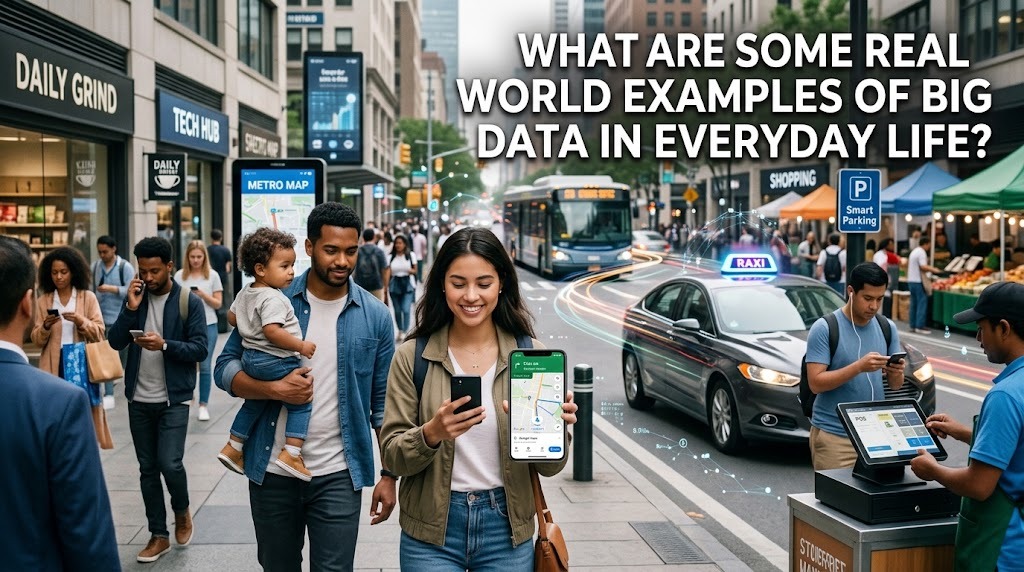
Big Data has become part of everyday life, often without people realizing it. Every time someone searches for information online, watches a video, uses a navigation application, or shops through an e-commerce platform, data is generated. This information can be analyzed to understand behavior, improve services, and predict future needs. Businesses, governments, and technology companies use Big Data to make digital experiences more efficient and relevant. Understanding its real-world applications helps explain how data influences daily activities.
BIG DATA IN SOCIAL MEDIA
Social media platforms use Big Data to understand user interests and improve content recommendations. They analyze information such as likes, comments, searches, shares, and viewing habits to identify patterns in user behavior. These insights help platforms recommend posts, videos, and accounts that may interest individual users. Advertisers can also use aggregated audience data to reach people who may be interested in their products.
For example, someone who frequently watches cooking videos may receive more food-related content in their feed. Although these recommendations can make social media more relevant, they can also limit exposure to different perspectives. Privacy protection and responsible data use are therefore important considerations.
BIG DATA IN ONLINE SHOPPING
E-commerce platforms use Big Data to understand customer preferences and improve shopping experiences. They analyze purchase histories, product searches, reviews, and browsing patterns to recommend relevant products. Businesses can also use sales data to forecast demand, manage inventory, and identify popular products. These insights help sellers make better decisions and reduce the risk of overstocking or running out of products.
For example, a customer who frequently searches for sports shoes may receive recommendations for similar footwear or related accessories. Online retailers can also analyze seasonal purchasing trends to prepare for periods of high demand. However, customers should be able to understand how their information is collected and used.
BIG DATA IN NAVIGATION AND TRANSPORTATION
Navigation applications use Big Data to help people choose routes and estimate travel times. They process information from GPS devices, road sensors, historical traffic records, and other sources to identify traffic conditions. By analyzing this information, applications can suggest alternative routes when roads become congested. Transportation companies can also use data to improve delivery schedules and fleet management.
For example, a navigation application may recommend a different road when an accident causes heavy traffic. Public transportation providers can analyze passenger numbers to identify busy routes and improve service schedules. These applications show how Big Data can save time and support more efficient transportation.
BIG DATA IN DIGITAL PAYMENTS AND BANKING
Banks and digital payment providers use Big Data to monitor transactions and identify unusual financial activities. Analytical systems can compare transaction patterns, locations, amounts, and other relevant signals to detect potential fraud. When a transaction appears suspicious, the system may flag it for additional verification. Data analysis also helps financial institutions understand customer needs and improve digital banking services.
For example, a bank may request additional confirmation when a payment differs significantly from a customer's usual activity. However, automated systems can sometimes flag legitimate transactions incorrectly. Financial institutions must balance fraud prevention with customer convenience while protecting sensitive financial information.
BIG DATA IN HEALTHCARE
Big Data supports healthcare by helping professionals and researchers analyze medical records, treatment outcomes, and public health information. These insights can reveal patterns in diseases, support medical research, and improve healthcare planning. Hospitals may also analyze appointment records to manage patient flow and allocate staff more effectively. When used appropriately, data analysis can contribute to better-informed healthcare decisions.
For example, hospitals can examine historical appointment patterns to anticipate periods of high patient demand. Researchers can also study large datasets to investigate possible relationships between health conditions and environmental factors. Medical data must be handled securely, and clinical decisions should remain guided by qualified healthcare professionals.
BIG DATA IN ENTERTAINMENT
Streaming services use Big Data to recommend movies, television programs, music, and other content. They analyze viewing histories, listening habits, searches, and user ratings to identify preferences. These patterns help platforms suggest content that users may enjoy. Companies can also use aggregated viewing data to understand audience interests and improve their services.
For example, someone who regularly watches documentaries may receive recommendations for similar programs. Music applications may suggest playlists based on listening habits and selected preferences. Although recommendations can make entertainment easier to discover, they do not always reflect a person's changing interests.
BIG DATA IN SMART HOMES
Smart home devices generate data that can help households manage energy use, comfort, and security. Smart thermostats, lighting systems, connected appliances, and security cameras may collect information about usage patterns and environmental conditions. This information can support automated adjustments and help users monitor their homes remotely. Energy providers may also analyze aggregated consumption data to improve demand forecasting.
For example, a smart thermostat can learn when a household usually adjusts its temperature and help manage heating or cooling schedules. Smart lighting may switch off automatically when certain conditions are detected. However, connected devices should use appropriate security settings because poorly protected systems can expose personal information.
BIG DATA IN EDUCATION
Digital learning platforms use Big Data to understand how students interact with educational materials. They can analyze quiz results, assignment completion, lesson activity, and learning progress to identify topics that may require additional practice. Teachers can use these insights to adjust lessons and provide more targeted support. Educational institutions can also examine aggregated data to evaluate courses and improve learning resources.
For example, an online learning platform may recommend additional exercises when a student struggles with a particular topic. Teachers can review assessment patterns to determine whether a lesson needs clearer explanations. Student data must be protected, and learning decisions should not rely entirely on automated predictions.
BIG DATA IN WEATHER FORECASTING
Weather forecasting relies on large amounts of information collected from satellites, weather stations, radar systems, and other observation tools. Meteorologists analyze these datasets using scientific models to estimate future weather conditions. The results help people prepare for heavy rain, storms, extreme temperatures, and other environmental changes. Governments and emergency services can also use weather information to support disaster preparedness.
For example, weather forecasts can help farmers plan agricultural activities and help travelers prepare for changing conditions. Emergency authorities may use weather models to assess potential flood risks. Although Big Data improves forecasting capabilities, weather predictions still contain uncertainty and may change as new observations become available.
BENEFITS AND CHALLENGES OF BIG DATA IN EVERYDAY LIFE
Big Data offers several benefits, including more personalized services, faster decision-making, improved efficiency, and better resource management. It helps businesses understand customer needs and enables digital platforms to provide more relevant recommendations. In healthcare, transportation, and education, data analysis can support planning and help identify problems that need attention. These applications demonstrate how information can create practical benefits in everyday activities.
However, Big Data also raises concerns about privacy, cybersecurity, inaccurate information, and excessive monitoring. Organizations may collect more personal information than necessary or use data in ways that people do not expect. Incorrect or biased datasets can also lead to unfair recommendations and misleading conclusions. Responsible data management requires strong security measures, transparent practices, reliable information, and respect for individual privacy.
CONCLUSION
Real-world examples of Big Data can be found in social media, online shopping, navigation, banking, healthcare, entertainment, smart homes, education, and weather forecasting. These applications help people access relevant information, save time, improve services, and make better-informed decisions. Although many processes happen automatically, they depend on analyzing information collected from different sources.
Despite its advantages, Big Data must be managed responsibly to protect privacy, maintain security, and prevent inaccurate conclusions. Understanding how it works allows people to make more informed decisions about the digital services they use every day.
Recent Posts

Bagaimana Sistem SKS pada Program Kuliah... 22.11.2026/45 View

How Does Technology Make Daily Evaluation... 21.11.2026/73 View

Apa Strategi Menghadapi Kesenjangan antara Kompetensi... 21.11.2026/75 View

Mengapa Inventaris Aset Penting bagi Kelancaran... 21.11.2026/71 View

When Should Musicians Join a Record... 21.11.2026/75 View
