

What Are The Advantages And Disadvantages Of Using Secondary Data?
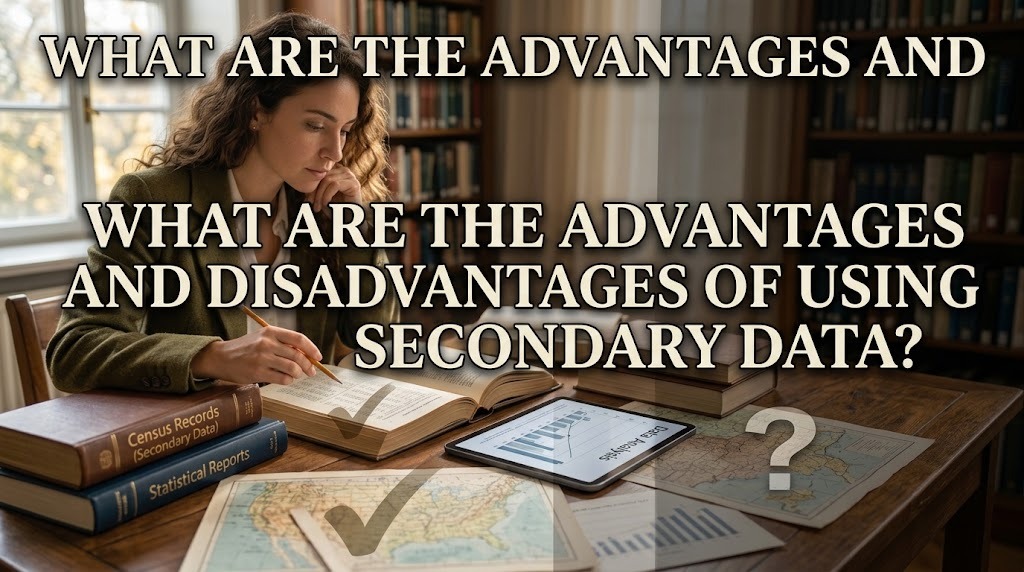
Secondary data is widely used in research because it allows researchers to access information that has already been collected by other people or organizations. Common sources include academic journals, government reports, books, statistical databases, and previous research studies. Using existing information can make research more efficient, especially when time and financial resources are limited. However, secondary data also has limitations that may affect the quality of research findings. Understanding the advantages and disadvantages of secondary data helps researchers decide whether this approach is suitable for their research objectives.
WHAT IS SECONDARY DATA?
Secondary data refers to information that was previously collected for another purpose and is later reused to answer a new research question. Researchers can obtain it from published studies, official statistics, company reports, digital repositories, and other existing records. For example, a student studying unemployment may analyze government employment statistics instead of conducting a new survey. Secondary data can include numerical information, such as population figures, as well as qualitative information, such as written reports and interview transcripts. Its usefulness depends on whether the information is reliable, relevant, and appropriate for the current research.
ADVANTAGES OF USING SECONDARY DATA
One of the main advantages of secondary data is that it can save time and money. Researchers do not always need to recruit participants, distribute questionnaires, conduct interviews, or purchase expensive equipment to obtain information. Existing datasets may also cover large populations, several regions, or long periods, allowing researchers to examine patterns that would be difficult to investigate independently. In addition, reviewing previous research helps researchers understand established findings and identify gaps that need further investigation. These benefits make secondary data particularly useful for students, academic researchers, businesses, and organizations with limited resources.
REDUCES TIME AND RESEARCH COSTS
Collecting primary data can require considerable preparation, travel, staff, and participant coordination. Secondary data reduces many of these demands because the information has already been gathered and may be freely accessible online. For example, a researcher studying changes in school enrollment can use published education statistics rather than survey every school. This allows more time to be spent on data analysis, interpretation, and writing research findings. However, some datasets require subscription fees, special permissions, or additional processing, so researchers should consider these costs before choosing a source.
PROVIDES ACCESS TO LARGE AMOUNTS OF INFORMATION
Secondary data can provide access to information collected from thousands of people, multiple locations, or different periods. Government agencies, universities, and international organizations often publish extensive datasets that individual researchers could not easily collect themselves. These resources make it possible to compare regions, examine historical developments, and identify long-term trends. For example, economic researchers can analyze several years of employment statistics to understand changes in the labor market. Access to large datasets can strengthen research, provided the information is suitable for the population and questions being studied.
SUPPORTS COMPARISON AND FUTURE RESEARCH
Previous studies and existing datasets help researchers compare findings across different situations. By examining earlier research, they can identify similarities, differences, and unanswered questions that may guide future investigations. Secondary data can also help researchers develop hypotheses and choose appropriate methods for collecting new information. For instance, previous studies about online learning may reveal a need to investigate student motivation in a particular region. This makes secondary data valuable for building background knowledge and identifying research gaps before conducting a new study.
DISADVANTAGES OF USING SECONDARY DATA
Despite its benefits, secondary data may not fully match the needs of a particular research project. The information was originally collected for a different purpose, so some important questions or variables may be missing. Researchers may also have limited control over the original collection methods, sample selection, and measurement procedures. These limitations can reduce the usefulness of the data and make certain conclusions difficult to support. Therefore, secondary data must be evaluated carefully before it is used in research.
OUTDATED OR INACCURATE INFORMATION
Some secondary data may be too old to represent current conditions, particularly in areas that change rapidly, such as technology, business, and public health. Information may also contain errors, incomplete records, or inconsistencies in definitions and measurements. For example, an old report about consumer behavior may not accurately describe current shopping habits. Researchers should check the publication date, original collection period, accuracy, and credibility of every source. Older information can still be valuable for historical research, but its limitations must be considered when interpreting the results.
LIMITED CONTROL OVER DATA COLLECTION
Researchers who use secondary data usually cannot change how the original information was collected. They may not be able to modify survey questions, select different participants, or obtain additional details from the original respondents. If the original study used a small or unrepresentative sample, its findings may not accurately reflect the wider population. Differences in research methods can also make it difficult to compare datasets from separate sources. Understanding these limitations helps researchers determine whether the existing information is appropriate or whether primary data collection is necessary.
POSSIBLE BIAS AND LACK OF RELEVANCE
Secondary data may reflect the priorities, assumptions, or limitations of the organization that originally collected it. Some reports may emphasize particular findings while leaving out information that is important for a different research question. Data may also focus on a different population, location, or period from the one being studied. For example, national statistics may not provide enough detail to explain a specific problem in one school or community. Researchers should check for possible bias, missing variables, and differences in context before using the information to support their conclusions.
HOW TO BALANCE THE ADVANTAGES AND DISADVANTAGES
Researchers can make better use of secondary data by defining their research objectives before searching for information. They should select credible sources, check the original methodology, and verify important findings against other reliable publications whenever possible. The data must also match the required population, variables, and time period. If important information is missing, researchers may combine secondary data with surveys, interviews, or observations to obtain a more complete understanding. This balanced approach helps reduce limitations while preserving the benefits of using existing information.
CONCLUSION
The advantages and disadvantages of secondary data depend on the quality of the information and the purpose of the research. Its main benefits include lower costs, faster access to information, and opportunities to analyze large datasets. However, outdated information, possible bias, missing details, and limited control over data collection can affect research quality. Researchers should evaluate every source carefully and consider whether additional primary data is necessary. When used appropriately, secondary data is a valuable resource for producing efficient, informed, and credible research findings.
Recent Posts

Bagaimana Sistem SKS pada Program Kuliah... 22.11.2026/46 View

How Does Technology Make Daily Evaluation... 21.11.2026/74 View

Apa Strategi Menghadapi Kesenjangan antara Kompetensi... 21.11.2026/75 View

Mengapa Inventaris Aset Penting bagi Kelancaran... 21.11.2026/72 View

When Should Musicians Join a Record... 21.11.2026/75 View
