

What Are the Basic Techniques Used in Long Jump?
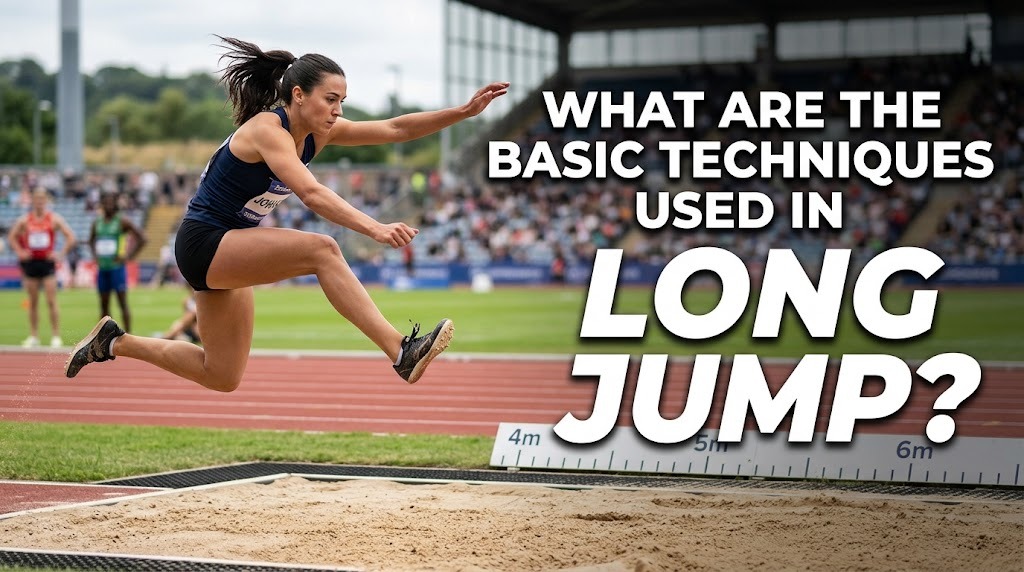
Long jump is an athletics event in which athletes attempt to jump as far as possible from a take-off board into a sandpit. Success depends on a combination of running speed, explosive leg power, coordination, and body control. Athletes must perform several movements in the correct sequence to achieve an effective jump. Understanding the basic long jump techniques helps beginners develop their skills and improve their performance safely.
THE APPROACH RUN
The approach run is the first stage of the long jump. Athletes run along a runway to build speed before reaching the take-off board. A fast and controlled approach helps generate the horizontal momentum needed for a long jump. Beginners should practice maintaining a consistent stride and identifying a suitable starting point to reach the board accurately.
THE TAKE-OFF TECHNIQUE
Take-off occurs when an athlete pushes off the ground using one foot from behind or at the take-off line. This movement converts part of the athlete’s running speed into upward motion. The take-off leg must produce force quickly while the body remains balanced. Athletes should practice a strong, controlled push without stepping beyond the board, because doing so results in a foul.
THE FLIGHT PHASE
The flight phase begins after the athlete leaves the ground and continues until landing in the sandpit. During this phase, athletes control their body position to prepare for landing. Common long jump techniques include the sail, hang, and hitch-kick methods. Each technique uses different arm and leg movements, but all aim to maintain effective body control and prepare the feet for a safe, efficient landing.
THE LANDING TECHNIQUE
Landing is the final stage of the long jump and can affect the recorded distance. Athletes generally bring both feet forward, extend their legs, and prepare to bend their knees as their feet contact the sand. They should move their upper body forward and avoid falling backward, since a mark made behind the feet can reduce the measured distance. Practicing landing techniques helps athletes use their flight effectively and maintain control when entering the sandpit.
ARM MOVEMENTS AND BODY COORDINATION
Arm movements help athletes coordinate their approach, take-off, and flight. During take-off, the arms contribute to the upward movement and help maintain balance. In the air, coordinated arm and leg movements allow athletes to control their body position. Good coordination also helps connect the different phases of the jump into one continuous movement.
MAINTAINING BALANCE AND BODY CONTROL
Balance is important throughout the long jump because athletes move at high speed and must transition quickly from running to jumping. During the approach, consistent body posture supports rhythm and accuracy. At take-off, balance helps the athlete direct the movement effectively. During landing, body control helps prevent the athlete from falling backward and losing valuable distance.
TRAINING EXERCISES FOR LONG JUMP
Long jump training combines sprinting, jumping drills, strength exercises, and technique practice. Short approach runs help beginners learn how to control their speed and reach the take-off board. Bounding and controlled single-leg jumps can develop coordination and explosive leg power when performed with proper technique. Squats, lunges, and core exercises may also support strength, while adequate recovery helps the body adapt to training.
COMMON MISTAKES IN LONG JUMP
Beginners sometimes run too quickly without controlling their final strides, which can make take-off difficult. Other common mistakes include stepping beyond the take-off board, losing balance in the air, or landing with the feet too far apart. Falling backward after landing can also reduce the recorded distance. Coaches can help athletes correct these problems through repeated drills, feedback, and gradual improvements in technique.
SAFETY TIPS FOR LONG JUMP PRACTICE
Athletes should warm up before sprinting or jumping to prepare their muscles and joints for intense movement. The runway should be clear, and the sandpit should be checked to ensure that the landing area is suitable. Beginners should learn the techniques gradually and avoid excessive jumping when tired. Proper footwear, suitable supervision, and sufficient recovery can help reduce the risk of injury.
CONCLUSION
The basic techniques used in long jump are the approach run, take-off, flight, and landing. Each phase contributes to the athlete’s ability to achieve a longer and more controlled jump. Speed, explosive power, coordination, and balance are important throughout the movement. With consistent practice, correct technique, and appropriate training, athletes can improve their long jump performance and develop confidence in competition.
Recent Posts

Bagaimana Sistem SKS pada Program Kuliah... 22.11.2026/50 View

How Does Technology Make Daily Evaluation... 21.11.2026/80 View

Apa Strategi Menghadapi Kesenjangan antara Kompetensi... 21.11.2026/79 View

Mengapa Inventaris Aset Penting bagi Kelancaran... 21.11.2026/75 View

When Should Musicians Join a Record... 21.11.2026/80 View
