

What Are The Benefits Of Having Bodily Kinesthetic Intelligence?
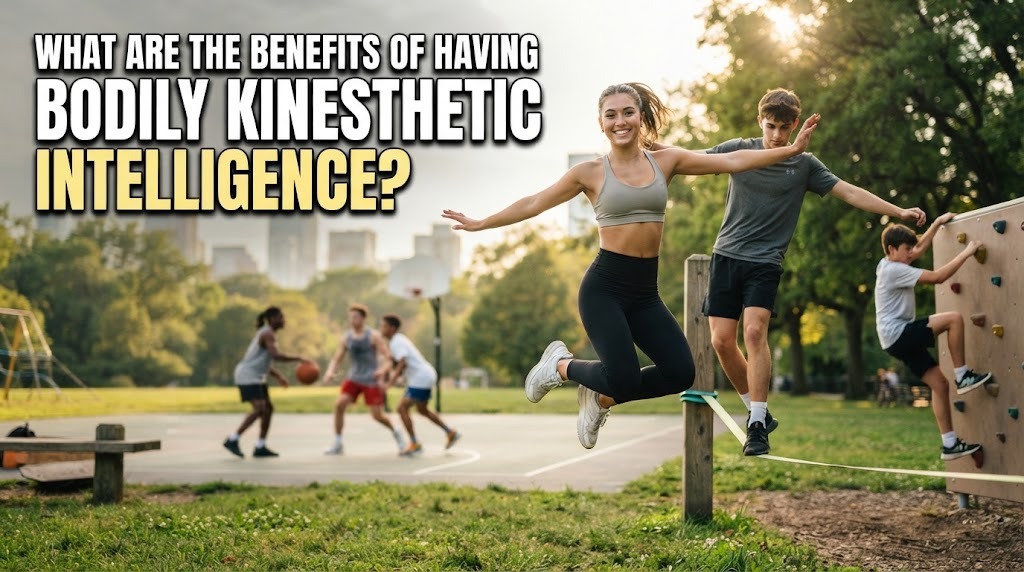
Bodily kinesthetic intelligence is the ability to use the body effectively through movement, coordination, physical control, and practical action. People with this intelligence may be comfortable with activities that involve sports, dance, crafts, cooking, building, or hands on learning. This ability can support different parts of everyday life, from learning new skills to completing practical tasks. However, having bodily kinesthetic intelligence does not mean a person must be athletic or physically strong.
IMPROVES BODY COORDINATION
One important benefit of bodily kinesthetic intelligence is better body coordination. People with this ability may become more comfortable coordinating their hands, eyes, feet, and other body parts during activities. Good coordination can be useful when playing sports, using tools, cooking, dancing, or completing detailed tasks. It allows movements to become more controlled and purposeful. Regular practice can further strengthen this ability.
Body coordination is also useful in everyday situations. Simple activities such as carrying objects, preparing food, riding a bicycle, or organizing materials require controlled movement. People can improve coordination through repeated practice and different physical experiences. Better coordination can make practical tasks easier and more efficient.
SUPPORTS HANDS ON LEARNING
People with strong bodily kinesthetic intelligence may benefit from hands on learning because they can understand information through direct experience. Instead of only reading instructions, they can practice a process and observe the results. This approach can be useful when learning cooking, science experiments, crafts, technical skills, or sports. Physical experience can help connect ideas with real actions.
Hands on learning does not mean that other learning methods are unnecessary. Reading, listening, discussion, and observation can still provide important information. Combining these methods with practical activities can create a more complete learning experience. Learning by doing can make certain skills easier to understand and practice.
DEVELOPS MOTOR SKILLS
Bodily kinesthetic intelligence can support the development of motor skills, which involve controlling and coordinating body movements. Large movements such as running, jumping, and throwing use gross motor skills, while detailed hand movements can involve fine motor skills. Different activities can help develop these abilities in different ways. For example, sports may improve large body movements, while crafts can improve hand control.
Motor skills can become more precise through regular practice. A person may initially find a movement difficult, but repeated experience can make it more familiar. Feedback can also help identify mistakes and improve technique. Developed motor skills can support both physical activities and practical daily tasks.
ENCOURAGES CREATIVITY AND SELF EXPRESSION
Bodily kinesthetic intelligence can provide opportunities for creativity and self expression. Dance, acting, crafts, cooking, and other activities allow people to communicate ideas through physical action. Instead of expressing creativity only through words or pictures, individuals can use movement and materials to create something. This can be especially useful for people who enjoy learning and expressing themselves through practical activities.
Creative physical activities can also encourage experimentation. A person may try different movements, materials, techniques, or designs to produce a desired result. Mistakes can become opportunities to find new solutions. Physical creativity can combine imagination with practical skills.
SUPPORTS PRACTICAL PROBLEM SOLVING
Another benefit is the ability to approach certain problems through direct action and practical experimentation. When building, repairing, cooking, or creating something, a person may need to identify a problem and adjust their actions. They can test different methods and observe what happens. This process connects physical experience with thinking and decision making.
Practical problem solving can be useful in many areas of life. A person may need to find a better way to organize materials, repair an object, or complete a project. These situations encourage flexibility and careful observation. Learning through practical experience can strengthen problem solving skills.
BUILDS CONFIDENCE THROUGH PRACTICE
Developing physical skills can contribute to confidence and motivation. When people learn a new movement or practical skill, they can experience a sense of achievement as their performance improves. Small improvements can encourage them to continue practicing. This can create a positive cycle in which practice leads to progress and progress increases motivation.
Confidence does not mean that every task will be easy. People may still make mistakes or experience difficulties while learning. What matters is recognizing improvement and understanding that skills can develop over time. Progress through practice can help people become more confident in their abilities.
SUPPORTS CAREER DEVELOPMENT
Bodily kinesthetic intelligence can be useful in careers that involve movement, practical skills, tools, or physical coordination. Possible fields include sports, dance, fitness, culinary arts, crafts, technical work, performing arts, and some healthcare professions. However, physical ability alone is not enough for most professional careers. Education, communication, knowledge, experience, and other skills are also important.
Understanding personal strengths can help people explore suitable career options. Someone who enjoys building and repairing may explore technical professions, while someone interested in movement may consider sports or performing arts. Career choices should consider multiple abilities and personal interests, not just one type of intelligence.
SUPPORTS EVERYDAY INDEPENDENCE
Bodily kinesthetic abilities can also help people handle everyday activities more independently. Tasks such as cooking, cleaning, organizing objects, using tools, and performing basic repairs involve different types of physical coordination. Being comfortable with practical tasks can make daily activities easier to manage. It can also encourage people to try solving simple problems themselves.
Independence develops through experience and learning. People can gradually improve their practical abilities by practicing tasks safely and asking for guidance when necessary. Physical confidence can make people more willing to participate in practical activities. These skills can remain useful at school, at work, and at home.
CONCLUSION
Having bodily kinesthetic intelligence can provide benefits in learning, movement, creativity, practical problem solving, confidence, and everyday activities. It can help people develop coordination, motor skills, body awareness, and the ability to learn through direct experience. This intelligence can also support certain career interests when combined with education and other abilities. It is important to remember that intelligence is not limited to physical performance because people can have strengths in several areas. By developing their abilities through safe practice and meaningful activities, people can make better use of their bodily kinesthetic strengths.
Recent Posts

Bagaimana Sistem SKS pada Program Kuliah... 22.11.2026/28 View

How Does Technology Make Daily Evaluation... 21.11.2026/65 View

Apa Strategi Menghadapi Kesenjangan antara Kompetensi... 21.11.2026/65 View

Mengapa Inventaris Aset Penting bagi Kelancaran... 21.11.2026/62 View

When Should Musicians Join a Record... 21.11.2026/63 View
