

What Are the Benefits of Lecturer Seminars for Academic Career Development?
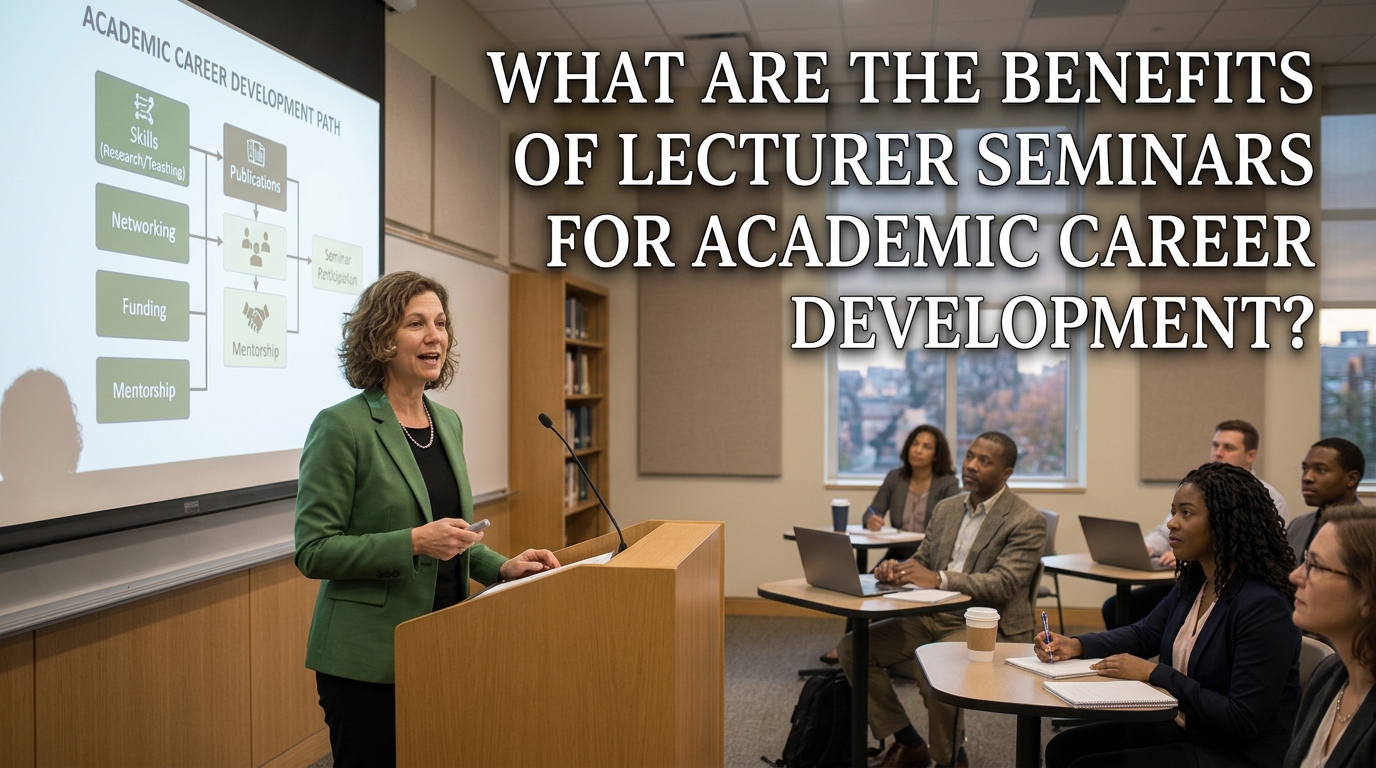
Lecturer seminars play an important role in supporting academic career development by helping educators expand their knowledge, improve professional skills, and build valuable connections. In higher education, lecturers are expected to teach effectively, conduct research, publish academic work, and contribute to institutional development. These responsibilities require continuous learning and the ability to adapt to changes in education. By participating in relevant seminars, lecturers can discover new opportunities, exchange experiences with professionals, and strengthen their qualifications for long-term career growth.
WHAT ARE LECTURER SEMINARS?
Lecturer seminars are academic activities that bring educators, researchers, and other professionals together to discuss topics related to teaching, research, and higher education. These events may include expert presentations, research discussions, practical workshops, and question-and-answer sessions. Universities, academic departments, and professional organizations commonly organize seminars to support knowledge sharing and professional development.
The topics can cover teaching strategies, research methodologies, academic publishing, educational technology, and leadership in higher education. Some seminars focus on specific academic disciplines, while others address broader professional challenges. By attending these activities, lecturers can gain new knowledge, practical insights, and opportunities for professional growth that support their academic responsibilities.
HOW DO LECTURER SEMINARS IMPROVE PROFESSIONAL SKILLS?
One major benefit of lecturer seminars is the opportunity to develop professional competencies. Lecturers can learn new teaching methods, improve presentation skills, and explore effective ways to communicate complex academic concepts. Workshops may also introduce techniques for designing assessments, managing classroom discussions, and using digital learning platforms. These skills help educators respond more effectively to the needs of students and the demands of modern higher education.
Seminars also encourage lecturers to evaluate their existing practices and identify areas for improvement. By listening to experts and exchanging experiences with colleagues, participants can discover practical solutions to common academic challenges. Applying these lessons can strengthen teaching quality, critical thinking, communication, and problem-solving abilities. Over time, improved competencies can support greater confidence and effectiveness in professional responsibilities.
HOW DO LECTURER SEMINARS SUPPORT RESEARCH AND ACADEMIC PUBLICATIONS?
Research is an important part of many academic careers, and lecturer seminars can help educators strengthen their research capabilities. Participants may learn about research design, data analysis, academic writing, publication standards, and responsible research practices. Presenting research findings at seminars also allows lecturers to receive constructive feedback and identify areas that require further investigation.
In addition, seminars can introduce lecturers to researchers who share similar academic interests. These connections may lead to collaborative studies, joint publications, or interdisciplinary research projects. Although seminar attendance does not guarantee publication or research success, it can provide useful knowledge and professional opportunities. Research development and academic collaboration can help lecturers build stronger research portfolios and contribute to their fields of expertise.
HOW CAN LECTURER SEMINARS EXPAND PROFESSIONAL NETWORKS?
Professional networking is another important benefit of lecturer seminars. These events bring together individuals from different universities, departments, and research backgrounds. Through discussions and informal interactions, lecturers can exchange ideas, learn about other institutions' practices, and establish relationships with potential collaborators. Such connections can provide access to new perspectives and professional opportunities.
A strong academic network may also support mentoring, joint research, guest lectures, and participation in future conferences. For example, lecturers who meet researchers with complementary expertise may develop projects that would be difficult to complete independently. Maintaining these relationships requires continued communication and mutual cooperation after the event. Professional networking helps lecturers become part of a wider academic community and discover opportunities for long-term career development.
HOW DO LECTURER SEMINARS CREATE CAREER ADVANCEMENT OPPORTUNITIES?
Lecturer seminars can support career advancement by helping educators strengthen the knowledge and competencies required for greater academic responsibilities. Depending on the institution, career progression may involve teaching performance, research achievements, publications, community service, leadership, and other established criteria. Seminars can help lecturers understand current academic practices and identify areas where additional development may be beneficial.
Some seminars also focus on academic leadership, curriculum management, research funding, or institutional quality assurance. These topics can prepare lecturers for responsibilities such as coordinating academic programs, supervising research, or leading departmental initiatives. However, seminar participation alone does not guarantee promotion or a higher academic position. Its value depends on how effectively lecturers apply what they learn and how the resulting development aligns with their institution's career requirements.
HOW DO LECTURER SEMINARS HELP LECTURERS ADAPT TO CHANGES IN HIGHER EDUCATION?
Higher education continues to change through advances in technology, new research findings, and evolving student needs. Lecturer seminars help educators stay informed about these developments and understand their potential impact on teaching and research. Topics may include artificial intelligence in education, digital assessment, inclusive learning, academic integrity, and innovative instructional methods.
By exploring these subjects, lecturers can evaluate new approaches before applying them in their own academic environments. They can also discuss potential challenges, including data privacy, accessibility, and the responsible use of technology. This knowledge supports informed decision-making and encourages continuous improvement. Adaptability and lifelong learning are valuable qualities for lecturers who want to remain effective and relevant throughout their academic careers.
HOW CAN LECTURERS MAXIMIZE THE BENEFITS OF SEMINARS?
Lecturers can gain more value from seminars by choosing events that match their professional goals and current development needs. Before attending, they should review the agenda, identify important questions, and prepare topics they want to explore. Taking notes and participating actively in discussions can help them understand the material more deeply. Building connections with speakers and fellow participants can also create opportunities for future collaboration.
After the seminar, lecturers should identify practical ideas they can apply to their teaching, research, or administrative responsibilities. They can discuss new approaches with colleagues, revise their work plans, or develop follow-up projects based on what they learned. Reviewing the results after several weeks or months can help determine whether the activities have produced meaningful improvements. Active participation and consistent application are essential for turning seminar experiences into lasting professional benefits.
CONCLUSION
Lecturer seminars provide valuable opportunities for academic career development by improving professional skills, supporting research, expanding networks, and helping educators adapt to changes in higher education. They can also introduce lecturers to leadership practices and new approaches that support their long-term professional goals. These benefits become more meaningful when participants apply their knowledge and maintain the relationships developed during the events.
For the best results, lecturers should choose relevant seminars, participate actively, and evaluate how the experience contributes to their development. Universities can support this process by providing accessible training opportunities and encouraging continuous learning. Ultimately, lecturer seminars are a useful part of professional development, helping educators strengthen their academic contributions and prepare for future responsibilities.
Recent Posts

Bagaimana Sistem SKS pada Program Kuliah... 22.11.2026/49 View

How Does Technology Make Daily Evaluation... 21.11.2026/77 View

Apa Strategi Menghadapi Kesenjangan antara Kompetensi... 21.11.2026/78 View

Mengapa Inventaris Aset Penting bagi Kelancaran... 21.11.2026/74 View

When Should Musicians Join a Record... 21.11.2026/79 View
