

What Are the Benefits of Political Literacy for Young People?
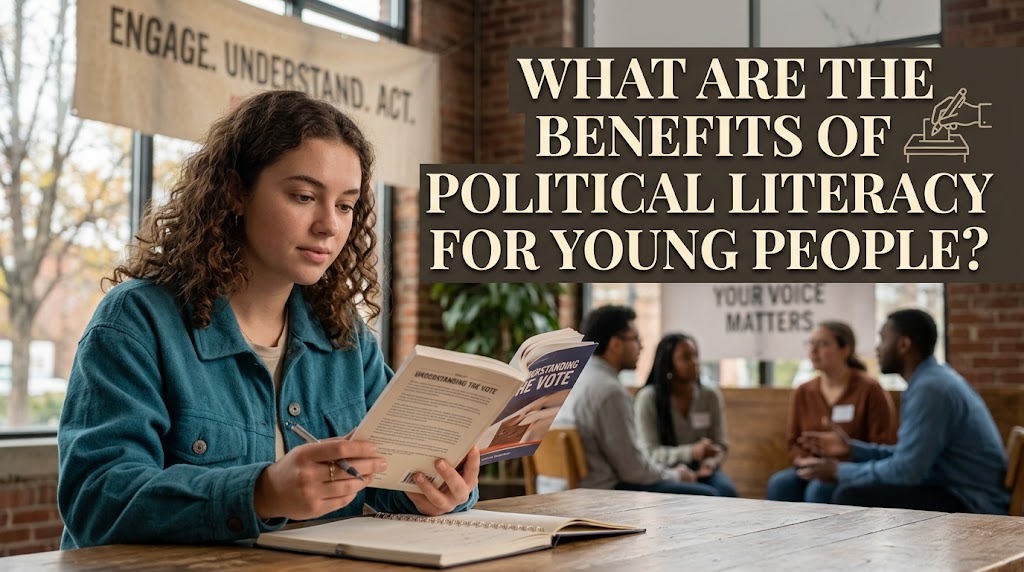
Political literacy helps young people understand political issues, public institutions, civic rights, and responsibilities. Young people encounter political information through school, social media, news platforms, and conversations, making the ability to understand and evaluate such information increasingly important.
Developing political literacy for young people does not mean encouraging a particular political viewpoint. Instead, it can provide knowledge and skills that help young people understand public issues, evaluate information, communicate respectfully, and participate in civic life according to their age and rights.
HELPING YOUNG PEOPLE UNDERSTAND PUBLIC ISSUES
One benefit of political literacy is helping young people understand issues that affect their communities. Topics such as education, employment, public services, technology, the environment, and social policies can influence young people's lives in different ways.
Political information can sometimes contain unfamiliar terms or complex explanations. Basic political knowledge can help young people understand how public institutions work and how decisions can affect different groups in society.
By learning about public issues, young people can develop a better understanding of the connection between government, communities, and citizens. This knowledge can also encourage them to ask questions and seek reliable information.
IMPROVING THE ABILITY TO EVALUATE INFORMATION
Young people are exposed to a large amount of information through digital platforms. Social media can make political content easy to access and share, but the information encountered online can vary in accuracy, context, and reliability.
Political literacy skills can encourage young people to check the source of a claim, compare information, identify evidence, and distinguish facts from opinions. UNESCO's media and information literacy framework emphasizes the ability to access, evaluate, and use information effectively.
These skills can be useful beyond politics. The ability to evaluate information carefully can support responsible use of digital media and help young people make more informed judgments about issues they encounter.
ENCOURAGING RESPONSIBLE CIVIC PARTICIPATION
Civic participation can take different forms depending on a person's age, legal rights, and circumstances. Young people can participate by learning about community issues, discussing public concerns, joining appropriate activities, volunteering, or expressing their views respectfully.
Political literacy can help young people understand their rights and responsibilities as members of society. The Council of Europe describes democratic citizenship as involving participation in civic and political processes alongside the exercise of rights and responsibilities.
Understanding these concepts can help young people recognize that participation is not limited to elections. Learning, discussing, listening, and contributing to community activities can also be part of civic life.
BUILDING CRITICAL THINKING AND OPEN-MINDEDNESS
Critical thinking is another important benefit of political literacy. Young people can learn to consider evidence, compare different perspectives, and ask whether a political claim is supported by reliable information.
Political literacy can also encourage young people to recognize that people may have different opinions about the same public issue. Understanding different perspectives does not require accepting every claim, but it can encourage more thoughtful discussion.
A democratic culture includes respect for diversity, dialogue, human rights, and peaceful ways of dealing with disagreement. These principles are reflected in the Council of Europe's framework for democratic culture.
PREPARING YOUNG PEOPLE FOR FUTURE CIVIC LIFE
Developing political literacy from a young age can provide a foundation for future participation in society. As young people grow older, they may have increasing opportunities and responsibilities to participate in civic and democratic processes.
Early learning can help them become familiar with institutions, public issues, information sources, and respectful communication. These abilities can be developed gradually through education, discussion, community activities, and responsible use of digital media.
Political literacy also allows young people to form their own informed views rather than simply accepting political claims from others. The goal is to support informed young citizens who can think independently and participate responsibly.
CONCLUSION
Political literacy benefits young people by helping them understand public issues, evaluate political information, participate in civic life, develop critical thinking, and prepare for future responsibilities in society.
Developing political literacy should focus on knowledge, information evaluation, respectful dialogue, and independent thinking rather than promoting a particular political position. These skills can help young people engage with public issues more thoughtfully and responsibly.
Recent Posts

Bagaimana Sistem SKS pada Program Kuliah... 22.11.2026/33 View

How Does Technology Make Daily Evaluation... 21.11.2026/67 View

Apa Strategi Menghadapi Kesenjangan antara Kompetensi... 21.11.2026/67 View

Mengapa Inventaris Aset Penting bagi Kelancaran... 21.11.2026/65 View

When Should Musicians Join a Record... 21.11.2026/66 View
