

What Are the Benefits of Speaking a Regional Languages in Daily Life?
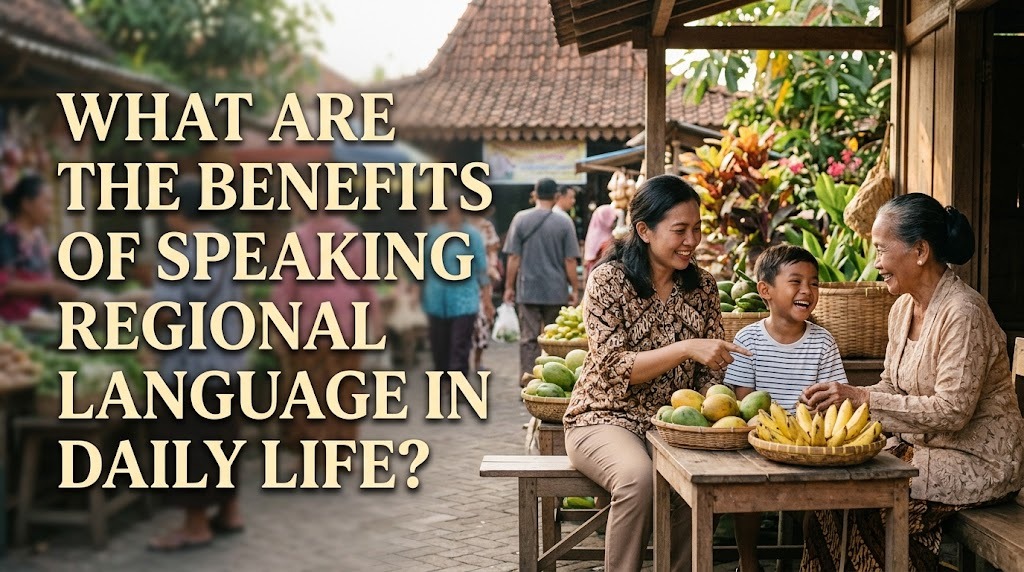
Speaking a regional language in daily life offers many benefits, from strengthening family relationships to preserving cultural traditions. In Indonesia, regional languages are used by communities to communicate, share experiences, and express their cultural identities. Languages such as Javanese, Sundanese, Minangkabau, and Bugis contain expressions that reflect local customs and social relationships. Using these languages regularly can help people maintain connections with their communities while appreciating Indonesia’s linguistic diversity. Speaking a regional language is not only a communication skill but also a way to maintain cultural heritage and strengthen social bonds.
STRENGTHEN FAMILY AND COMMUNITY RELATIONSHIPS
One important benefit of speaking a regional language is the ability to communicate more comfortably with family members and people in the local community. Parents, grandparents, and older relatives may prefer using their regional language when sharing stories, giving advice, or discussing everyday experiences. Understanding and speaking the same language can make these conversations feel more natural and personal. It also allows younger family members to participate more actively in discussions with older generations.
Regional languages can also help people build closer relationships with neighbors, community leaders, and local friends. Familiar greetings and expressions may create a sense of connection because they reflect shared experiences and cultural backgrounds. In some situations, speaking the local language can make interactions more welcoming and encourage people to participate in community activities. Using a regional language can strengthen relationships by creating shared understanding and a sense of belonging. These benefits are especially meaningful when people use the language regularly rather than only during special occasions.
PRESERVE CULTURAL IDENTITY AND TRADITIONS
Regional languages contain expressions, stories, and vocabulary that reflect the history and identity of their communities. Speaking these languages helps people remain connected to the traditions they have inherited from previous generations. Through everyday conversations, individuals can learn traditional greetings, proverbs, and expressions associated with local customs. These elements provide insight into how communities communicate and understand their cultural heritage.
Many traditions are also closely connected to the languages used during ceremonies, performances, and community gatherings. When people understand the original language, they may better appreciate the meaning of traditional speeches, songs, and stories. Parents and grandparents can use regional languages to explain the background of local celebrations and customary practices. Speaking a regional language helps keep cultural traditions meaningful and accessible to younger generations. It allows cultural knowledge to remain part of everyday life rather than becoming something people encounter only through books or performances.
IMPROVE COMMUNICATION WITH LOCAL COMMUNITIES
Speaking a regional language can be useful when interacting with people who regularly use it in their daily activities. Local markets, neighborhood gatherings, community meetings, and traditional events may involve expressions that are more familiar to regional-language speakers. Understanding these expressions can make conversations easier and help people follow local discussions. It may also reduce misunderstandings caused by unfamiliar vocabulary or communication styles.
People who move to a new area can benefit from learning the regional language used by the surrounding community. Even a basic understanding of greetings and common expressions can help them build relationships with neighbors and colleagues. However, regional-language ability varies among individuals, so it is important not to assume that everyone in an area speaks the same language. Learning the local language can make everyday interactions more comfortable and inclusive. Combining regional-language skills with Indonesian allows people to communicate with local residents as well as people from other regions.
DEVELOP LANGUAGE SKILLS AND CULTURAL UNDERSTANDING
Speaking a regional language gives people opportunities to learn different vocabulary, pronunciation patterns, and ways of constructing sentences. People who use more than one language may become more aware of how communication changes according to context and audience. Comparing regional languages with Indonesian can also help learners recognize similarities and differences between languages. These experiences may encourage greater curiosity about language and communication.
Regional languages can also introduce speakers to cultural ideas that are expressed through particular words, proverbs, or forms of politeness. Some expressions are closely connected to local customs and may require cultural knowledge to understand fully. Learning these meanings can help people communicate more respectfully and interpret conversations more accurately. Language learning can broaden cultural awareness by revealing how different communities express their experiences and values. These benefits grow when speakers actively practice the language and learn from fluent speakers.
SUPPORT MENTAL CONNECTION AND A SENSE OF BELONGING
For many people, a regional language is closely associated with childhood memories, family conversations, and experiences in their hometown. Hearing familiar words can remind them of relatives, local celebrations, or places where they grew up. Speaking the language may help them maintain a connection to their background, even when they live far from their original community. This connection can be especially meaningful for people who move to another city for education or employment.
Regional languages can also help people feel more included when participating in cultural or community activities. Understanding local expressions may make it easier to follow conversations and engage with others who share similar experiences. At the same time, people should respect those who speak different languages or have not had the opportunity to learn their family’s regional language. A regional language can provide a meaningful connection to family, community, and personal history. Maintaining that connection can help people appreciate their background while remaining open to other cultures.
CONTRIBUTE TO REGIONAL LANGUAGE PRESERVATION
Using a regional language in daily life is one of the most practical ways to help preserve it. A language is more likely to continue when people use it regularly and teach it to children. If it is used only during ceremonies or formal cultural activities, younger generations may have fewer opportunities to develop confidence in speaking it. Everyday conversations help keep vocabulary, pronunciation, and expressions familiar.
Individuals can contribute by speaking their regional language at home, teaching common expressions to children, and sharing traditional stories with relatives. They can also create songs, videos, or social media posts in the language to reach younger audiences. Schools and community organizations can support these efforts through language clubs, storytelling activities, and local cultural programs. Regional languages remain stronger when people use them as living languages rather than treating them only as historical heritage. Consistent use helps ensure that future generations can continue learning and benefiting from their linguistic traditions.
CONCLUSION
Speaking a regional language in daily life can strengthen family relationships, preserve cultural identity, improve local communication, develop language skills, and create a sense of belonging. It also helps maintain the traditions and knowledge passed down through generations. These benefits are especially important in Indonesia, where linguistic diversity forms a significant part of national cultural heritage. People can support regional languages by using them at home, communicating with local communities, and encouraging children to learn them. By speaking regional languages regularly, individuals help keep their cultural heritage active while supporting communication across Indonesia’s diverse communities.
Recent Posts

Bagaimana Sistem SKS pada Program Kuliah... 22.11.2026/49 View

How Does Technology Make Daily Evaluation... 21.11.2026/77 View

Apa Strategi Menghadapi Kesenjangan antara Kompetensi... 21.11.2026/78 View

Mengapa Inventaris Aset Penting bagi Kelancaran... 21.11.2026/74 View

When Should Musicians Join a Record... 21.11.2026/79 View
