

What Are the Best Activities to Increase Engagement in a Creator Community?
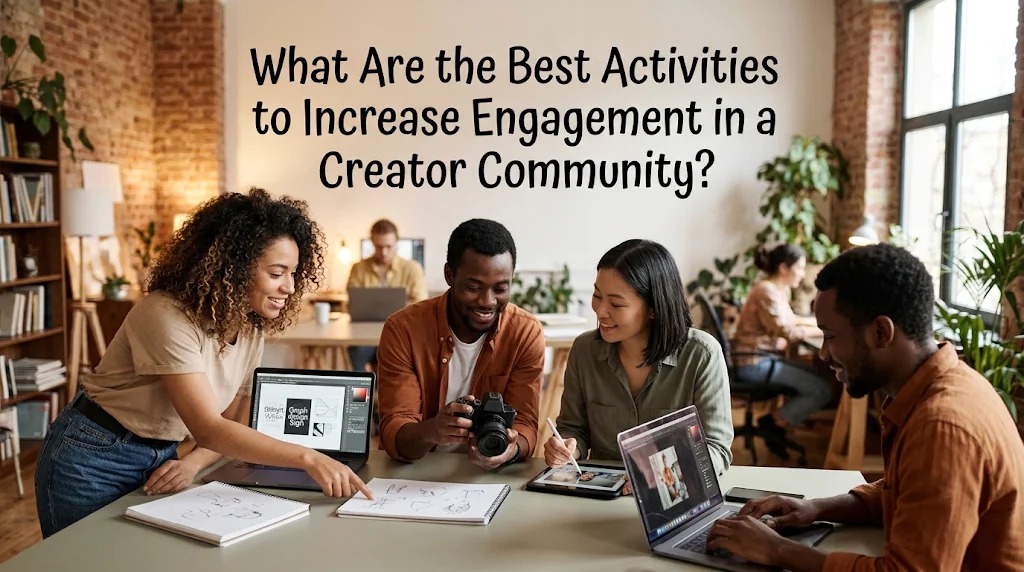
Building an active creator community requires more than inviting people to join a group or follow a social media account. Members need meaningful activities that encourage them to communicate, exchange ideas, develop creative abilities, and collaborate on different projects. Without regular interaction, even a community with many members can become inactive and lose its sense of connection.
Member engagement is an important factor in maintaining a productive creator community. When individuals actively participate in discussions and activities, they can develop stronger relationships, gain new knowledge, and feel more connected to the group's goals. This involvement also creates opportunities for members to showcase their abilities and receive feedback from others.
There are various activities that community managers can organize to increase participation and maintain enthusiasm. From creative challenges and online workshops to collaborative projects and networking sessions, each activity can provide different benefits. Choosing suitable programs can help create a supportive environment where members feel motivated to contribute consistently.
ORGANIZING CREATIVE CHALLENGES AND CONTENT COMPETITIONS
Creative challenges are effective activities for encouraging members to participate and explore their abilities. Community managers can introduce weekly or monthly challenges based on specific themes, such as photography, writing, graphic design, video production, or storytelling. Members can participate individually or in small groups according to their interests and skills.
For example, a creator community can organize a seven-day video challenge that encourages members to produce short educational videos. Another activity could involve designing promotional posters or writing informative articles about a particular topic. These challenges provide opportunities for members to practice their skills while discovering different creative approaches.
Community managers can also organize friendly competitions to increase enthusiasm. Participants can submit their work, receive feedback, and learn from other members' results. However, competitions should focus on learning and creative development rather than only identifying winners. This approach helps maintain a positive atmosphere and encourages beginners to participate without feeling intimidated.
HOLDING WORKSHOPS AND KNOWLEDGE-SHARING SESSIONS
Workshops and knowledge-sharing sessions can increase engagement by providing useful learning experiences. These activities allow members to improve their abilities through discussions, demonstrations, and practical exercises. Topics can be selected based on the community's interests and the skills members want to develop.
For instance, a community can organize workshops about video editing, content writing, photography, graphic design, digital marketing, or social media management. Experienced members or invited professionals can share practical knowledge and explain techniques that participants can apply to their own projects. Beginners can also ask questions and receive guidance directly.
Regular learning sessions help establish a continuous learning environment within the community. Members have reasons to participate because each activity offers new information and opportunities for personal development. To make these sessions more effective, organizers should provide interactive discussions and practical assignments instead of relying entirely on one-way presentations.
CREATING COLLABORATIVE PROJECTS BETWEEN MEMBERS
Collaborative projects are valuable activities because they encourage members to work together and build stronger professional relationships. Instead of developing content independently, participants can combine their abilities to complete a shared creative project. This process helps them understand different working styles and learn how to manage responsibilities as a team.
For example, a writer can collaborate with a graphic designer and video editor to produce educational content for social media. Each member contributes different expertise, allowing the group to develop more complete and engaging materials. These projects can also provide practical experience that members may use when pursuing freelance work or professional opportunities.
Community managers should establish clear project objectives, responsibilities, and deadlines to ensure effective teamwork. Members should also have opportunities to suggest ideas and participate in decision-making. Through regular collaboration, individuals can improve their communication skills, strengthen trust, and develop a greater sense of belonging within the community.
ORGANIZING ONLINE DISCUSSIONS AND INTERACTIVE ACTIVITIES
Online discussions are simple but effective ways to maintain regular communication between members. Community managers can introduce interesting topics related to content creation, digital technology, audience development, and creative industry trends. Members can share opinions, discuss experiences, and exchange practical recommendations.
Interactive activities such as polls, question-and-answer sessions, and live discussions can make these conversations more engaging. For example, community managers can ask members about their biggest content creation challenges or invite them to recommend useful editing applications. These activities encourage individuals who may not usually participate in longer discussions to contribute their opinions.
Creating a comfortable discussion environment is equally important. Members should be encouraged to respect different perspectives and provide constructive responses. By maintaining open and supportive communication, communities can develop stronger relationships and make members feel that their contributions are valuable.
HOLDING NETWORKING EVENTS AND MEMBER APPRECIATION ACTIVITIES
Networking events provide opportunities for members to meet, introduce themselves, and discover potential collaboration partners. These activities can be organized through online meetings, offline gatherings, virtual conferences, or informal discussion sessions. They are particularly useful for beginners who want to establish connections with more experienced creators.
During networking activities, members can share their creative interests, discuss ongoing projects, and explain the skills they can contribute. Community managers can also introduce themed networking sessions that connect individuals with similar professional goals. This approach can lead to new friendships, collaborative projects, and potential business opportunities.
In addition to networking, member appreciation activities can help maintain enthusiasm. Community managers can recognize members who consistently contribute, complete creative projects, or help other participants. Recognition does not always need to involve financial rewards because simple appreciation, public acknowledgment, and opportunities to showcase achievements can also make members feel valued.
EVALUATING COMMUNITY ACTIVITIES AND MAINTAINING ENGAGEMENT
Organizing activities is important, but community managers also need to evaluate whether those programs provide meaningful results. Community evaluation helps identify which activities attract participation, what members enjoy, and which areas require improvement. Without evaluation, organizers may continue running programs that do not match members' needs.
Several indicators can be used to understand community engagement, including discussion participation, event attendance, project completion, and feedback from members. However, engagement should not be measured only through the number of comments or reactions. The quality of interactions and the benefits gained by participants are equally important.
Community managers should regularly collect suggestions and adjust activities according to members' interests. They should also maintain a realistic schedule so that participants do not feel overwhelmed by too many programs. By combining meaningful activities with consistent evaluation, creator communities can develop a sustainable environment that encourages long-term participation.
CONCLUSION
Increasing engagement in a creator community requires activities that encourage communication, creativity, learning, and collaboration. Creative challenges, workshops, collaborative projects, online discussions, networking events, and member appreciation programs can provide valuable opportunities for individuals to participate actively.
However, successful engagement does not depend only on the number of activities organized. Community managers must understand members' needs, provide relevant programs, and create an environment where everyone feels respected and appreciated. Through consistent evaluation and meaningful interaction, a creator community can become more active, productive, and supportive while helping its members grow in the digital creative industry.
Recent Posts

Bagaimana Sistem SKS pada Program Kuliah... 22.11.2026/35 View

How Does Technology Make Daily Evaluation... 21.11.2026/69 View

Apa Strategi Menghadapi Kesenjangan antara Kompetensi... 21.11.2026/69 View

Mengapa Inventaris Aset Penting bagi Kelancaran... 21.11.2026/67 View

When Should Musicians Join a Record... 21.11.2026/68 View
