

What Are the Best Presentation Tips for Students?
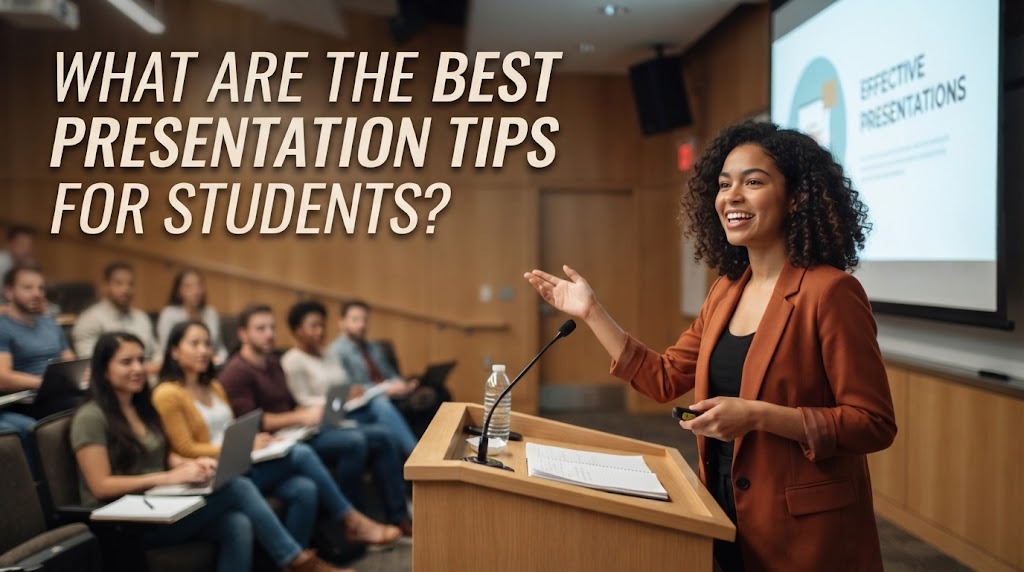
Presentation skills are important for students because they are often required to explain ideas in front of classmates, lecturers, or other audiences. A good presentation is not only about speaking in front of people but also about organizing information, using clear language, and communicating ideas confidently. Students who develop strong presentation skills can become more effective in academic activities and prepare themselves for future professional situations.
A successful presentation does not have to be complicated. Students can make their presentations more effective by understanding the topic, preparing clear slides, practicing their delivery, and maintaining interaction with the audience. With consistent practice and proper preparation, students can become more confident and deliver information in a way that is easier to understand.
UNDERSTAND THE TOPIC BEFORE PRESENTING
The first step to giving a good presentation is understanding the topic thoroughly. Students should not rely only on memorizing information from slides or notes. Understanding the subject allows students to explain ideas naturally and respond to questions more confidently. It also makes it easier to identify which information is important and which details can be left out.
Before preparing slides, students should research information from reliable sources and organize the main ideas. Difficult concepts should be studied until they can be explained using simple language. Students can also prepare examples to make complicated information easier for the audience to understand. Strong knowledge of the topic will make the presentation more convincing and reduce dependence on reading the slides.
ORGANIZE THE PRESENTATION CLEARLY
A clear structure helps the audience follow the presentation from beginning to end. Students can start by introducing the topic and explaining why it is important. The main section should then present the most relevant information in a logical order. Finally, the presentation should end with a conclusion that summarizes the main ideas.
Each section should connect naturally to the next one. Avoid placing unrelated information on the same slide or changing topics without a clear transition. A simple structure can make the presentation easier to follow even when the subject is relatively complex. Good organization also helps students remember the order of their explanations during the presentation.
CREATE SIMPLE AND EFFECTIVE SLIDES
Presentation slides should support the speaker rather than replace the speaker. Students should avoid putting entire paragraphs or long explanations on their slides. Instead, use short phrases, keywords, diagrams, charts, or relevant images to highlight the main ideas. This allows the audience to focus on the speaker while still having useful visual references.
The design should also remain consistent throughout the presentation. Use readable fonts, sufficient spacing, and a clear contrast between text and background. Avoid excessive animations, decorative elements, or complicated layouts that can distract from the information. A simple presentation design can look professional and make important information easier to understand.
PRACTICE BEFORE THE PRESENTATION
Practice is one of the most effective ways for students to improve their presentation skills. Rehearsing allows students to become familiar with the order of the material and identify sections that are difficult to explain. It also helps them estimate how long the presentation will take. Regular practice can make delivery feel more natural and reduce nervousness.
Students can practice in front of a mirror, record themselves, or present to friends or family members. During practice, pay attention to speaking speed, pronunciation, volume, and body language. Avoid memorizing every sentence because forgetting one word could make the speaker lose confidence. Understanding the ideas and practicing how to explain them is usually more effective than memorizing the entire presentation.
SPEAK CLEARLY AND CONFIDENTLY
Clear speech helps the audience understand the information being presented. Students should speak at a moderate speed and pronounce important terms carefully. Speaking too quickly can make information difficult to follow, while speaking too slowly can reduce audience attention. Pausing briefly between important ideas can also give the audience time to process the information.
Confidence does not mean speaking without nervousness. Feeling nervous before a presentation is normal, especially when speaking in front of many people. Students can manage nervousness by taking a breath, maintaining good posture, and focusing on communicating the message rather than worrying about making mistakes. Confidence usually develops through preparation and repeated experience.
MAINTAIN GOOD BODY LANGUAGE
Body language can influence how an audience responds to a presentation. Students should maintain appropriate eye contact instead of continuously looking at their slides or notes. Natural hand gestures can also help emphasize important points. Standing with a relaxed and balanced posture can make the speaker appear more confident.
Avoid repetitive movements such as constantly touching your hair, shaking your legs, or turning away from the audience. These habits can distract listeners from the presentation. Body language should feel natural rather than overly rehearsed. When facial expressions, posture, gestures, and speech work together, the presentation becomes more engaging.
ENGAGE WITH THE AUDIENCE
A presentation becomes more interesting when students create some form of interaction with the audience. They can ask a simple question, provide a familiar example, or invite the audience to think about a particular situation. Looking at different parts of the room can also make the presentation feel more personal. These techniques help prevent the presentation from becoming a one-way communication.
Audience interaction should remain relevant to the topic. Students do not need to use complicated activities to keep people interested. A short question or practical example can be enough to encourage attention. The goal is to help the audience connect with the subject while keeping the presentation focused.
PREPARE FOR QUESTIONS
Questions are a common part of academic presentations, so students should prepare for them in advance. After researching the topic, think about what questions classmates or lecturers might ask. Preparing possible answers can make students feel more confident during the discussion session. It is also useful to review information that may not appear directly on the slides.
If you do not know the answer to a question, avoid giving inaccurate information simply to appear confident. It is better to acknowledge the limitation and explain that the information needs further verification. Students can also ask for clarification if a question is unclear. Responding honestly and professionally can demonstrate strong communication skills.
MANAGE PRESENTATION TIME
Time management is another important presentation skill for students. A presentation that is too long can cause the audience to lose attention and may prevent other presenters from having enough time. Students should estimate the time needed for the introduction, main discussion, conclusion, and questions. Practicing with a timer can help identify sections that need to be shortened.
Focus on the information that directly supports the presentation objective. If there is too much material, prioritize the most relevant ideas rather than trying to explain everything. Leave enough time for the conclusion so the presentation does not end suddenly. Good time management shows that the presenter is prepared and respects the audience.
CONCLUSION
The best presentation tips for students involve strong preparation, clear communication, effective slides, confident delivery, and meaningful interaction with the audience. Students should understand their topic before presenting, organize information logically, practice regularly, and use simple visual materials. Good body language, time management, and preparation for questions can further improve the quality of an academic presentation.
Presentation skills develop through experience rather than instant perfection. Students should treat every presentation as an opportunity to improve their communication, confidence, and ability to explain ideas. With consistent practice and proper preparation, students can deliver presentations that are clearer, more engaging, and more professional.
Recent Posts

Bagaimana Sistem SKS pada Program Kuliah... 22.11.2026/37 View

How Does Technology Make Daily Evaluation... 21.11.2026/70 View

Apa Strategi Menghadapi Kesenjangan antara Kompetensi... 21.11.2026/73 View

Mengapa Inventaris Aset Penting bagi Kelancaran... 21.11.2026/68 View

When Should Musicians Join a Record... 21.11.2026/71 View
