

What Are the Biggest Challenges Businesses Face in Managing Logistics Operations?
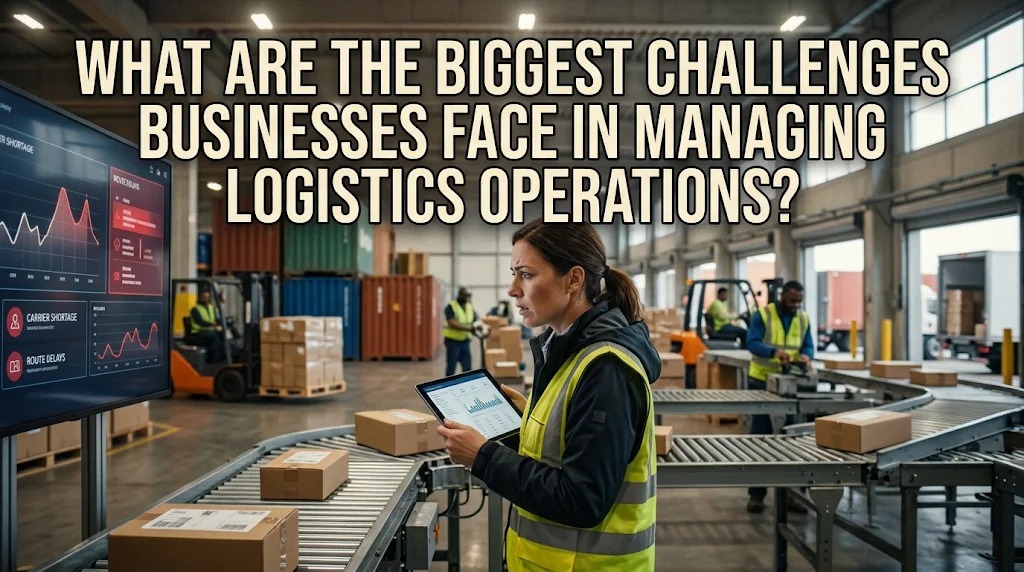
Logistics management is an essential part of business operations because it ensures that products move efficiently from suppliers to customers. However, managing logistics activities is not always easy. Companies must deal with various challenges, including transportation delays, rising operating costs, inventory problems, limited warehouse capacity, and unexpected supply chain disruptions. These difficulties can affect product availability, delivery schedules, and customer satisfaction. Understanding the biggest challenges in logistics management helps businesses develop effective strategies, improve operational performance, and maintain a reliable distribution system.
HIGH TRANSPORTATION COSTS AND DELIVERY DELAYS
One of the biggest challenges in logistics operations is managing transportation costs. Businesses need to spend money on fuel, vehicle maintenance, driver wages, shipping services, and other transportation requirements. When fuel prices increase or delivery routes become inefficient, transportation expenses can rise significantly. These additional costs may reduce company profits and make product distribution more expensive.
Delivery delays are another common problem that businesses frequently experience. Traffic congestion, extreme weather, vehicle breakdowns, and unexpected road conditions can interrupt transportation schedules. Delayed deliveries may affect production activities and cause customers to receive their orders later than expected. To overcome these problems, companies should plan efficient delivery routes, maintain transportation vehicles regularly, and prepare alternative shipping arrangements.
INVENTORY MANAGEMENT AND PRODUCT AVAILABILITY
Managing inventory is challenging because businesses must maintain sufficient stock without accumulating excessive products. If inventory levels are too low, companies may experience product shortages and fail to meet customer demand. On the other hand, storing too many products can increase warehouse expenses and create risks of damage, expiration, or outdated inventory.
Another difficulty is maintaining accurate inventory records. Manual recording methods can lead to errors when products enter or leave warehouses. These inaccuracies make it difficult for businesses to determine actual stock availability and plan future purchases. Companies can address these challenges by using inventory management systems, conducting regular stock checks, and analyzing sales data to predict product demand more accurately.
SUPPLY CHAIN DISRUPTIONS AND SUPPLIER PROBLEMS
Supply chain disruptions can create serious difficulties for companies that depend on external suppliers and transportation networks. Problems such as natural disasters, political instability, international shipping restrictions, and economic uncertainty can interrupt the movement of raw materials and finished products. When supplies do not arrive according to schedule, production activities and customer deliveries may also be affected.
Supplier-related problems can create additional challenges. For example, suppliers may experience production difficulties, deliver products late, or provide materials that do not meet quality standards. Depending on only one supplier can increase business risks because companies may struggle to find alternative sources when unexpected problems occur. Therefore, businesses should develop reliable supplier relationships, evaluate supplier performance, and establish alternative supply options to maintain operational stability.
WAREHOUSE MANAGEMENT AND TECHNOLOGY LIMITATIONS
Warehouse management involves organizing storage facilities, controlling product movements, and ensuring that goods can be accessed efficiently. However, limited storage capacity, poor warehouse layouts, and insufficient equipment can reduce productivity. Employees may spend more time locating products, preparing orders, and handling inventory when warehouse operations are not properly organized.
Technology limitations can also affect logistics performance. Some businesses still depend on manual processes or outdated systems that make it difficult to monitor inventory and track deliveries accurately. Although modern logistics technology can improve efficiency, implementing new systems may require significant investment, employee training, and maintenance expenses. Companies should select technology based on their operational requirements and gradually improve their digital capabilities to achieve better warehouse and logistics performance.
RISING CUSTOMER EXPECTATIONS AND ENVIRONMENTAL RESPONSIBILITIES
Modern customers expect fast deliveries, accurate orders, transparent tracking information, and reliable services. Meeting these expectations can be difficult, especially for businesses that manage large order volumes or serve customers across different regions. Delivery mistakes and poor communication can reduce customer trust and damage a company's reputation.
Businesses must also consider their environmental responsibilities when managing logistics operations. Transportation activities contribute to fuel consumption and greenhouse gas emissions, while excessive packaging can increase waste. Companies are increasingly encouraged to adopt sustainable logistics practices, such as optimizing delivery routes, using environmentally friendly packaging, and improving vehicle efficiency. Balancing delivery speed, operational costs, customer expectations, and environmental considerations requires careful planning and continuous improvement.
CONCLUSION
Businesses face several challenges when managing logistics operations, including high transportation costs, delivery delays, inventory problems, supply chain disruptions, warehouse limitations, and changing customer expectations. These difficulties can affect operational efficiency, product availability, and customer satisfaction. To overcome them, companies need effective planning, reliable supplier relationships, accurate inventory control, suitable technology, and efficient transportation strategies. By continuously evaluating and improving their logistics systems, businesses can reduce operational risks, strengthen distribution performance, and maintain a competitive advantage in the modern business environment.
Recent Posts

How Does Technology Make Daily Evaluation... 21.11.2026/62 View

Apa Strategi Menghadapi Kesenjangan antara Kompetensi... 21.11.2026/63 View

Mengapa Inventaris Aset Penting bagi Kelancaran... 21.11.2026/59 View

When Should Musicians Join a Record... 21.11.2026/58 View

Daily Evaluation or Daily Planning Which... 21.11.2026/66 View
