

What Are The Biggest Challenges In Archaeological Research?
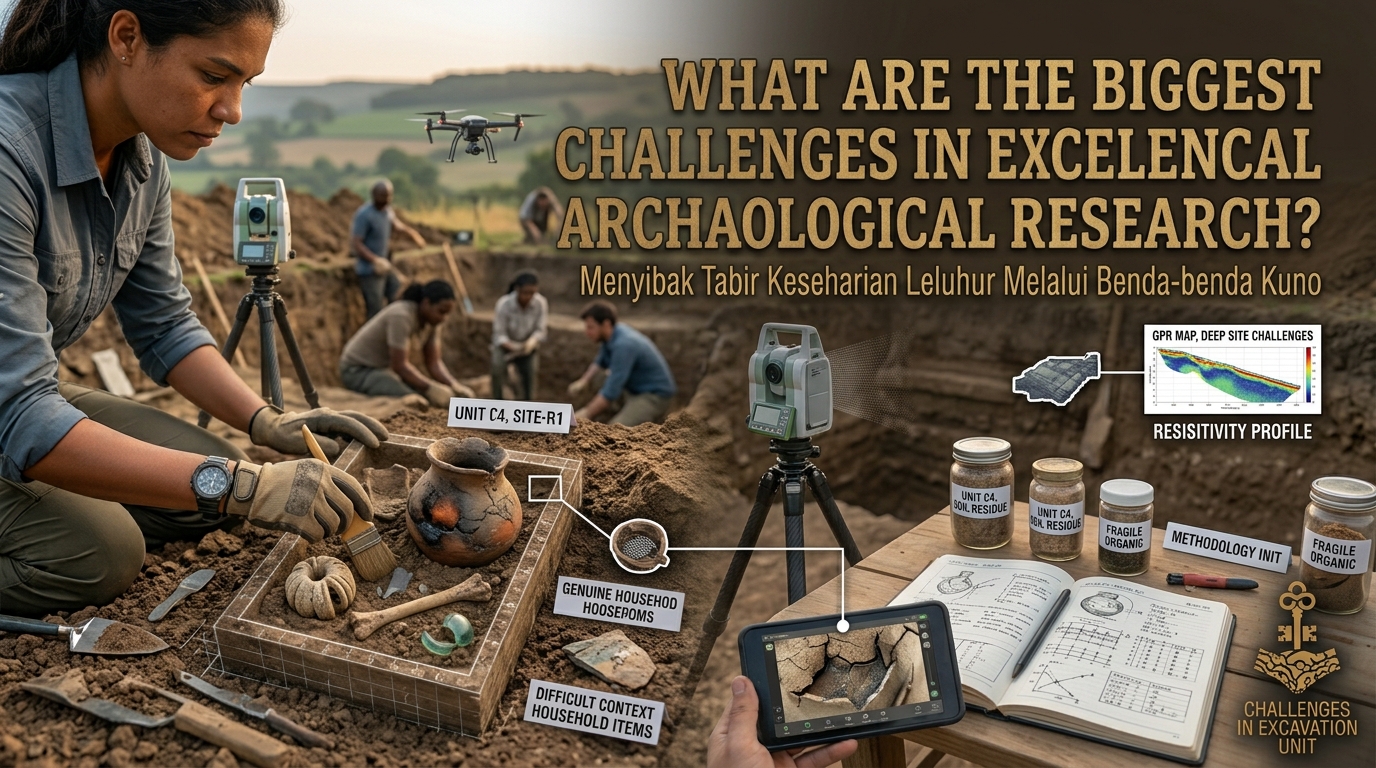
Archaeology helps us understand how ancient civilizations lived, developed, and interacted with the world around them. By studying artifacts, buildings, human remains, and ancient landscapes, researchers can uncover valuable information about the past. However, discovering and interpreting this evidence is not always easy. Archaeological research involves scientific, environmental, financial, and ethical challenges that can affect the accuracy and success of an investigation.
From damaged historical sites to limited funding and incomplete evidence, archaeologists must overcome many obstacles before reaching reliable conclusions. Understanding these challenges explains why careful research, modern technology, and responsible preservation are essential for protecting humanity's shared history.
LIMITED AND INCOMPLETE ARCHAEOLOGICAL EVIDENCE
One of the biggest challenges in archaeological research is the lack of complete evidence. Many ancient objects have been destroyed by natural disasters, erosion, human activity, or the passage of time. Materials such as wood, textiles, and plant remains often decay quickly, while stone and pottery can survive for thousands of years. As a result, archaeologists may find only small pieces of evidence about a once-thriving civilization.
These gaps make it difficult to reconstruct the past accurately. A single artifact may suggest how people lived, but it rarely explains an entire society. Archaeologists must compare discoveries from different locations and periods to develop reliable interpretations. Scientific evidence and careful analysis help reduce uncertainty, although some historical questions may remain unanswered.
DAMAGE TO ARCHAEOLOGICAL SITES
Natural processes and human activities can seriously damage archaeological sites. Floods, earthquakes, storms, rising temperatures, and coastal erosion may destroy structures or expose fragile objects to harmful conditions. Growing cities, road construction, mining, and agricultural expansion can also disturb or eliminate sites before researchers have an opportunity to study them.
Once an archaeological site is damaged, important information may be permanently lost. The position of an artifact, its relationship with nearby objects, and its location within soil layers can help explain its original purpose. If these relationships are destroyed, interpreting the discovery becomes much harder. Site protection, accurate documentation, and conservation planning are therefore essential parts of archaeological research.
LIMITED FUNDING AND RESOURCES
Archaeological projects often require substantial financial support. Researchers may need specialized equipment, transportation, laboratory testing, excavation materials, and trained personnel. Long-term projects also require funding for documentation, artifact storage, conservation, and publication of results.
When budgets are limited, archaeologists may be unable to investigate every promising location or apply advanced scientific techniques. Funding shortages can delay excavations and make it difficult to maintain archaeological collections properly. Researchers must therefore prioritize important research questions and use available resources efficiently. Cooperation between universities, governments, museums, and heritage organizations can help support valuable discoveries and preserve archaeological knowledge.
DIFFICULTIES IN DATING ANCIENT OBJECTS
Determining the age of an archaeological discovery is essential for understanding when people lived and how societies changed. However, dating ancient objects can be complicated because different materials require different methods. Radiocarbon dating, for example, is useful for suitable organic materials but cannot directly determine the age of most stone tools or metal objects.
Contamination, disturbed soil layers, and the movement of objects between locations can also affect dating interpretations. In some cases, researchers estimate an object's age by studying the surrounding material or comparing it with other dated discoveries. Combining several dating methods can improve reliability when suitable evidence is available. Even then, results may include uncertainty ranges rather than an exact calendar date.
INTERPRETING ARCHAEOLOGICAL FINDS ACCURATELY
Finding an ancient object is only the beginning of archaeological research. The greater challenge is determining what the object means and how it was used. A tool may have served several purposes, while a building could have been used differently at various times in its history. Without sufficient context, researchers may develop interpretations that later discoveries challenge.
To reduce these risks, archaeologists compare artifacts with other evidence, including architectural remains, human and animal bones, plant remains, and historical documents. They also consider the cultural and environmental conditions in which objects were found. Evidence-based interpretation helps distinguish well-supported conclusions from speculation. Researchers must remain open to revising their explanations when new information becomes available.
ENVIRONMENTAL AND CLIMATE-RELATED CHALLENGES
Environmental conditions strongly influence how well archaeological materials survive. High humidity can encourage mold and corrosion, while extreme heat and repeated wetting and drying may damage fragile materials. In tropical environments, vegetation and biological activity can also make archaeological sites difficult to locate and excavate.
Climate change creates additional concerns, including rising sea levels, stronger coastal erosion, changing rainfall patterns, and more frequent extreme weather in some regions. These processes can threaten sites that have survived for centuries. Archaeologists use environmental monitoring, protective structures, and digital documentation to reduce certain risks. However, conservation strategies must be adapted to each site's materials, location, and environmental conditions.
THEFT, LOOTING, AND ILLEGAL ARTIFACT TRADE
Looting and illegal artifact trading are serious threats to archaeological research. When people remove objects from sites without permission or proper documentation, the discoveries lose much of their scientific value. An artifact may still look impressive in a private collection, but researchers may no longer know where it was found or what surrounded it.
Illegal excavation can also damage burials, ancient buildings, and other remains. The resulting loss of context makes it harder to understand the relationships between objects and the people who used them. Preventing these activities requires effective laws, site monitoring, public education, and cooperation between authorities and local communities. Protecting archaeological context is just as important as preserving the objects themselves.
ETHICAL ISSUES AND RESPECT FOR LOCAL COMMUNITIES
Archaeological research involves more than scientific investigation because many sites and objects have cultural, spiritual, or historical importance to living communities. Human remains and burial places require particular care, respect, and attention to relevant laws and cultural practices. Researchers must consider whether excavation is necessary and how sensitive discoveries should be handled.
Cooperation with Indigenous peoples and local communities is also essential, especially when archaeological sites are connected to their heritage or identity. Community consultation, informed collaboration, and responsible stewardship can help ensure that research respects different perspectives. Decisions about ownership, access, conservation, and the display of cultural objects may require careful discussion. Ethical archaeology aims to increase historical knowledge while respecting the people connected to the past.
SHORTAGE OF SPECIALIZED EXPERTISE AND TECHNOLOGY
Modern archaeological research often depends on specialists in fields such as chemistry, geology, anthropology, genetics, and digital mapping. Some projects require advanced laboratory equipment or techniques that are not available in every country or institution. A shortage of trained experts can slow analysis and limit the types of questions researchers can investigate.
Technology can improve archaeological discoveries, but it also requires training, maintenance, and reliable data management. For example, ground-penetrating radar can help identify underground features, while three-dimensional scanning can document fragile objects. However, these tools do not automatically explain what a discovery means. Technology works best when combined with archaeological expertise, field observations, and scientific verification.
CONCLUSION
Archaeological research faces many challenges, including incomplete evidence, damaged sites, limited funding, dating difficulties, environmental threats, looting, and ethical concerns. Each obstacle can affect how researchers discover, preserve, and interpret evidence from ancient societies. Overcoming these problems requires scientific accuracy, responsible fieldwork, interdisciplinary cooperation, and long-term conservation.
Although modern technology provides valuable tools, successful archaeology still depends on careful observation and critical thinking. Collaboration among researchers, governments, and local communities also helps protect important cultural resources. By addressing these challenges, archaeologists can uncover more reliable stories of ancient civilizations and preserve humanity's heritage for future generations.
Recent Posts

Bagaimana Sistem SKS pada Program Kuliah... 22.11.2026/50 View

How Does Technology Make Daily Evaluation... 21.11.2026/79 View

Apa Strategi Menghadapi Kesenjangan antara Kompetensi... 21.11.2026/79 View

Mengapa Inventaris Aset Penting bagi Kelancaran... 21.11.2026/75 View

When Should Musicians Join a Record... 21.11.2026/80 View
