

What Are the Biggest Challenges in Preserving Indonesian Cultural Heritage?
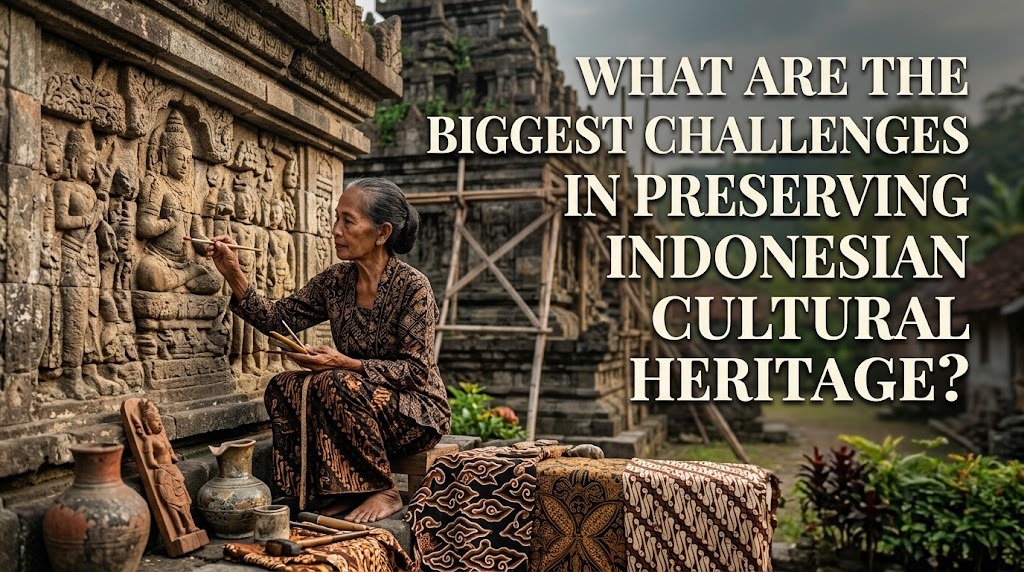
Indonesia is home to a rich variety of cultural heritage, including traditional dances, regional languages, historical temples, traditional houses, local cuisine, and handicrafts. These cultural treasures reflect the country's long history, diverse communities, and unique traditions. However, preserving Indonesian cultural heritage has become increasingly challenging as society changes and modern lifestyles continue to develop.
Several factors can threaten the survival of traditional knowledge and historical sites. These include modernization, limited funding, environmental damage, declining interest among younger generations, and a lack of documentation. Understanding these challenges is an important step toward finding effective ways to protect Indonesia's cultural identity for the future.
MODERNIZATION AND CHANGING LIFESTYLES
Modernization has changed how people communicate, work, study, and spend their free time. Although these developments provide many benefits, they can also reduce opportunities for people to practice traditional cultural activities. For example, some young people may become more interested in modern entertainment than traditional music, dance, or regional literature. As a result, certain cultural practices may receive less attention within their communities.
Changing lifestyles can also affect traditional occupations, including weaving, wood carving, and other handicrafts. When younger generations choose different careers, fewer people may continue learning these specialized skills from experienced artisans. Over time, traditional techniques could disappear if there are not enough practitioners to pass them on. Preserving cultural heritage therefore requires finding ways to make traditional practices relevant and accessible in modern life.
DECLINING INTEREST AMONG YOUNGER GENERATIONS
The younger generation plays an important role in maintaining Indonesian cultural heritage. However, some young people have limited opportunities to learn about their local traditions, especially when cultural education is not regularly included in their daily activities. Regional languages, traditional games, folk songs, and customary knowledge may gradually become less familiar. This situation can weaken the connection between younger generations and their cultural roots.
Families, schools, and communities can help address this challenge by creating engaging learning experiences. Cultural workshops, traditional performances, local history projects, and digital educational content can encourage young people to explore their heritage. Elders and cultural practitioners can also share stories and practical knowledge with younger participants. By involving young people directly, communities can help ensure that traditions remain active rather than becoming memories of the past.
LIMITED FUNDING FOR CULTURAL PRESERVATION
Preserving cultural heritage often requires substantial financial resources. Historical buildings need regular maintenance, museums require proper facilities, and traditional artists may need support to continue their work. In some areas, funding for cultural programs may be limited or inconsistent. This can make it difficult to organize preservation activities and maintain important heritage sites.
Limited financial support can also affect traditional artisans and performers who depend on their cultural skills for income. If their work does not provide sufficient financial stability, they may need to pursue other occupations. Governments, private organizations, educational institutions, and local communities can help by providing grants, training, and sustainable employment opportunities. Fair compensation for cultural practitioners is particularly important because preservation depends on the people who maintain and transmit cultural knowledge.
ENVIRONMENTAL DAMAGE AND NATURAL DISASTERS
Indonesia's cultural heritage faces environmental risks because the country experiences earthquakes, volcanic eruptions, floods, landslides, and coastal erosion. These events can damage historical buildings, archaeological sites, traditional houses, and cultural objects. Humidity, heavy rainfall, and changes in temperature can also contribute to the deterioration of old structures and materials. Without suitable protection, valuable heritage may be lost before it can be properly documented or restored.
Human activities can create additional environmental pressures. Pollution, uncontrolled development, and changes in land use may damage the surroundings of historical sites or affect traditional landscapes. Protecting cultural heritage requires regular inspections, appropriate conservation methods, disaster preparedness, and careful planning around vulnerable locations. Combining traditional building knowledge with suitable modern technology can also help communities protect historic structures while respecting their original character.
URBANIZATION AND MODERN DEVELOPMENT
Urbanization is changing many Indonesian towns and cities as populations grow and new housing, roads, shopping centers, and commercial buildings are constructed. In some cases, development can put traditional neighborhoods and historical structures at risk. Old buildings may be demolished or significantly altered to make room for new projects. When this happens, communities can lose not only physical structures but also places connected to their collective memories.
Modern development can also affect traditional settlements where architecture and community activities are closely connected. Traditional houses may be replaced by buildings designed for different needs, while historic public spaces may become less accessible. Sustainable urban planning can help balance development with cultural preservation. Authorities and local residents should identify valuable heritage areas, maintain historic buildings where appropriate, and include cultural considerations in planning decisions.
GLOBALIZATION AND CULTURAL STANDARDIZATION
Globalization allows people to exchange ideas, products, and cultural experiences across national borders. This exchange can introduce Indonesian traditions to international audiences and create new opportunities for cultural collaboration. However, widespread international trends may also influence local preferences and reduce the visibility of regional cultural expressions. Some traditional clothing, music, and crafts may receive less attention when popular global products dominate the market.
Another concern is that cultural traditions can sometimes be simplified or presented without sufficient context for commercial purposes. This may weaken public understanding of their original meanings and community significance. Indonesian cultural heritage can remain relevant by encouraging creative adaptations while respecting traditional knowledge and cultural values. Promoting regional arts through education, festivals, and responsible media coverage can also help maintain their visibility.
LOSS OF REGIONAL LANGUAGES AND TRADITIONAL KNOWLEDGE
Regional languages are important carriers of Indonesian cultural heritage. They preserve local expressions, oral histories, traditional songs, stories, and knowledge about the natural environment. When a language is used less frequently, the knowledge expressed through it may also become harder to transmit. If fluent speakers become fewer and younger generations do not learn the language, some cultural expressions may eventually disappear.
Traditional knowledge faces similar risks when it is passed down mainly through conversation, observation, and practice. Skills such as preparing traditional medicines, producing handicrafts, performing customary ceremonies, and using traditional farming methods may be difficult to recover once experienced practitioners are gone. Communities can address this challenge by documenting oral histories, supporting regional-language education, and organizing activities where traditional knowledge is practiced. Documentation should be carried out respectfully, particularly when certain knowledge is private or restricted within a community.
LACK OF DOCUMENTATION AND PUBLIC AWARENESS
Some Indonesian cultural traditions have been carefully documented, while others remain known mainly to local communities. When information about a tradition is not recorded, it may become difficult for future generations to understand its history, techniques, and cultural significance. This is especially concerning when a tradition depends on a small number of experienced practitioners. A lack of reliable information can also lead to misunderstandings about the origins and meanings of cultural practices.
Public awareness is equally important because people are more likely to protect heritage when they understand its value. Museums, schools, researchers, and cultural organizations can help by creating accessible educational materials and accurate digital archives. Photographs, recordings, interviews, and historical documents can preserve information for future study. However, documentation should involve the communities concerned and respect their ownership, consent, and cultural sensitivities.
CULTURAL COMMERCIALIZATION AND MISREPRESENTATION
Cultural heritage can create economic opportunities through tourism, entertainment, fashion, and traditional crafts. However, commercialization may become a challenge when cultural expressions are changed or presented mainly to attract customers. For example, a traditional performance might be shortened or altered without explaining its original purpose. Although adaptation is not automatically harmful, it can become problematic when important meanings are ignored or communities lose control over how their heritage is represented.
Misrepresentation can also occur when traditional designs, stories, or cultural knowledge are used without proper acknowledgment or permission. This can raise concerns about cultural ownership, fair compensation, and respect for the communities that maintain these traditions. Responsible cultural tourism and ethical creative industries should involve local practitioners in decision-making. They should also provide accurate information and ensure that economic benefits reach the people who contribute to preserving the heritage.
HOW CAN INDONESIA OVERCOME THESE CHALLENGES?
Preserving Indonesian cultural heritage requires cooperation between governments, local communities, schools, cultural organizations, researchers, and individuals. Government agencies can strengthen conservation programs, provide funding, enforce relevant heritage protections, and support cultural education. Schools can introduce students to local history, regional languages, traditional arts, and community-based learning activities. These efforts can help make cultural preservation a shared responsibility rather than the task of a few specialists.
Technology can also support preservation through digital archives, educational videos, online exhibitions, and virtual access to historical sites. Meanwhile, traditional artisans and performers need fair opportunities to earn a living and pass on their skills. Local communities should remain involved in decisions about how their heritage is documented, restored, displayed, or adapted. By combining community knowledge, appropriate technology, education, and sustainable funding, Indonesia can protect its cultural heritage while allowing traditions to develop naturally over time.
CONCLUSION
The biggest challenges in preserving Indonesian cultural heritage include modernization, declining interest among younger generations, limited funding, environmental damage, urbanization, globalization, language loss, insufficient documentation, and cultural commercialization. These challenges affect both tangible heritage, such as temples and traditional houses, and intangible heritage, such as dances, languages, crafts, and customary practices.
Protecting this heritage requires long-term commitment and cooperation across society. Education, community participation, responsible tourism, digital documentation, and financial support can help ensure that traditional knowledge and historical sites remain valuable for future generations. By respecting cultural diversity and supporting the communities that maintain their traditions, Indonesia can preserve its cultural identity while adapting to an increasingly modern world.
Recent Posts

Bagaimana Sistem SKS pada Program Kuliah... 22.11.2026/47 View

How Does Technology Make Daily Evaluation... 21.11.2026/75 View

Apa Strategi Menghadapi Kesenjangan antara Kompetensi... 21.11.2026/77 View

Mengapa Inventaris Aset Penting bagi Kelancaran... 21.11.2026/73 View

When Should Musicians Join a Record... 21.11.2026/77 View
