

What Are the Challenges of Developing Numeracy Literacy in Indonesia?
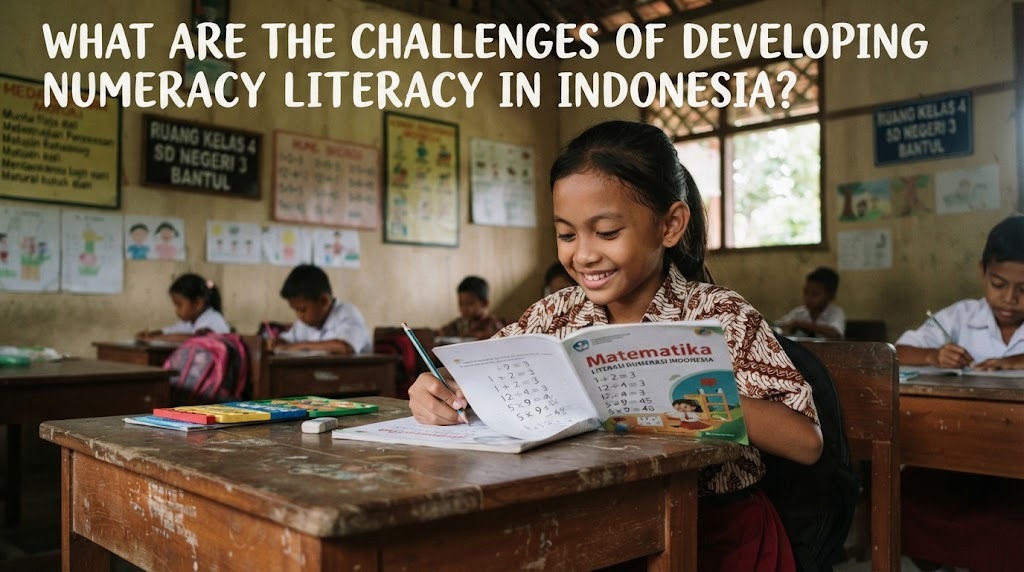
Numeracy literacy is an important ability that helps people use numbers, data, measurements, and mathematical information in real life. In Indonesia, developing this skill is part of a broader effort to improve the quality of education and prepare students to deal with practical problems. Numeracy is not only about performing calculations but also about interpreting information and applying mathematical reasoning in different situations.
However, improving numeracy literacy requires more than simply increasing mathematics lessons. Students may face challenges related to learning methods, access to educational resources, teacher capacity, family support, and differences between regions. Understanding these challenges can help schools, families, and communities identify areas that need greater attention.
DIFFERENCES IN ACCESS TO EDUCATIONAL RESOURCES
One challenge in developing numeracy literacy is the difference in access to educational resources between communities. Some students have access to books, computers, internet connections, and other learning materials, while others may have fewer resources. These differences can affect how frequently students practice numerical skills outside the classroom.
Geographical conditions can also influence educational access, particularly in remote and less connected areas. When learning resources are limited, teachers may have fewer opportunities to provide varied numeracy activities. Improving access to appropriate learning materials is therefore an important part of supporting numeracy development.
LIMITED PRACTICAL APPLICATION OF NUMERACY
Students can find numeracy difficult when mathematical concepts are taught mainly as formulas or procedures without enough connection to real situations. Numeracy literacy requires students to understand how mathematics can be used to solve practical problems. Activities involving shopping, budgeting, measurements, schedules, and data interpretation can make this connection clearer.
When students regularly apply mathematics to familiar situations, they can better understand why numerical skills matter. Teachers can introduce problems based on situations that students encounter in their daily lives. This approach can help transform numeracy from an abstract classroom topic into a practical life skill.
DIFFERENCES IN STUDENT LEARNING NEEDS
Students have different levels of prior knowledge, learning speeds, and experiences with mathematics. A method that works well for one student may not be equally effective for another. If learning activities do not accommodate these differences, some students may struggle to develop fundamental numerical skills.
Teachers therefore need to identify students' learning needs and provide appropriate support. Basic concepts may need to be reinforced before students move to more complex problems. Providing varied exercises and opportunities for practice can help students develop their skills gradually.
TEACHER CAPACITY AND LEARNING METHODS
Teachers have an important role in helping students develop numeracy literacy. Effective numeracy learning requires teachers to design activities that involve reasoning, interpretation, problem solving, and the use of numerical information. This can require appropriate training, teaching resources, and opportunities for professional development.
Learning methods can also influence how students understand mathematics. Lessons that encourage students to explain their reasoning and discuss different solutions can provide more opportunities to develop deeper understanding. The challenge is ensuring that teachers have sufficient support to implement these approaches consistently.
LACK OF CONFIDENCE IN MATHEMATICS
Some students may feel nervous or lack confidence when working with numbers and mathematical problems. Previous difficulties can make students reluctant to participate or attempt unfamiliar questions. This can limit the amount of practice they receive and make it harder to develop stronger numeracy skills.
A supportive learning environment can help students become more comfortable making mistakes and asking questions. Teachers can emphasize the reasoning process rather than focusing only on the final answer. Regular practice with appropriately challenging problems can also help students gradually build confidence.
LIMITED FAMILY SUPPORT FOR NUMERACY PRACTICE
Numeracy development does not take place only at school. Family activities can provide opportunities for children to practice numerical skills through everyday tasks such as calculating expenses, measuring ingredients, managing time, or comparing prices. However, not every family has the same time, resources, or understanding of how to support numeracy learning.
Simple activities can still provide meaningful practice without requiring specialized materials. Parents and other family members can encourage children to explain calculations and discuss how numbers are used in everyday decisions. Consistent support at home can complement learning provided by schools.
CHALLENGES IN UNDERSTANDING DATA
Modern students encounter numerical information through social media, news, advertisements, websites, and digital platforms. Understanding this information requires more than basic calculation because students also need to interpret graphs, percentages, averages, and statistical claims.
Students may struggle when numerical information is presented in unfamiliar formats or without sufficient context. Learning activities that involve reading charts, comparing data, and checking whether conclusions are supported by evidence can help address this challenge. These activities also connect numeracy literacy with critical thinking and digital literacy.
REGIONAL AND SOCIOECONOMIC DIFFERENCES
Indonesia has a large and diverse population with differences in geography, infrastructure, household conditions, and educational opportunities. These factors can create different learning experiences for students in various communities. A strategy that works in one setting may need to be adapted for another.
Addressing these differences requires attention to local conditions rather than relying on a single approach for every school. Schools may need different types of resources and support depending on their circumstances. Collaboration between educational institutions, families, communities, and policymakers can help create more suitable learning opportunities.
HOW TO STRENGTHEN NUMERACY LITERACY IN INDONESIA
Improving numeracy literacy can begin with learning activities that connect mathematics to real life. Schools can provide problems involving money, measurements, transportation, schedules, data, and everyday decision making. These activities allow students to practice numerical skills while understanding their practical purpose.
Teachers can also use discussions, projects, games, and technology when appropriate to make learning more varied. Regular assessment can help identify areas where students need additional support. At the same time, families can reinforce numeracy through simple activities at home, creating a learning environment that extends beyond the classroom.
CONCLUSION
Developing numeracy literacy in Indonesia involves several challenges, including differences in educational resources, limited practical application, varying student needs, teacher support, confidence in mathematics, family involvement, and regional conditions. The growing amount of numerical information in modern life also makes data interpretation an increasingly important skill.
These challenges require cooperation between schools, teachers, families, communities, and other education stakeholders. By connecting numeracy with real-life situations, providing appropriate learning support, and creating more opportunities for meaningful practice, students can develop stronger numerical skills. Numeracy literacy can therefore become not only an educational goal but also an important foundation for everyday problem solving and informed decision making.
Recent Posts

Bagaimana Sistem SKS pada Program Kuliah... 22.11.2026/33 View

How Does Technology Make Daily Evaluation... 21.11.2026/67 View

Apa Strategi Menghadapi Kesenjangan antara Kompetensi... 21.11.2026/67 View

Mengapa Inventaris Aset Penting bagi Kelancaran... 21.11.2026/65 View

When Should Musicians Join a Record... 21.11.2026/66 View
