

What Are the Challenges of Political Literacy in the Digital Era?
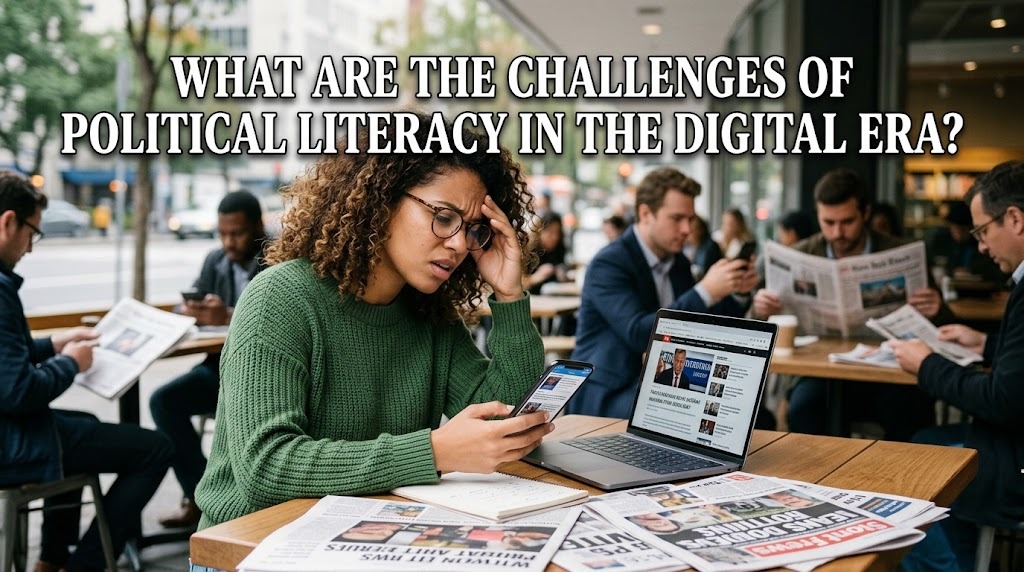
The digital era has made political information easier to access than ever before. People can find news, public statements, policy discussions, and political opinions through websites, social media, video platforms, and messaging applications.
However, easier access to information also creates challenges for political literacy. People need to deal with large amounts of content, different levels of reliability, rapidly changing information, and various forms of misleading or incomplete claims. Developing strong information and critical thinking skills can help individuals navigate this environment more carefully.
THE LARGE AMOUNT OF POLITICAL INFORMATION
One major challenge of political literacy in the digital era is the huge amount of information available online. People can encounter many political posts and discussions within a short period of time.
Having access to more information does not necessarily mean having a better understanding of an issue. Users may find it difficult to determine which information is relevant, accurate, current, or supported by evidence.
Developing information literacy can help people manage this situation. Users can focus on credible sources, compare information, and examine the context before accepting a political claim.
THE SPREAD OF MISINFORMATION AND DISINFORMATION
Another challenge is the rapid spread of misinformation and disinformation. Political content can be shared quickly through social media and messaging platforms, sometimes without sufficient verification.
A misleading post may use an old photograph, edited video, incomplete quotation, inaccurate statistic, or false claim. When such content is repeatedly shared, it can become difficult for users to distinguish accurate information from misleading content.
UNESCO's media and information literacy resources identify misinformation and disinformation as important challenges in the modern information environment. Developing source-checking and verification habits can help people respond more carefully to questionable political content.
THE INFLUENCE OF ALGORITHMS AND PERSONALIZED CONTENT
Digital platforms often organize content according to various signals, such as user activity and engagement. As a result, people may repeatedly encounter information related to topics they have previously viewed or interacted with.
This can affect how people experience political information online. If users mostly encounter similar viewpoints, they may have fewer opportunities to see information that challenges their existing understanding.
This does not mean that every personalized recommendation creates the same effect. However, being aware that digital platforms organize content can encourage users to actively seek information from a broader range of credible sources.
DIFFICULTY DISTINGUISHING FACTS FROM OPINIONS
Political content often combines facts, opinions, interpretations, and arguments. On social media, these different types of statements may appear in similar formats, making them difficult to distinguish.
For example, a report about an official event may contain verifiable information, while a commentator's explanation of what the event means may represent an interpretation. Recognizing this distinction can help users understand what kind of information they are consuming.
Critical thinking can support this process by encouraging people to ask what evidence supports a claim, whether important context is missing, and whether other credible sources provide additional information.
THE NEED FOR STRONGER DIGITAL AND CIVIC SKILLS
The challenges of political literacy in the digital era show why digital skills and civic knowledge need to work together. Knowing how to use a digital platform is different from knowing how to evaluate the information found on it.
Schools, universities, families, communities, media organizations, and other institutions can contribute to improving digital and political literacy. Learning activities can include source evaluation, fact-checking exercises, discussions about public issues, and responsible digital communication.
The goal is not to make everyone hold the same political views. Instead, political literacy can help people understand public affairs, evaluate information independently, communicate respectfully, and make their own informed judgments.
CONCLUSION
The main challenges of political literacy in the digital era include the large volume of information, the spread of misinformation and disinformation, personalized content, and the difficulty of distinguishing facts from opinions.
These challenges can be addressed by strengthening information literacy, critical thinking, digital awareness, and civic knowledge. With these skills, people can become more careful when consuming and sharing political information while remaining free to form their own views.
Recent Posts

Bagaimana Sistem SKS pada Program Kuliah... 22.11.2026/33 View

How Does Technology Make Daily Evaluation... 21.11.2026/67 View

Apa Strategi Menghadapi Kesenjangan antara Kompetensi... 21.11.2026/67 View

Mengapa Inventaris Aset Penting bagi Kelancaran... 21.11.2026/65 View

When Should Musicians Join a Record... 21.11.2026/66 View
