

What Are The Characteristics Of Children With Bodily Kinesthetic Intelligence?
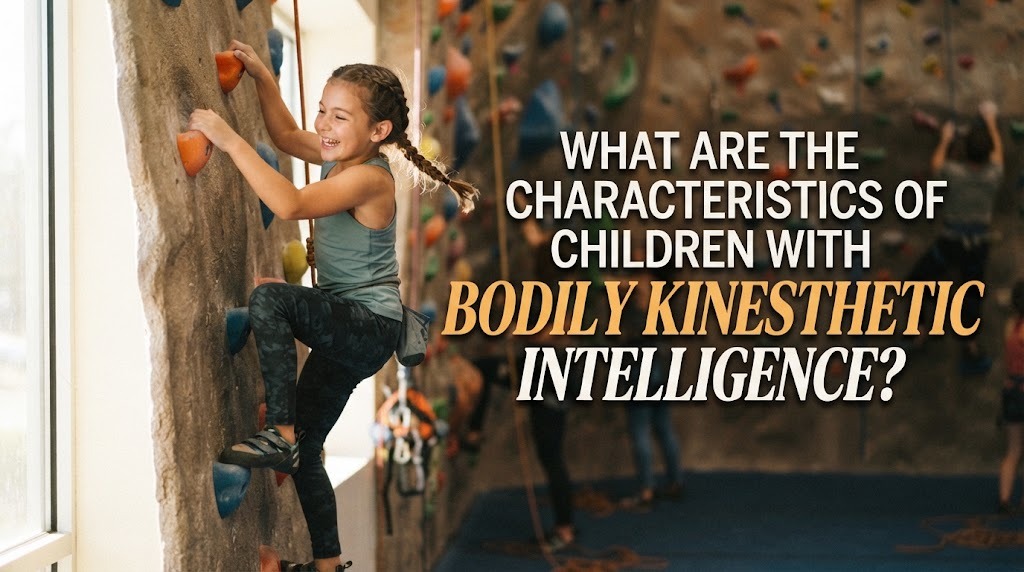
Bodily kinesthetic intelligence is the ability to use the body effectively to express ideas, complete tasks, and learn through physical experience. Children with this type of intelligence often enjoy activities that involve movement, hands-on practice, and coordination. They may learn more easily when they can touch, build, move, or directly practice something instead of only listening to an explanation. This ability can appear in many forms and is not limited to sports or physical activities. Understanding its characteristics can help parents and teachers provide learning experiences that match a child's strengths.
ENJOYS LEARNING THROUGH MOVEMENT
One of the most noticeable characteristics is a strong preference for learning through movement. Children may find it easier to understand a lesson when they can participate in an activity rather than simply sit and listen. They may enjoy demonstrations, experiments, role-playing, educational games, and practical projects. Moving while learning can help them stay focused and connect new information with real experiences. This does not mean they cannot learn through reading or listening, but physical activities may make learning more engaging for them.
For example, a child learning about plants may understand the topic better by planting seeds and observing their growth. A child learning mathematics may enjoy using physical objects to understand numbers or measurements. These experiences allow children to connect abstract information with real actions. Over time, this learning style can help them develop confidence in solving practical problems.
SHOWS GOOD BODY COORDINATION
Children with strong bodily kinesthetic abilities may demonstrate good coordination between different parts of their bodies. They can often control their hands, feet, eyes, and other body movements effectively during activities. They may enjoy catching and throwing objects, dancing, cycling, swimming, or playing physical games. Their movements can become more accurate as they gain experience and practice. However, coordination develops at different rates in every child, so it should not be judged from one activity alone.
These children may also notice how their bodies move during a task. For example, they might adjust their position when trying to maintain balance or change their hand movement when creating something. This shows body awareness, which can be an important part of bodily kinesthetic intelligence. Practice and opportunities to explore movement can further strengthen these abilities.
LIKES HANDS ON ACTIVITIES
Another characteristic is a strong interest in hands-on activities. Children may enjoy building models, drawing, crafting, cooking with supervision, gardening, assembling objects, or working with educational materials. They often become more interested when they can physically interact with the things they are learning about. Instead of only asking how something works, they may want to try it themselves. This natural curiosity can encourage them to explore and experiment.
Hands-on activities can also help children develop problem-solving skills. When a project does not work as expected, they can observe the result, make changes, and try again. This process teaches them that mistakes can be part of learning. It also encourages patience, creativity, and practical thinking.
ENJOYS SPORTS AND PHYSICAL ACTIVITIES
Many children with bodily kinesthetic intelligence enjoy sports and physical activities, although athletic ability is not a requirement. They may be interested in running, dancing, martial arts, gymnastics, swimming, or other activities that involve controlled movement. They may enjoy practicing specific movements repeatedly until they become more accurate. Physical activities can also give them opportunities to develop discipline and understand how practice affects performance.
Some children may prefer less competitive activities, such as yoga, crafts, gardening, or building projects. Therefore, parents and teachers should not assume that every kinesthetic child must enjoy sports. The important characteristic is often the child's interest in using physical actions to explore and accomplish something.
LEARNS QUICKLY THROUGH DEMONSTRATIONS
Children with bodily kinesthetic intelligence may respond well when someone demonstrates how to do something. Watching a process and then practicing it can help them understand instructions more clearly. For example, they may learn how to fold paper, use simple tools, perform a dance movement, or complete a science experiment more easily after seeing an example. They can then repeat the process and make adjustments based on their experience.
This learning pattern can make demonstrations especially useful in classrooms. Teachers can combine explanations with visual examples and practical practice to give children more ways to understand information. Children can also benefit from short instructions followed by opportunities to apply what they have learned. This approach can support different learning preferences while encouraging active participation.
HAS STRONG INTEREST IN CREATING THINGS
A child with bodily kinesthetic intelligence may enjoy creating and manipulating objects. They may spend time making crafts, building structures, arranging materials, drawing, assembling toys, or creating simple projects. They can become deeply focused when their hands are involved in the activity. The process allows them to combine imagination with physical skills. Their creations may also become a way to express ideas that are difficult to explain verbally.
Creating things can help develop several abilities at once. Children can practice fine motor skills, coordination, concentration, creativity, and problem-solving while working on a project. Parents and teachers can encourage this interest by providing safe materials and allowing children to experiment. The goal is not to make every project perfect but to give children opportunities to explore and learn.
PREFERS ACTIVE PARTICIPATION
Children with bodily kinesthetic intelligence often prefer to be actively involved in the learning process. They may become more engaged when they can participate in games, demonstrations, experiments, group activities, or practical assignments. Sitting quietly for a long time may sometimes make it harder for them to maintain attention, especially when the activity does not involve interaction. Giving them appropriate opportunities to move can help them stay involved.
Active participation does not mean children should always be moving. They still need opportunities to listen, read, think, and rest. A balanced learning environment can combine movement with observation and reflection. This allows children to develop bodily kinesthetic abilities while also strengthening other important skills.
HOW PARENTS AND TEACHERS CAN SUPPORT THEM
Parents and teachers can support children by providing varied learning experiences. Simple activities such as building models, role-playing, drawing, gardening, cooking with supervision, or conducting safe experiments can provide useful opportunities for physical learning. Children should also be encouraged to participate in sports or other movement-based activities that they genuinely enjoy. Positive feedback can help them become more confident in developing their abilities. Most importantly, adults should avoid comparing their development with other children.
Children also benefit when their strengths are recognized without placing them into a fixed category. Bodily kinesthetic intelligence is one possible way of describing a child's abilities, not a complete definition of who they are. A child can have strengths in several areas at the same time. By combining hands-on activities with reading, discussion, creativity, and other learning methods, adults can support more balanced development.
CONCLUSION
Children with bodily kinesthetic intelligence may show characteristics such as enjoying movement, learning through practice, having body awareness, and preferring hands-on activities. They may also enjoy sports, demonstrations, creative projects, and activities that allow them to actively participate. However, these characteristics can appear differently in every child. A child does not need to be athletic to have strong bodily kinesthetic abilities. With appropriate opportunities and support, children can develop their physical coordination, creativity, practical thinking, and confidence.
Recent Posts

Bagaimana Sistem SKS pada Program Kuliah... 22.11.2026/27 View

How Does Technology Make Daily Evaluation... 21.11.2026/65 View

Apa Strategi Menghadapi Kesenjangan antara Kompetensi... 21.11.2026/65 View

Mengapa Inventaris Aset Penting bagi Kelancaran... 21.11.2026/62 View

When Should Musicians Join a Record... 21.11.2026/63 View
