

What Are the Characteristics of Visual Learners?
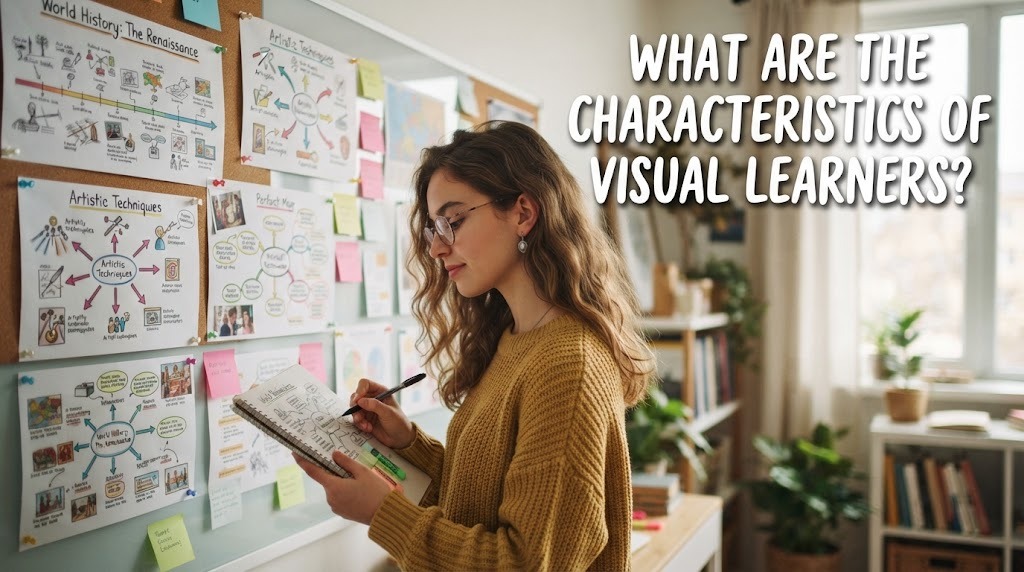
Visual learners are students who often find it easier to understand information when it is presented through images, diagrams, charts, colors, or other visual materials. They may remember information more clearly when they can see how ideas are organized. Visual learning can be useful in many subjects because complex information can become easier to understand when presented in a structured form. However, learning preferences are not fixed, and students can still benefit from combining visual methods with other study strategies. Understanding these characteristics can help students choose study techniques that match their needs.
PREFER USING IMAGES AND VISUAL MATERIALS
One common characteristic of visual learners is a preference for information that can be seen. They may understand lessons more easily when teachers use pictures, diagrams, charts, maps, or illustrations. Visual materials can help students see relationships between different concepts. Instead of reading a long explanation, they may prefer information that is arranged in a clear and organized format. This can make studying feel more manageable, especially when the material contains many details.
Visual learners may also enjoy educational videos because they combine images with explanations. Animations and demonstrations can help show how a process works step by step. However, visual materials should still be supported by accurate explanations. Simply looking at attractive images does not guarantee that a student understands the topic.
LIKE ORGANIZED AND COLOR CODED NOTES
Visual learners may prefer notes that are neat, structured, and easy to scan. They can use different colors to separate important concepts, examples, definitions, and supporting information. Headings, bullet points, boxes, and symbols can also make notes easier to review. A well-organized page allows students to quickly identify the most important information. This method can be particularly helpful when preparing for exams.
However, using too many colors can make notes confusing. Students should use colors with a clear purpose rather than decorating every part of the page. For example, one color can represent important terms while another can identify examples. Simple and consistent formatting can make visual notes more useful.
REMEMBER INFORMATION THROUGH VISUAL ASSOCIATIONS
Another characteristic is the ability to connect information with visual representations. A student may remember a concept because they recall a particular diagram, chart, or layout from their notes. Creating symbols or simple drawings can also help connect ideas with memorable images. Mind maps are one example of a technique that can show how different concepts are related. These visual associations can make review sessions more active.
Students can create their own visual summaries after studying a topic. Instead of copying information directly from a textbook, they can turn important ideas into diagrams or short visual notes. This process requires students to identify the main points first. As a result, creating the visual material can also become part of the learning process.
ENJOY MIND MAPS AND DIAGRAMS
Mind maps and diagrams can be useful for visual learners because they show information through relationships and structures. A main topic can be placed in the center, followed by related ideas and supporting details. Diagrams can also explain processes that may be difficult to understand through text alone. For example, students studying science can use diagrams to understand biological processes. Students studying business can use flowcharts to understand organizational or operational processes.
These tools are most effective when they remain simple and focused. A diagram containing too much information can become difficult to read. Students should use keywords and clear connections rather than writing complete paragraphs inside every section. The goal is to make the information easier to understand and remember.
PAY ATTENTION TO PRESENTATION AND STRUCTURE
Visual learners may notice how information is presented and organized. They may find it easier to follow lessons when slides, textbooks, and notes have clear headings and logical structures. Consistent formatting can help them identify important information more quickly. They may also benefit from tables, timelines, graphs, and other structured learning materials. A clear presentation can reduce the effort needed to find key information.
This preference does not mean that visual learners cannot learn from spoken explanations or written materials. They can still use lectures, discussions, and textbooks effectively. Adding visual support can simply make the information easier to process. Combining presentation formats can help students understand a topic from different perspectives.
USE VISUAL STUDY STRATEGIES
Visual learners can use several study strategies to support their learning. They can create mind maps, draw diagrams, use flashcards, watch educational videos, and organize notes with headings and colors. They can also turn long explanations into short visual summaries. Reviewing these materials regularly can help reinforce important concepts. Practice questions should still be included because understanding information requires more than recognizing visual patterns.
Students can also experiment with different combinations of methods. For example, they can read a chapter, create a mind map, watch a related explanation, and then complete practice questions. This approach allows students to use visual materials while developing other learning skills. Over time, they can identify which techniques are most useful for each subject.
CONCLUSION
Visual learners often prefer information that is presented through images, diagrams, charts, colors, and organized notes. They may remember concepts through visual associations and benefit from tools such as mind maps and flowcharts. However, students should not feel limited to one learning style because different subjects may require different study methods. Combining visual strategies with reading, listening, discussion, and practice can create a more flexible learning routine.
Recent Posts

Bagaimana Sistem SKS pada Program Kuliah... 22.11.2026/21 View

How Does Technology Make Daily Evaluation... 21.11.2026/63 View

Apa Strategi Menghadapi Kesenjangan antara Kompetensi... 21.11.2026/65 View

Mengapa Inventaris Aset Penting bagi Kelancaran... 21.11.2026/62 View

When Should Musicians Join a Record... 21.11.2026/60 View
