

What Are the Common Challenges of Managing a Creator Community?
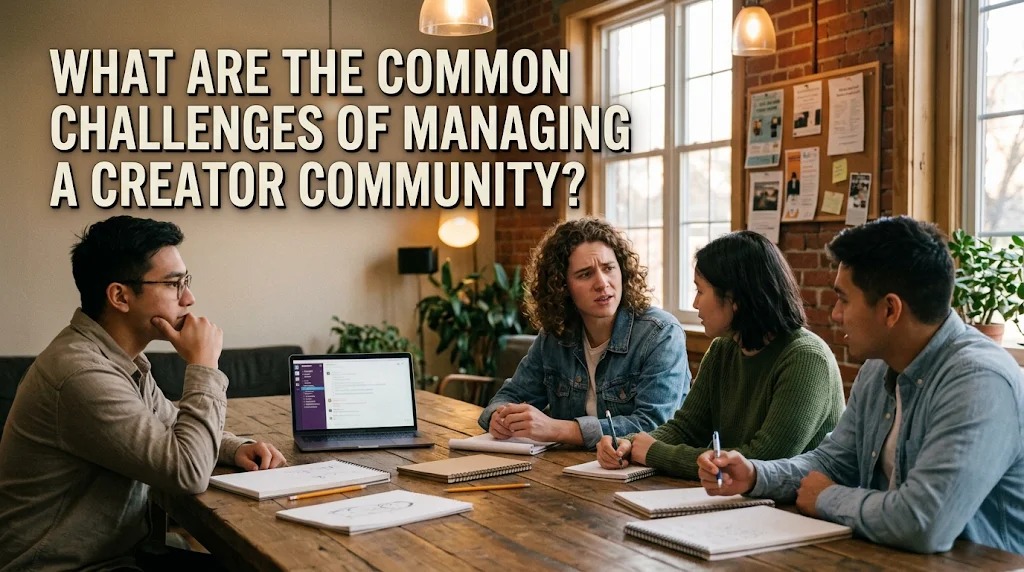
Managing a creator community can be an exciting opportunity to connect creative individuals, exchange knowledge, and develop valuable digital projects. These communities bring together content creators with different skills, interests, and professional goals. However, maintaining an active and productive community requires more than simply gathering people in one group. It also involves communication, organization, leadership, and consistent participation.
As the digital content industry continues to grow, creator communities face various challenges that can affect their development. Some communities struggle to maintain member engagement, manage different opinions, establish clear goals, or encourage collaboration. These problems can make it difficult to create a positive environment where members feel comfortable sharing ideas and developing their abilities.
Understanding the common challenges of managing a creator community is important for community leaders and members. With effective management strategies, these obstacles can be addressed to build a supportive, organized, and sustainable creative environment.
MAINTAINING MEMBER PARTICIPATION AND ENGAGEMENT
One of the most common challenges in managing a creator community is maintaining consistent member participation. At the beginning, many people may show strong enthusiasm for joining discussions, sharing content, and participating in activities. However, their involvement can decrease over time because of work responsibilities, personal commitments, or changing interests.
Low participation can affect the overall atmosphere of a community. When only a few members contribute regularly, discussions may become less active, and collaborative projects can be difficult to organize. New members may also feel less motivated to participate when they see limited interaction from existing members.
To overcome this challenge, community managers need to create activities that encourage meaningful participation. Regular discussions, creative challenges, online meetings, and collaborative projects can help members remain involved. Providing recognition for active contributions can also encourage members to participate more consistently.
MANAGING DIFFERENT OPINIONS AND COMMUNICATION PROBLEMS
Creator communities usually consist of individuals with different backgrounds, experiences, creative styles, and personal expectations. These differences can generate valuable ideas, but they can also create disagreements. For example, members may have different opinions about content quality, project deadlines, creative decisions, or community activities.
Communication problems can become serious when members misunderstand messages or express criticism in an inappropriate manner. Disagreements that are not handled properly may create uncomfortable situations and weaken relationships between members. In some cases, conflicts can reduce trust and discourage people from participating.
Community managers should establish clear communication guidelines that encourage respect, openness, and constructive feedback. Members need to understand that differences in opinion are normal and should be discussed professionally. Creating a safe environment where everyone can express ideas without personal attacks is essential for maintaining healthy relationships.
KEEPING CONTENT QUALITY AND CREATIVE CONSISTENCY
Another challenge is maintaining content quality and creative consistency. Every creator has different abilities, production methods, and standards. Some members may focus on educational content, while others prefer entertainment, storytelling, or promotional materials. These differences can make it difficult to establish common expectations for collaborative projects.
Inconsistent content quality may also affect the community's reputation, especially when members work together to publish content under a shared identity. Poor planning, inaccurate information, and weak production standards can reduce audience trust. Therefore, community managers need to encourage members to understand basic quality standards without limiting their individual creativity.
One effective approach is to provide learning opportunities through workshops, mentoring sessions, and knowledge-sharing activities. Members can discuss content planning, research methods, storytelling, editing techniques, and audience engagement. Regular feedback can also help creators improve their work while maintaining their unique creative identities.
ORGANIZING ACTIVITIES AND MANAGING COMMUNITY RESOURCES
Managing a creator community requires proper organization, especially when the number of members continues to increase. Community managers need to coordinate discussions, workshops, collaborative projects, and other activities. Without clear planning, these activities may become disorganized and fail to meet members' expectations.
Another difficulty involves limited resources. Some communities may not have sufficient funding, equipment, digital tools, or experienced volunteers to support their programs. This situation can make it challenging to organize large activities or provide equal opportunities for all members.
To address these problems, community managers should establish realistic goals and prioritize activities based on available resources. They can use digital collaboration tools, shared calendars, and online communication platforms to simplify coordination. Assigning responsibilities to different members can also distribute the workload and make community management more efficient.
HANDLING COMPETITION AND CHANGES IN DIGITAL TECHNOLOGY
The digital content industry is highly competitive, and creators constantly face changes in audience preferences, platform features, and content trends. These developments create challenges for communities that want to remain relevant and provide useful opportunities for their members.
Competition between creators can sometimes reduce collaboration when individuals become too focused on personal popularity, audience growth, or financial benefits. Some members may hesitate to share knowledge because they worry that others will become more successful. If this behavior becomes common, the community may lose its supportive atmosphere.
Technological developments also require community managers to encourage continuous learning. Artificial intelligence, content editing applications, and new digital platforms can change how creative work is produced and distributed. Communities should organize discussions and training activities to help members understand these developments while emphasizing originality, ethical practices, and responsible technology use.
CONCLUSION
Managing a creator community involves several challenges, including maintaining member participation, handling disagreements, ensuring content quality, organizing activities, and adapting to technological changes. These issues can affect the productivity and long-term development of a community if they are not addressed properly.
However, effective communication, clear guidelines, regular activities, and collaborative leadership can help overcome many of these difficulties. Community managers should also encourage mutual respect, continuous learning, and knowledge sharing among members. By creating an organized and supportive environment, a creator community can remain active, strengthen relationships, and provide valuable opportunities for everyone involved in the digital creative industry.
Recent Posts

Bagaimana Sistem SKS pada Program Kuliah... 22.11.2026/35 View

How Does Technology Make Daily Evaluation... 21.11.2026/69 View

Apa Strategi Menghadapi Kesenjangan antara Kompetensi... 21.11.2026/70 View

Mengapa Inventaris Aset Penting bagi Kelancaran... 21.11.2026/67 View

When Should Musicians Join a Record... 21.11.2026/69 View
