

What Are the Common Mistakes Students Make When Writing a Thesis?
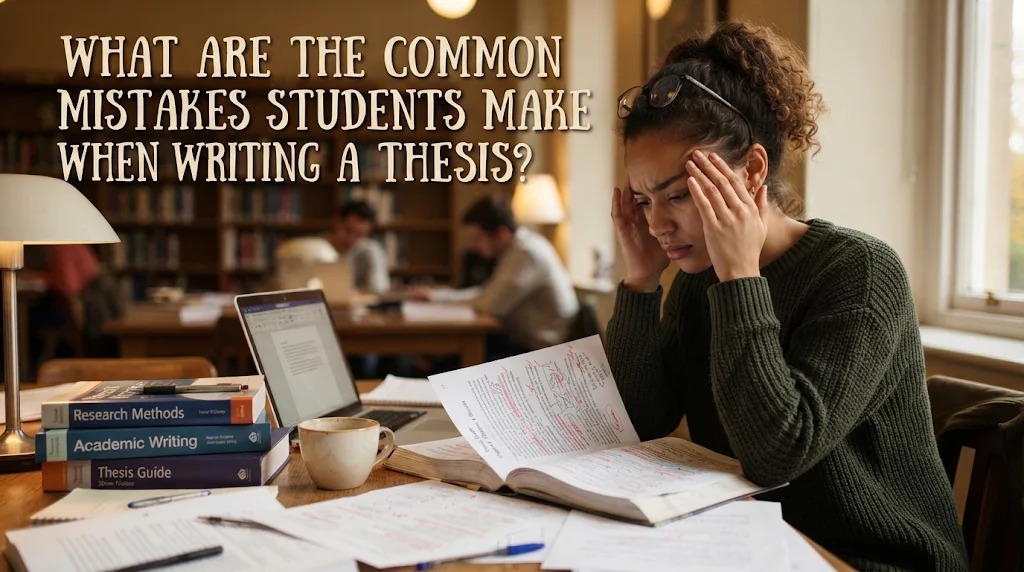
Writing a thesis is an important academic responsibility for university students. It requires careful planning, systematic research, critical thinking, and good academic writing skills. However, many students experience difficulties during the process because thesis writing involves several stages that must be completed correctly.
Some mistakes may seem minor, but they can affect the quality, clarity, and credibility of the research. Understanding these common problems can help students avoid unnecessary revisions and complete their theses more effectively. By recognizing potential errors early, students can produce academic papers that meet university requirements.
CHOOSING A TOPIC THAT IS TOO BROAD
One common mistake students make when writing a thesis is choosing a research topic that is too broad. A topic that covers too many issues can make it difficult to determine the research focus and establish clear objectives. As a result, students may struggle to collect relevant information and organize their discussions.
To avoid this problem, students should narrow their topics into specific and manageable research areas. They need to consider the availability of data, research resources, and the time required to complete the study. Consulting an academic supervisor can also help students determine whether their chosen topic is realistic and suitable for academic research.
HAVING UNCLEAR RESEARCH QUESTIONS AND OBJECTIVES
Research questions and objectives provide direction throughout the thesis writing process. However, some students create questions that are too general, confusing, or unrelated to their research topics. This can cause problems when determining the appropriate research methods and analyzing the findings.
Students should formulate research questions that are specific, measurable when appropriate, and relevant to the research problem. Their objectives must also explain what the study intends to achieve. Maintaining consistency between the research questions, objectives, methodology, and conclusions helps create a more focused and organized thesis.
USING INAPPROPRIATE OR UNRELIABLE REFERENCES
References are essential for supporting academic arguments and establishing a strong theoretical foundation. Unfortunately, some students rely on outdated publications, unreliable websites, or sources that have little connection to their research topics. Using inappropriate references can weaken the credibility and accuracy of a thesis.
Students should prioritize reliable academic sources, including peer-reviewed journals, scholarly books, official publications, and previous research studies. They also need to evaluate the relevance and credibility of every reference before including it in their writing. Proper citation is equally important because it acknowledges original authors and helps students avoid plagiarism.
SELECTING THE WRONG RESEARCH METHOD
Another common mistake is selecting a research method that does not match the research questions or objectives. For example, students may use questionnaires when their research requires deeper explanations of participants' experiences. Choosing an unsuitable method can result in insufficient information and research findings that do not properly answer the main problem.
To prevent this issue, students should understand the differences between quantitative, qualitative, and mixed-method research. They need to consider the type of data required, research participants, available resources, and analysis techniques. Discussing the methodology with an academic supervisor can help ensure that the chosen approach is appropriate and scientifically justified.
POOR DATA ANALYSIS AND INTERPRETATION
Collecting research data is not enough to produce a quality thesis. Students must also analyze the information correctly and explain what the findings mean. Some students make mistakes by using inappropriate statistical techniques, overlooking important patterns, or presenting results without connecting them to their research questions.
Another problem occurs when students interpret findings based on personal opinions rather than available evidence. Research conclusions must be supported by the collected data and appropriate theoretical references. Students should carefully check their analysis procedures and present the results objectively. Accurate interpretation makes the research more meaningful and strengthens the overall quality of the thesis.
LACK OF TIME MANAGEMENT AND INSUFFICIENT REVISION
Poor time management is another challenge that can affect thesis completion. Some students delay their research until the deadline approaches, making it difficult to collect data, write chapters, and complete necessary revisions. Rushing the process can increase grammatical errors, inconsistent formatting, and incomplete discussions.
Students should create a realistic writing schedule and divide the thesis into smaller tasks with specific deadlines. They also need to communicate regularly with their academic supervisors to receive feedback and identify problems early. Revising the thesis several times is important to improve its structure, clarity, accuracy, and academic quality. Careful proofreading before submission can help prevent avoidable mistakes.
CONCLUSION
Students commonly make mistakes when writing a thesis, including choosing overly broad topics, developing unclear research questions, using unreliable references, and selecting inappropriate research methods. Other problems involve poor data analysis, weak interpretation, and insufficient time management.
These mistakes can be avoided through careful planning, reliable academic references, appropriate research methods, and regular consultation with academic supervisors. Students should also revise their work consistently to ensure that their thesis meets academic standards. By understanding and avoiding these common problems, students can produce better research and complete their academic responsibilities more effectively.
Recent Posts

Apa Saja Keuntungan Mengambil Kuliah Cepat?... 23.11.2026/45 View

Bagaimana Cara Mengatasi Kelelahan Akibat Jadwal... 23.11.2026/27 View

Mengapa Pengalaman Organisasi Menjadi Nilai Tambah... 23.11.2026/32 View

Bagaimana Manajer Proyek Mengendalikan Anggaran agar... 23.11.2026/32 View

Apa Tantangan Terbesar Mahasiswa dalam Menjalani... 23.11.2026/29 View
