

What Are the Common Signs of Someone Using a Fake Identity?
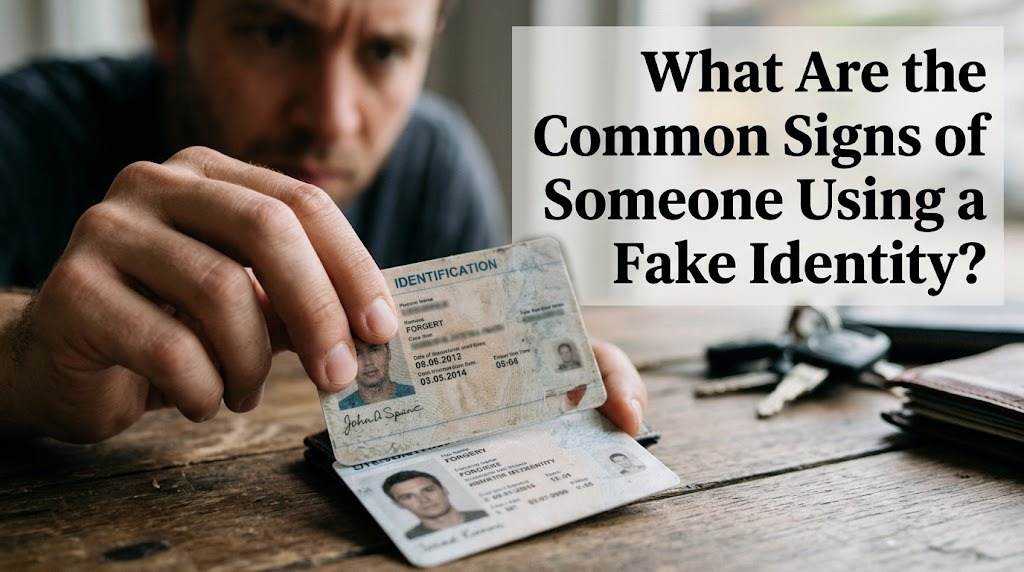
Using a fake identity is a common issue in today's digital world. Some people create false identities to hide their real backgrounds, deceive others, commit fraud, or gain access to services illegally. This behavior can happen on social media, online dating platforms, digital marketplaces, financial services, and even professional environments.
Recognizing the common signs of someone using a fake identity is important to protect personal information, financial security, and online relationships. Although not every unusual behavior indicates identity fraud, several warning signs can help people identify suspicious individuals. Understanding these signs can make it easier to avoid scams and take appropriate action before serious problems occur.
INCONSISTENT PERSONAL INFORMATION
One of the most common signs of someone using a fake identity is inconsistent personal information. A person may provide different names, ages, birth dates, addresses, or employment details when communicating with different people. These differences can indicate that the individual is attempting to hide their real identity or create a false personal background.
For example, someone might introduce themselves using one name on social media but use another name when communicating through messaging applications. Their professional background may also differ from the information they share in other online profiles. Small differences can sometimes happen because of ordinary mistakes, but repeated inconsistencies should be treated as warning signs.
Another indication is when someone frequently changes their personal details without providing a reasonable explanation. They may also avoid answering simple questions about their background. Paying attention to these patterns can help people recognize possible identity deception before trusting someone too quickly.
SUSPICIOUS SOCIAL MEDIA PROFILES
Social media profiles can provide useful information when identifying someone who may be using a fake identity. Suspicious accounts sometimes have very few photographs, limited personal information, unusual usernames, or recently created profiles. Some accounts also use photographs that appear unrelated to the person's claimed background.
Another warning sign is an account that has many followers but very little genuine interaction. Its comments may look repetitive, while its uploaded content may consist of copied photographs or information from other accounts. Some fake profiles also use pictures belonging to other people without permission to appear more trustworthy.
People should also pay attention to profiles that frequently change their names, photographs, or descriptions. However, a new account or limited social media activity does not automatically mean someone is using a fake identity. The most important step is to examine several warning signs together rather than making assumptions based on a single detail.
AVOIDING IDENTITY VERIFICATION
People who use fake identities often avoid situations that require them to verify their personal information. They may refuse to participate in video calls, provide legitimate identification, or complete verification procedures when these steps are reasonably necessary. Instead, they might repeatedly make excuses or try to convince others that verification is unnecessary.
This behavior can become particularly concerning when financial transactions, business agreements, employment applications, or online relationships are involved. For example, someone may claim to represent a company but refuse to provide verifiable professional information. They might also pressure another person to trust them without offering reasonable evidence of their identity.
However, refusing to share personal identification documents is not always suspicious because legitimate privacy and security concerns exist. People should use official verification systems rather than demanding sensitive documents through private messages. A trustworthy verification process should protect personal information while confirming that someone is who they claim to be.
UNUSUAL COMMUNICATION AND REQUESTS
Another common sign of a fake identity is unusual communication behavior. Someone may provide unclear answers, avoid direct questions, or frequently change their explanations when discussing personal information. Their stories may also contain details that are difficult to verify or contradict information they previously shared.
In online environments, fake identities are sometimes used to build trust before requesting money, personal information, passwords, or verification codes. A person may create an emotional connection quickly and then invent an emergency that requires immediate financial assistance. This approach is commonly associated with online scams and social engineering.
People should be especially careful when someone creates a sense of urgency or repeatedly pressures them to make decisions without enough time to think. Legitimate individuals and organizations generally do not need to obtain passwords or one-time verification codes through private conversations. Recognizing unusual communication patterns can help prevent identity-related fraud and protect personal data.
HOW TO PROTECT YOURSELF FROM FAKE IDENTITIES
Protecting yourself from fake identities begins with checking information carefully before establishing trust. When interacting with unfamiliar people online, examine their profiles, communication history, and publicly available information. If someone claims to represent a company or organization, use official contact details to confirm their position instead of relying only on the information they provide.
Avoid sharing sensitive personal information with people whose identities have not been properly verified. Details such as identification numbers, banking information, passwords, home addresses, and verification codes should remain private. You should also use strong passwords and enable two-factor authentication to reduce the risk of unauthorized account access.
If you discover a suspicious account, avoid sending money or clicking unfamiliar links. Save relevant evidence, block the account when necessary, and report suspicious activity through the platform's official reporting system. If financial information has already been compromised, contact your bank or relevant service provider immediately.
CONCLUSION
Recognizing the common signs of someone using a fake identity is an important part of maintaining personal and digital security. Inconsistent personal information, suspicious social media profiles, avoidance of identity verification, and unusual communication patterns can indicate possible identity deception. However, these signs should be evaluated carefully because individual circumstances may have legitimate explanations.
By checking information, protecting sensitive data, and avoiding suspicious requests, people can reduce their risk of becoming victims of identity fraud. Staying alert and understanding how fake identities operate can help create safer interactions both online and offline.
Recent Posts

Bagaimana Sistem SKS pada Program Kuliah... 22.11.2026/37 View

How Does Technology Make Daily Evaluation... 21.11.2026/70 View

Apa Strategi Menghadapi Kesenjangan antara Kompetensi... 21.11.2026/73 View

Mengapa Inventaris Aset Penting bagi Kelancaran... 21.11.2026/68 View

When Should Musicians Join a Record... 21.11.2026/71 View
