

What Are the Consequences of Taking Leave Without Official Permission?
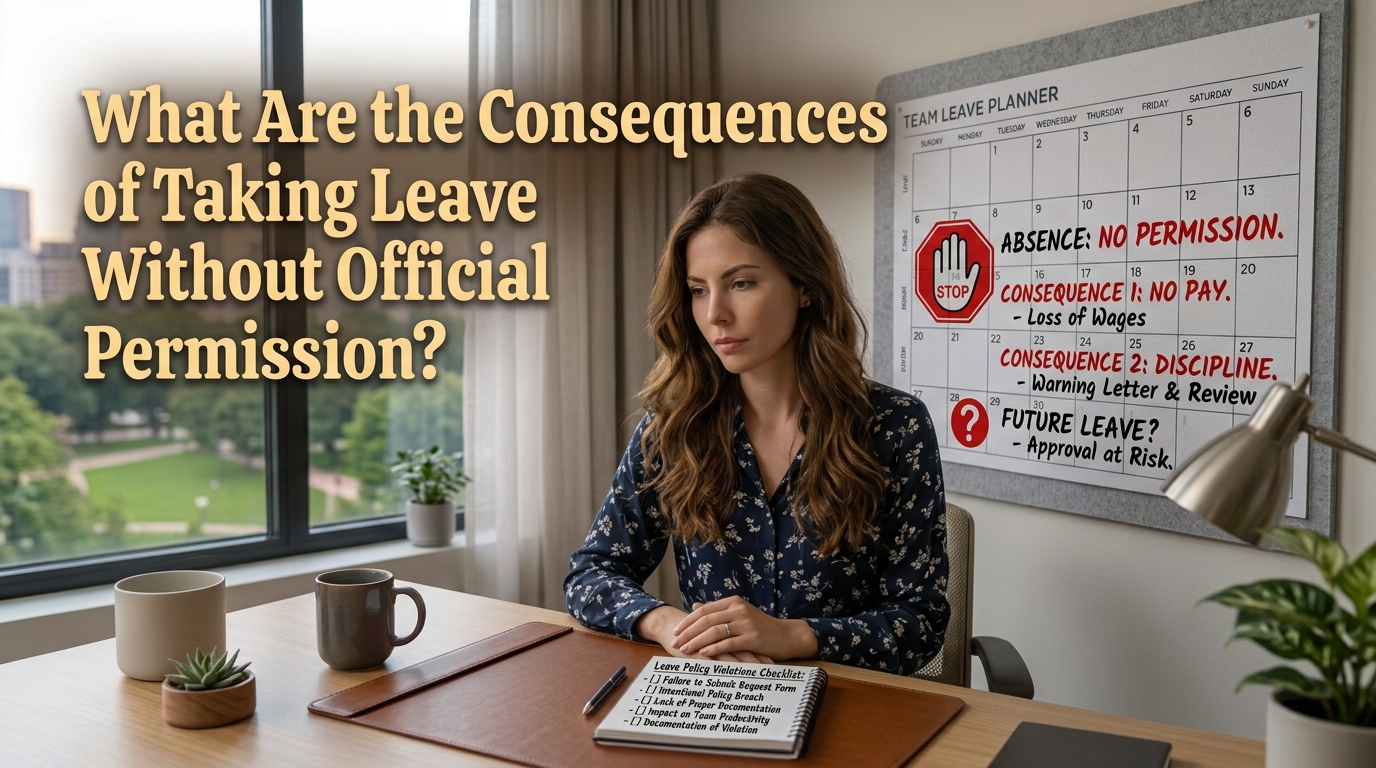
Taking time off work without official permission may seem like a simple decision, especially when employees face urgent personal matters. However, leaving work without approval can create serious problems for both employees and employers. It may affect workplace relationships, salary payments, performance evaluations, and even job security. Every company has its own leave policies, so employees should understand the procedures before taking time away from work. Knowing the possible consequences can help employees avoid unnecessary conflicts and maintain professional responsibilities.
WHAT DOES TAKING LEAVE WITHOUT OFFICIAL PERMISSION MEAN?
Taking leave without official permission means being absent from work without receiving approval from an authorized supervisor or employer. This situation may occur when an employee does not submit a leave request, fails to inform their manager, or leaves the workplace before receiving permission. It can also happen when an employee extends an approved leave period without notifying the company. In some workplaces, this behavior is considered an unauthorized absence or a violation of attendance policies. However, the exact classification depends on company regulations and applicable employment laws.
Employees should understand that informing a supervisor is not always the same as receiving official approval. Some companies require written requests through email, forms, or digital attendance systems. Others may allow verbal approval in genuine emergencies, followed by formal documentation. Following the correct leave procedure helps prevent misunderstandings and protects employees from unnecessary disciplinary action.
SALARY DEDUCTIONS AND FINANCIAL CONSEQUENCES
One possible consequence of taking leave without permission is a deduction from salary for unauthorized absence, depending on the employment agreement, company policy, and applicable labor regulations. Employees may not receive payment for days they do not work if those absences are not covered by paid leave entitlements. Some companies may also apply attendance-related deductions or other measures permitted by their policies and the law. These rules should be clearly communicated to employees. Therefore, employees need to understand how unauthorized absences affect their income.
Financial consequences may also occur indirectly. For example, repeated attendance problems could affect performance incentives, attendance bonuses, or other benefits if the relevant policies allow it. Employees who frequently miss work may also lose opportunities for overtime or additional responsibilities. Understanding the company's attendance and compensation rules can help employees avoid unexpected financial problems.
DISCIPLINARY WARNINGS FROM THE COMPANY
Employees who take leave without official permission may receive a verbal warning or written warning from their supervisor or human resources department. The response usually depends on the seriousness of the absence, its duration, and whether the employee has violated company rules before. A first incident may result in a reminder or counseling session. However, repeated unauthorized absences can lead to more serious disciplinary measures. Employers generally need to follow their established procedures when handling workplace violations.
A disciplinary warning is intended to remind employees of their responsibilities and encourage better attendance. It may also become part of an employee's personnel record, depending on company procedures. Such records could be considered during future performance reviews or internal evaluations. Responding professionally to warnings and improving attendance can help employees rebuild trust with their supervisors.
REDUCED TRUST AND PROFESSIONAL REPUTATION
Taking leave without permission can damage the relationship between employees and their supervisors. Managers rely on employees to communicate clearly, follow schedules, and complete assigned responsibilities. When someone is absent without notice, coworkers may need to handle additional tasks or adjust their schedules. This situation can create frustration and reduce teamwork. Over time, repeated unauthorized absences may weaken professional trust.
An employee's reputation may also be affected. Supervisors may become less confident when assigning important responsibilities or coordinating projects. This does not mean one mistake will permanently damage someone's career, but repeated behavior can create a negative impression. Employees can maintain a positive reputation by communicating honestly, following workplace procedures, and taking responsibility for their actions.
DISRUPTION TO WORKPLACE OPERATIONS
Unauthorized leave can affect more than the absent employee. Companies often organize their schedules based on the number of available workers and their assigned responsibilities. When an employee suddenly fails to attend work, important tasks may be delayed or transferred to other team members. This can increase workloads and reduce overall productivity. Unexpected absences can disrupt daily operations, particularly in workplaces that depend on fixed schedules or coordinated teams.
The impact may be greater in hospitals, customer service departments, manufacturing facilities, and other workplaces that require sufficient staff coverage. For example, an absent employee may cause delays in customer service or interrupt a production schedule. Employers may need to arrange replacement workers or adjust work assignments at short notice. This is why timely communication and proper leave requests are important for maintaining operational efficiency.
RISK OF CONTRACT TERMINATION OR DISMISSAL
In serious cases, taking leave without permission may contribute to employment termination or dismissal. This is more likely when an employee repeatedly ignores attendance rules, remains absent for an extended period, or fails to provide a reasonable explanation. However, dismissal should not automatically be assumed after every unauthorized absence. Employers must consider the circumstances and follow the applicable employment regulations and required procedures.
In Indonesia, employment termination is subject to the provisions of applicable labor laws and regulations, including rules on employee absence and termination procedures. The legal consequences depend on the facts of the case, the employment relationship, and the relevant requirements. Employees should not assume that every absence without permission automatically qualifies as a valid reason for dismissal. Employers and employees should refer to current labor regulations and obtain appropriate guidance when a dispute arises.
HOW TO AVOID TAKING LEAVE WITHOUT OFFICIAL PERMISSION
Employees can avoid unauthorized absences by understanding their company's leave policies and following the required procedures. Before taking planned leave, they should submit a request through the appropriate channel and wait for confirmation from an authorized person. It is also important to check the available leave balance and provide accurate information about the requested dates. Submitting leave requests in advance gives supervisors enough time to arrange work schedules and responsibilities.
For emergencies, employees should contact their supervisors or human resources department as soon as possible. If they cannot submit a formal request immediately, they should explain the situation and follow up with the required documents when possible. Keeping records of messages, emails, and approvals can also help prevent misunderstandings. Clear communication and proper documentation are essential for maintaining a professional relationship with the company.
WHAT SHOULD EMPLOYEES DO AFTER AN UNAUTHORIZED ABSENCE?
Employees who have already taken leave without permission should address the situation honestly and as soon as possible. They should contact their supervisor or human resources department, explain the reason for their absence, and apologize if their actions disrupted workplace activities. If supporting documents are available, such as a medical certificate or evidence of an emergency, they should submit them according to company procedures. Honest communication can help reduce misunderstandings and show that the employee takes workplace responsibilities seriously.
Employees should also review the company's attendance policy and ask about any disciplinary or administrative steps that may follow. If they believe a decision is unfair or inconsistent with applicable regulations, they can seek clarification through the company's complaint procedure or obtain advice from an appropriate labor authority. Most importantly, they should take practical steps to prevent the same situation from happening again. Learning from the incident can help restore workplace trust and improve professional conduct.
CONCLUSION
Taking leave without official permission can lead to several consequences, including salary deductions, disciplinary warnings, damaged professional relationships, reduced productivity, and potential employment termination. The seriousness of these consequences depends on the circumstances, company policies, and applicable labor regulations. Employees should always follow official leave procedures and communicate with supervisors before being absent whenever possible. For unexpected emergencies, informing the company promptly and providing supporting documents can help prevent further problems. Responsible attendance and clear communication are important for maintaining job security and building a positive professional reputation.
Recent Posts

Bagaimana Sistem SKS pada Program Kuliah... 22.11.2026/37 View

How Does Technology Make Daily Evaluation... 21.11.2026/70 View

Apa Strategi Menghadapi Kesenjangan antara Kompetensi... 21.11.2026/73 View

Mengapa Inventaris Aset Penting bagi Kelancaran... 21.11.2026/68 View

When Should Musicians Join a Record... 21.11.2026/71 View
